Cantina Tramin Opens a €15 Million Expansion in South Tyrol
The mostly underground facility uses gravity-fed grape handling to improve precision during harvests squeezed by weather volatility.
2026-08-10
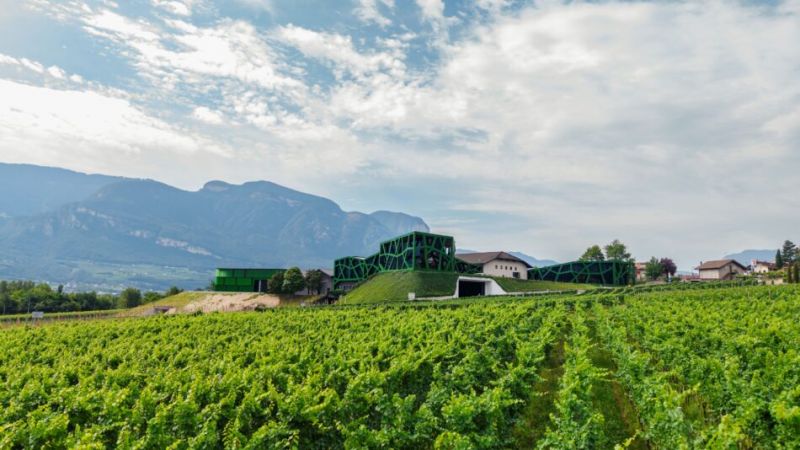
Cantina Tramin, one of South Tyrol’s best-known wine cooperatives, has opened a new production facility in Tramin, in northern Italy, completing a €15 million expansion aimed at improving grape handling and wine quality during harvest.
The project is the largest investment in the cooperative’s 128-year history. Cantina Tramin, which was founded in 1898, brings together about 300 growers farming 270 hectares, making it one of the leading wine producers in Alto Adige, the Italian region also known as South Tyrol. The area is widely known for white wines and is one of Italy’s most established mountain wine regions.
The new structure was designed by the architect Werner Tscholl, who also created the winery’s striking headquarters completed in 2010. That building became a local landmark in Tramin, and the new work extends the same visual language while focusing on production needs rather than public-facing spaces.
According to the winery, most of the expansion was built underground, across a site that had already been sealed, in an effort to limit additional environmental impact. The new facility includes two underground levels and was planned to make harvest operations faster, more flexible and gentler on the fruit, especially in years when weather conditions force many vineyard parcels to be picked at the same time.
The layout relies heavily on gravity to move grapes and juice through the first stages of production, reducing the need for pumping. The winery also added three new presses, a change intended to improve the precision and delicacy of grape processing. For a region where vineyard sites are fragmented by altitude, slope and exposure, the ability to keep fruit separate can be important for quality and style.
Willi Stürz, Cantina Tramin’s winemaker and technical director, said the new facility would have a direct effect on the wines by allowing more separate vinifications and smaller lots. That, he said, should help the winery show the identity of individual parcels and vintages with greater precision. Stürz has been a central figure at the cooperative since the 1990s, when the winery shifted more firmly toward a quality-driven strategy and expanded its higher-end selections.
The project also carries broader significance for South Tyrol’s wine sector, where the cooperative model remains a major part of production. Cantina Tramin’s investment comes as the region continues to present itself as a high-value vineyard area. A recent study published by the American Association of Wine Economists placed South Tyrol second only to Champagne in wealth created per hectare from vineyard cultivation, a ranking often cited by producers in the region as evidence of the economic strength of its winegrowing system.
Architecturally, the new building continues the winery’s effort to connect production space with the surrounding vineyard landscape. The facade uses profiled glass in different shades of green, matching the style of the existing structure. The above-ground elements are designed to appear light and transparent while screening the more functional areas behind them. The underground sections were covered with soil and planted with vines, further reducing the visual impact of the enlargement.
At the same time, the winery expanded its photovoltaic system. Cantina Tramin said the solar installation now supplies about 67% of the cellar’s energy needs, linking the production upgrade to a broader effort to cut outside energy demand.
The opening marks the completion of a project that had been in development for several years and reflects the winery’s view that investment in infrastructure remains essential, even in a period when many European wine producers are facing pressure from climate variability, rising costs and changing consumption patterns. In South Tyrol, where harvest timing can change quickly and vineyard work is shaped by steep terrain and small parcels, the ability to process fruit rapidly and carefully has become an increasingly important part of maintaining quality.
