South Korea Tightens Rules for Rectified Alcohol Sellers
New tax agency standards expand oversight of containers, transport records, labeling and quality documents across wholesale and retail distribution.
2026-07-22
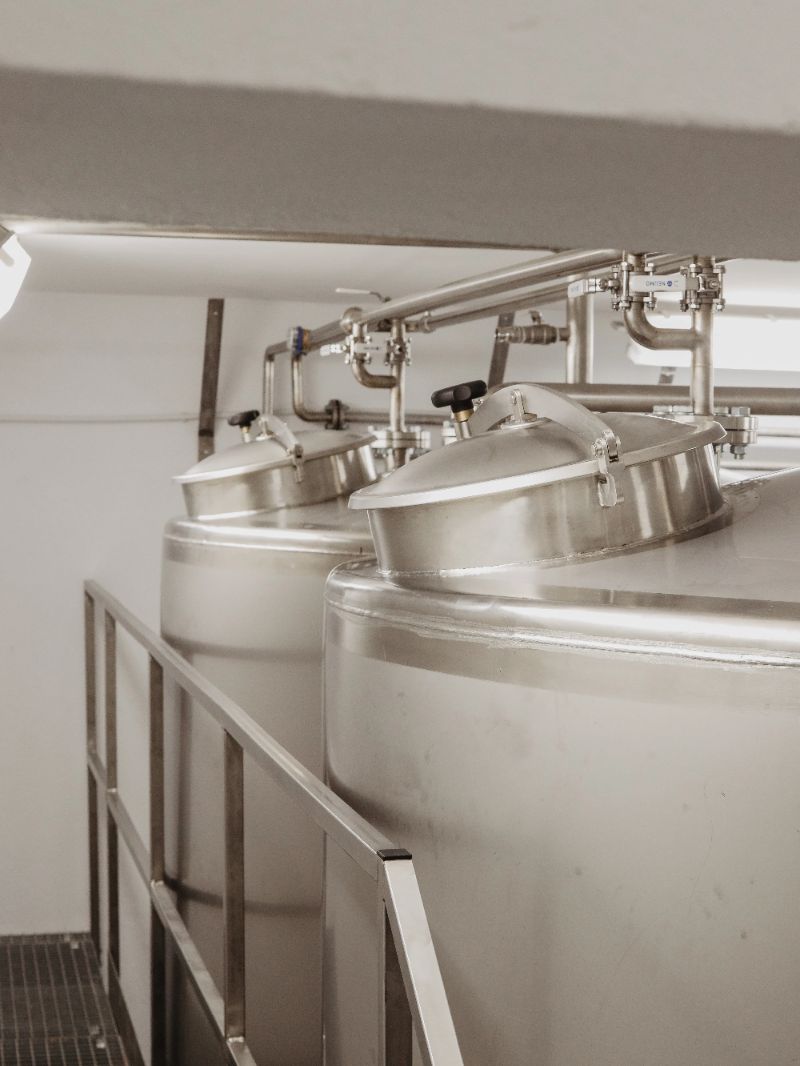
South Korea’s National Tax Service has revised the rules that sellers of rectified alcohol must follow when buying, transporting and selling the product, tightening operating standards for containers, transport records and labeling in a move that could affect suppliers of base alcohol used across the drinks industry.
The notice, issued by the tax agency as National Tax Service Notice No. 2026-25 and dated July 21, revises an earlier framework that had applied to wholesale sellers of rectified alcohol and expands it into a broader set of rules for both wholesalers and retailers. The measure covers industrial-use rectified alcohol retailers and fermentation alcohol retailers, and sets out what they must do when purchasing, selling or transporting rectified alcohol, or when changing sales facilities and equipment.
Under the revised rules, rectified alcohol may be transported only in designated vehicles or containers. The notice lists dedicated tank trucks for rectified alcohol, food-only tank trucks, drums and tin-plated cans as approved options. When food-only tank trucks are used, the operator must have the vehicle cleaned by a specialized cleaning company and keep the cleaning certificate at the business site.
The notice also sets shipment sizes for some containers. Drums must be used for outbound shipments in 200-liter units. Tin-plated cans must be used in 50-liter, 20-liter, 10-liter or 5-liter units.
The new framework also clarifies who is responsible for moving rectified alcohol at each stage of distribution. Transport from a rectified alcohol production plant to a wholesaler’s sales site, including storage depots, and from a wholesaler’s sales site to a retailer’s sales site must be handled by the wholesaler. There are exceptions. Producers may transport anhydrous alcohol and industrial synthetic alcohol when they sell directly to retailers. Retailers must handle transport from their own sales sites to the final receiving location of actual industrial users.
For fermentation alcohol, including refined alcohol, the rules allow direct delivery by wholesalers to end users when rapid supply is needed. In those cases, purchase and shipment declaration forms must state that direct transport will take place. The notice also allows wholesalers, in some cases, to bypass their own sales sites entirely and move product directly from the producer to the end user’s receiving location. That option applies when the wholesaler has approval to move untaxed liquor or when direct shipment is needed to speed supply and improve transport convenience. Here too, the direct transport must be recorded on purchase and shipment declarations.
One provision is especially relevant for beverage makers. The notice says that rectified alcohol purchased by liquor manufacturers for use in making alcoholic beverages must be transported by the wholesaler from the rectified alcohol plant to the liquor production site. But if a rectified alcohol producer and a liquor manufacturer trade directly, the producer may deliver it to the liquor plant. In that case, only alcohol that has passed quality testing may be transported, and the producer must provide the liquor manufacturer with the test analysis document showing it was judged suitable. For distillers and other beverage producers that rely on neutral spirit or similar base alcohol, that requirement could sharpen compliance checks in sourcing and receiving.
The revised notice also sets reporting duties for wholesalers. A wholesaler planning to buy rectified alcohol must report that fact to the head of the tax office with jurisdiction over the receiving location before the planned purchase date. If a wholesaler buys tax-exempt rectified alcohol for export or supply purposes under liquor tax rules, it must submit an application for tax exemption jointly with the producer and obtain approval from the tax office with jurisdiction over the production site.
If a wholesaler seeks to buy tax-exempt rectified alcohol for industrial uses other than food or drink consumption, it must submit a special-use tax exemption application together with proof of actual demand from the end user. The application must be filed jointly with the producer and approved by the competent tax office. The notice also says wholesalers may buy only rectified alcohol that has been judged suitable on a quality test analysis sheet. If there is nonconforming product, the relevant test analysis sheet must be kept for three years from the date of judgment.
When wholesalers buy untaxed rectified alcohol under liquor tax provisions, they must submit an application for approval of untaxed liquor removal jointly with both the liquor manufacturer and the rectified alcohol producer. After purchases are completed, wholesalers must report them to their tax office by the 10th day of the month following receipt.
Sales are also restricted. Wholesalers may sell purchased rectified alcohol only to liquor manufacturers or rectified alcohol retailers. When product is removed from a sales site, that fact must be reported to the competent tax office by the 10th day of the following month.
The notice adds facility reporting requirements as well. If a wholesaler installs, expands or improves storage facilities or sales facilities and equipment, including buildings and land used for sales sites, it must report those changes within 20 days.
For industrial-use rectified alcohol retailers, the revised rules say they must buy non-beverage-use rectified alcohol from licensed wholesalers or importers of industrial-use rectified alcohol. Industrial synthetic alcohol and anhydrous alcohol may still be purchased directly from producers. Retailers planning to buy rectified alcohol must report that fact to their tax office before the planned purchase date unless they have already received tax exemption approval or proof-of-demand status under related liquor tax provisions.
The notice also addresses purchases of tax-exempt industrial-use rectified alcohol intended for uses other than food or drink consumption. In those cases, retailers must file a special-use tax exemption application jointly with a producer or importer and attach proof of actual demand from the end user. The filing goes to the tax office or customs office with jurisdiction over the place of removal.
A key part of the revision concerns labeling on containers used for non-food purposes. According to the monitoring summary of the notice, containers for such uses must carry warnings including “not drinkable” in red lettering. That requirement is likely aimed at reducing misuse and confusion between beverage-grade inputs and industrial supplies as product moves through warehouses and transport networks.
That distinction matters beyond industrial compliance alone because rectified alcohol sits upstream in several beverage supply chains, especially in spirits production where neutral base alcohol can be redistilled, blended or otherwise processed into finished products. Clearer rules on approved containers, direct shipment routes, quality documents and warning labels could lead suppliers and beverage producers to review contracts, logistics procedures and receiving checks even if their day-to-day operations do not change immediately.
The National Tax Service said in its notice that the revision formally changes the title of the earlier measure from one focused on wholesale operators to one covering sellers more broadly. The updated framework took shape under delegated authority in South Korea’s law on liquor licenses and related enforcement rules, which give the commissioner power to specify operational requirements for this segment of the market.
