France Endured One of Its Longest July Heat Waves on Record
Météo-France said the 16-day episode brought persistent extreme heat nationwide and set a record overnight low of 30.6C in Vivès.
2026-07-24
France went through its second heat wave of the summer from July 4 to July 19, a 16-day stretch that the national weather service said ranks among the country’s longest such episodes on record. Météo-France said the event stood out for its duration and for the persistence of very high daytime and nighttime temperatures across much of the country.
At the peak of the episode, on July 12, authorities placed 37 departments under red heat-wave alerts and 46 under orange alerts. Météo-France said the heat wave followed an earlier and more intense spell from June 17 to June 30, as well as an unusually early hot period in May that did not meet the threshold for a formal heat wave.
The agency said this latest event was longer than the late-June episode, which lasted 14 days, but less intense. It described the July heat wave as one of the longest in France after those of July 1983, which lasted 23 days, and July 2006, which lasted 21 days. In terms of duration and intensity, Météo-France said it was broadly comparable to the national heat wave recorded in 2025 from June 19 to July 4.
The hottest day nationwide during the July episode was July 12, when the average temperature over 24 hours reached 28.1C based on Météo-France’s thermal indicator. That remained below the 30C peak recorded on June 24 and June 25 during the earlier heat wave. The agency said extreme daytime highs were generally less exceptional than in June, when nearly one-third of its main stations set all-time records, but the July event was marked by how long the heat held across large parts of the country.
From July 7 to July 15, very high temperatures affected almost all of France during both the day and night. From July 16 to July 19, especially high temperatures persisted in Mediterranean regions and in the Southwest.
Days of strong heat, defined by Météo-France as maximum temperatures of at least 35C, were frequent across most of the country. Many areas recorded five to 10 such days during the episode. In southern France, totals often exceeded 10 days and reached as many as 14 days in Le Luc, in Var, and Avignon, in Vaucluse. Météo-France said northern Brittany, the Cotentin peninsula, Hauts-de-France and Grand Est were the main areas that did not experience this level of daytime heat.
Among the highest temperatures reported during the episode were 42.1C in Saintes, in Charente-Maritime, where the normal July temperature is 26.4C; 41.2C in Narbonne, in Aude, compared with a normal of 29.3C; 40.9C in Perpignan, in Pyrénées-Orientales, where the normal is 29.5C; and 40.9C in Cogolin, in Var, against a normal of 32.0C. Montpellier reached 40.8C compared with a normal July temperature of 29.5C.
Météo-France also highlighted a milestone at Marignane, in Bouches-du-Rhône, where temperatures reached 40.5C. The agency said it was the first time that station, which opened in 1921, had crossed the 40C mark. Other notable readings included 39.8C in Auch, in Gers, where the normal is 27.8C, and 37.9C in Saint-Girons, in Ariège, compared with a normal of 25.5C.
Nighttime conditions were also severe. Météo-France said the nights of July 13 and July 15 were the hottest nationally during this episode, with average minimum temperatures of 21.4C across mainland France and Corsica. That level ranks among the warmest nights recorded by the agency, behind only values observed during June’s heat wave.
One overnight reading set a national benchmark. During the night of July 8 to July 9, temperatures at Vivès in Pyrénées-Orientales did not fall below 30.6C. Météo-France said that was the highest minimum temperature ever observed overnight across mainland France and Corsica, surpassing the previous record of 30.5C set at Marignana in Corse-du-Sud on Aug. 1, 2017.
Warm nights with temperatures staying above 20C were frequent and often consecutive in several cities. Toulouse recorded 12 straight such nights from July 8 to July 19. Paris had 10 from July 7 to July 16. Bordeaux had nine from July 9 to July 17. Tours had seven from July 9 to July 15, while Albi had seven from July 11 to July 17 and Le Luc had seven from July 13 to July 19.
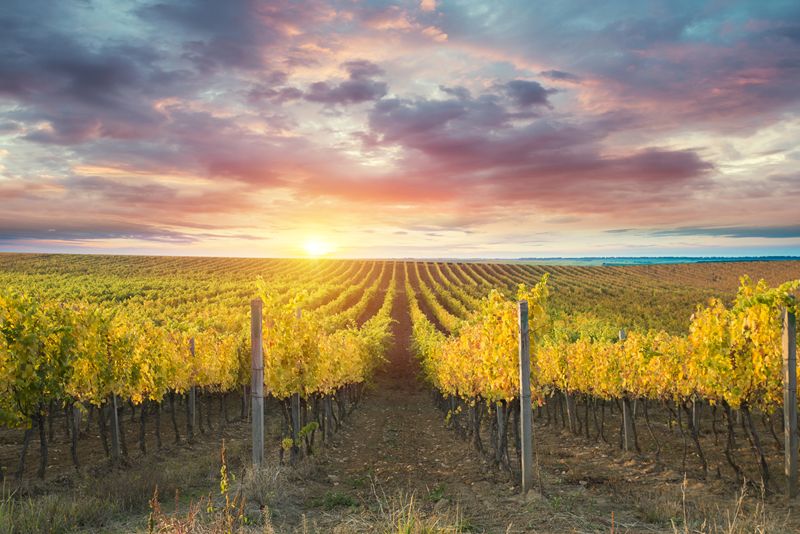
The prolonged heat matters beyond public health and energy demand because it can weigh on agriculture at a sensitive point in the growing season. For vineyards in southern France and other warm regions, repeated days above seasonal norms and very warm nights can increase water stress and speed up grape development. That can alter ripening patterns and may affect yields or fruit balance if dry conditions persist. Similar pressure can extend to barley and other crops tied to beer and spirits production.
For France’s drinks sector, that raises concern at a time when producers are already dealing with repeated early-season heat events. The weather service’s review does not assess crop losses or beverage output, but its account of sustained heat across major farming regions points to conditions that could add strain for winegrowers and other agricultural producers if high temperatures continue through summer.
