U.K. wine duty rules force importers to change 1,000 product codes a year
Drinks producers and hospitality operators say tax, labeling and packaging rules are driving up costs across the sector
Friday, June 26, 2026
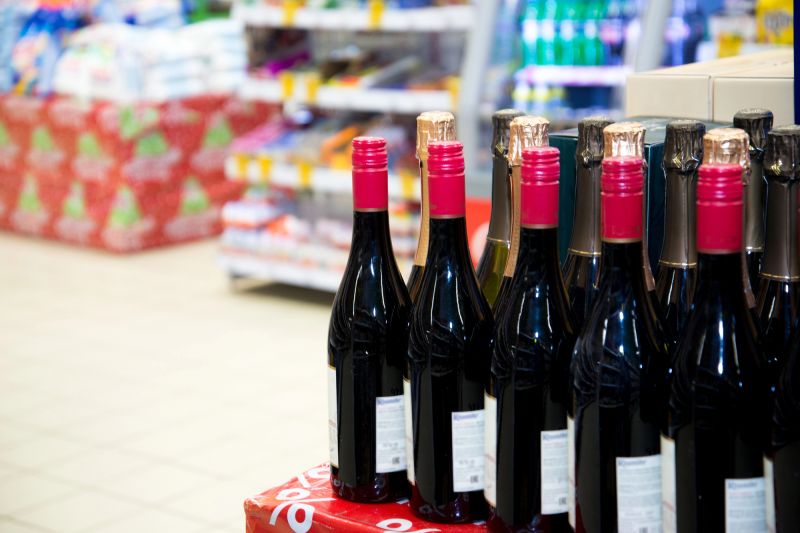
British drinks producers, importers and hospitality operators are pressing for changes to several U.K. rules they say are raising costs and adding paperwork at a time when the sector is already under strain, with wine duty, alcohol-free labeling, packaging charges and restaurant taxes emerging as the main complaints.
A central concern is the U.K.’s wine duty system, which taxes wine according to 0.5% alcohol-by-volume increments. Chris Davis, channel controller at Les Grands Chais de France, said the policy is creating “operational friction and commercial risk” by forcing companies to update prices, compliance documents and internal systems whenever a wine’s ABV shifts by 0.5%. He said that in a portfolio of more than 1,000 wines, even small variations can disrupt printed price lists, contracts and sales systems.
Davis said the company supplies more than 180 countries and that the U.K. stands out for its detailed treatment of half-degree ABV changes. He called for a return to a banded system with a flat 12.5% duty band for wines between 11.5% and 14.5% ABV.
C&C procurement director Gillian Murray described similar problems. She said the company now has evidence that about 40% of the wines it imports change ABV each year, forcing it to change about 1,000 product codes annually. When producers fail to flag those changes before shipment, she said, importers must create new codes on arrival and then manage the switch with customers on a fixed date. Murray said the process has required extra staff in ports, master data and digital teams, increasing fixed costs.
For the drinks trade, any change to this tax structure could have direct effects on compliance costs, product coding and final shelf prices, especially for importers, wholesalers and hospitality groups handling large wine ranges.
Another issue is how the U.K. defines alcohol-free drinks. Laura Willoughby, founder of Club Soda, said beverages containing up to 0.5% ABV should be allowed to use the term “alcohol free,” bringing Britain into line with the European Union. She noted that under an EU wine package approved last year, wine at up to 0.5% ABV can be labeled alcohol-free, while products using “zero” on packaging must be at or below 0.05% ABV.
Willoughby said changing the definitions would reduce consumer confusion and help exporters avoid relabeling products for different markets. She also argued that treating 0.0% as the only true alcohol-free standard would push much of the category toward dealcoholization technology and favor larger companies over producers using natural fermentation methods.
Asahi UK backed a broader definition as well. Marketing director Rob Hobart said the government’s review of alcohol-free definitions could allow products containing up to 0.5% ABV into the category. Although Asahi’s own alcohol-free brands already meet the current threshold, he said a wider classification would help retailers organize ranges more clearly, give producers more confidence to innovate and expand consumer choice.
In hospitality, tax pressure remains another major complaint. Will Beckett, co-founder of Hawksmoor, said restaurants face some of the heaviest tax burdens in the economy and pointed in particular to VAT, employer National Insurance contributions and business rates. He said as much as 75% of pre-tax profit in the restaurant sector goes to the Treasury.
Beckett said the U.K.’s 20% VAT rate for restaurants compares with an EU average of 10% to 13%. He also said 89,000 jobs have been lost since the 2024 Budget, with venues cutting hours, raising prices or closing. He argued that reducing VAT for hospitality to 10% would help marginal businesses become profitable and could ease pressure on independent pubs and restaurants, which he said make up about 80% of the sector.
Packaging regulation is also drawing criticism. Hal Wilson, co-founder and wine buyer at Cambridge Wine Merchants, said Extended Producer Responsibility rules are reasonable in principle but poorly drafted in practice. He said restaurants, bars and pubs already pay private contractors for recycling, yet suppliers still have to collect detailed information from trade customers on how much product is served by the glass versus sold by the bottle in order to complete EPR returns.
Wilson said that creates unnecessary work and leaves merchants stuck between their own obligations and customers who do not want to pay twice for recycling-related charges. He argued that most non-household waste sold into trade channels should be treated as already covered by other schemes. He also criticized what he called a punitive charge for glass under EPR, saying it is eight times higher than in Germany.
Environmental policy was another area flagged for reform. Anne Jones, a wine sustainability consultant, called for replacing multiple environmental schemes with one outcomes-based system focused on ecosystem health. She said current arrangements rely too heavily on biodiversity credits, carbon units, certifications and reporting requirements while failing to restore nature at scale. Jones argued that farmers and growers should instead be rewarded for measurable gains in biodiversity, soil health, water quality and carbon removal.
Taken together, the proposals reflect a broad push from across wine, beer and hospitality for simpler rules that reduce administrative burdens and commercial risk. For beverage companies operating across borders or managing large portfolios, even narrow regulatory definitions or small tax thresholds can ripple through labeling, logistics, pricing systems and customer contracts.