Cibus Tec completed its Africa trade mission after five stops in four countries.
Final meetings in Mozambique and Zimbabwe capped an Italian push to sell food-processing technology across Sub-Saharan markets.
Tuesday, September 22, 2026
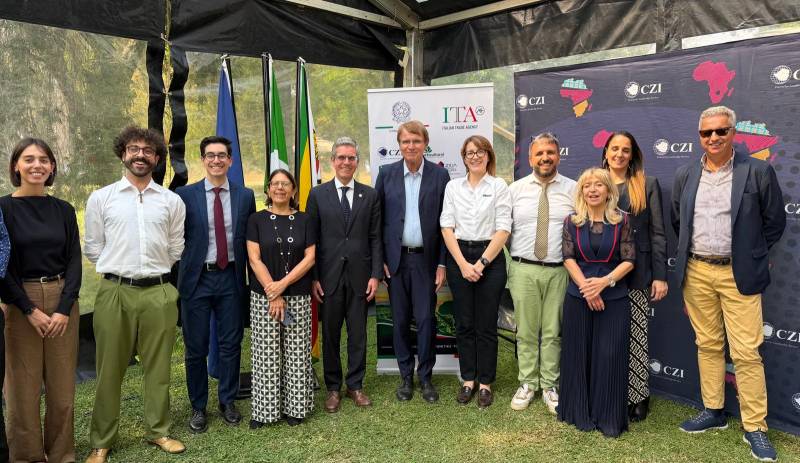
The Cibus Tec for Africa program, a series of trade missions designed to connect Italian food-processing technology companies with partners in Sub-Saharan Africa, ended this month after its final stops in Maputo, Mozambique, on Sept. 14 and 15, and Harare, Zimbabwe, on Sept. 17 and 18.
The initiative was promoted by Cibus Tec, the trade fair for food and beverage technologies held in Parma, and by Italian Agrifood Technology for Africa, a network coordinated by Renzo Piraccini that brings together Italian companies seeking to expand in Sub-Saharan markets. Organizers said the project was built to introduce Italian equipment, production systems and technical know-how to African food and agriculture operators looking to upgrade processing capacity, improve quality and strengthen supply chains.
According to information released Monday in Milan, the missions also included earlier stops in Dakar and Saint-Louis, Senegal, and Nairobi, Kenya. Taken together, the program reached five stops in four countries. At each stage, the format was similar: presentations by Italian companies, business-to-business meetings with local firms and institutions, and visits to production sites and agricultural facilities. The aim was to give Italian manufacturers direct contact with local demand while allowing African operators to assess specific technologies for processing, packaging and production efficiency.
The project was supported by the Italian Trade Agency, known as ICE, through its local offices, as well as by Italy’s Foreign Ministry and the Italian embassies involved. Organizers said that institutional support was important in securing meetings with local governments, business groups and development organizations.
In Mozambique, the Maputo event brought together about 80 stakeholders from the agri-food sector, including company representatives and public officials. The meeting was supported by the ICE office in Maputo and the Mozambique-Italy Chamber of Commerce. Among those attending were Mozambique’s agriculture minister, Roberto Mito Albino, Italian Ambassador Gabriele Annis and Fabio Strinati, director of the Italian Agency for Development Cooperation in Maputo. Representatives from the Food and Agriculture Organization, the International Fund for Agricultural Development, the World Bank, the African Development Bank and APIEX, Mozambique’s investment and export promotion agency, also took part.
The turnout in Maputo pointed to broad interest in food production and processing technologies at a time when many African countries are trying to expand domestic value-added production. Italian suppliers have targeted these markets as demand grows for machinery that can improve shelf life, reduce waste, increase productivity and support more consistent food safety standards.
The Zimbabwe mission, held in Harare, involved more than 40 business and institutional stakeholders, according to organizers. It was carried out with the support of the Italian Embassy in Harare, led by Ambassador Giuseppe Giacalone, and in cooperation with the Confederation of Zimbabwe Industries, ZimTrade, the Agricultural and Rural Development Authority and the Zimbabwe Investment and Development Agency. One of the central parts of the visit was a stop at Montgomery Farm, a large agricultural business in the Harare area, where Italian participants met local operators to discuss production needs and the type of machinery and systems that could be useful in the market.
The organizers presented the African roadshow as both a commercial effort and a market study exercise. Sub-Saharan food systems are under pressure from population growth, urban demand, infrastructure gaps and post-harvest losses. That has created interest in technologies that can extend storage life, support processing closer to farms and improve the reliability of local supply chains. Italian companies in the sector see an opening in those conditions, especially in areas such as plant engineering, packaging, quality control and industrial processing.
The conclusion of the Africa program comes a few weeks before the 54th edition of Cibus Tec, which is scheduled to take place in Parma from Oct. 27 to Oct. 30. Organizers said the international component will remain a central part of the 2026 event. They expect foreign exhibitors and brands to account for more than 30% of the total presence at the show. Of the more than 3,000 buyers expected, more than 300 are projected to come from 20 African countries.
This year’s Cibus Tec will be held at the same time as the second edition of Labotec, an exhibition focused on innovation and laboratory analysis technologies. Organizers say the joint scheduling reflects the growing role of testing, measurement and scientific analysis in food and beverage production. They also said that, starting with this edition, admission to both trade fairs will be free in an effort to widen participation among industry professionals. Registration has already opened on the event’s website.
Cibus Tec is organized by Koeln Parma Exhibitions, a joint venture between Koelnmesse and Fiere di Parma. The Africa missions gave the Parma event a direct link to markets that organizers regard as increasingly important for future growth in food production technology, especially as African companies and public agencies look for outside partners to help modernize processing capacity and build stronger agribusiness value chains.