U.S. Ban Shuts Many Canadian Alcohol Producers Out of Their Biggest Market
Small distillers say provincial monopolies and approval rules make it costly to replace lost American sales at home.
Tuesday, September 29, 2026

Views › 3184
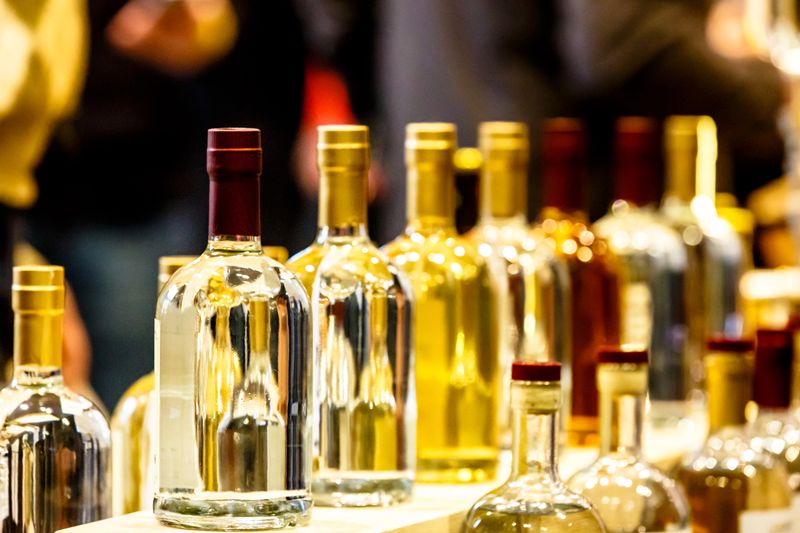
Canadian distillers, brewers, and winemakers entered Tuesday facing a new barrier in the United States and long-standing ones at home, as a U.S. ban on many Canadian alcohol imports took effect and producers said Canada’s own provincial rules will make it hard to replace lost sales.
The U.S. measures began just after midnight, widening the pressure on an industry that depends heavily on the American market. For many smaller producers, the immediate problem is not only the loss of export business but the lack of a smooth domestic fallback. In interviews reported by Reuters, alcohol makers said Canada’s provincial system remains so fragmented that selling across the country can be costly, slow, and in some cases unworkable.
John Cote, who makes Black Fox whisky and gin in Saskatchewan, said he had hoped to benefit from a surge in “buy Canadian” sentiment during the trade dispute with the United States. Instead, he said, shipping bottles to stores in other provinces remains difficult because of approvals, fees, and rules that vary from one jurisdiction to another. He told Reuters that he sold some whisky at a recent event in Ontario but lost money on each bottle after absorbing bureaucratic costs and waiting three weeks for permission.
The problem goes beyond paperwork. Much of alcohol retailing in Canada is controlled by provincial monopolies, and producers say those systems often favor local goods over products from other parts of the country. That can leave distillers, wineries, and breweries struggling to secure shelf space outside their home province at the same moment they need new buyers most.
A spokesperson for the Canadian government told Reuters there is still “much more to do” to simplify provincial regulation as U.S. trade actions intensify. The latest U.S. ban on many Canadian alcoholic beverages, along with motorcycles and dairy products, followed the collapse last month of talks involving President Donald Trump and Prime Minister Mark Carney. Canada and the United States have been exchanging rounds of trade measures since early 2025, when most Canadian provinces blocked imports of U.S. alcohol after Trump’s first tariff move.
The dispute has added urgency to a long-running Canadian debate over internal trade barriers. Carney, who took office last year, had pledged to reduce those barriers as part of a broader effort to make Canada’s economy less dependent on the United States, its largest trading partner. Last week, his government proposed legislation meant to speed approvals for natural resource projects and improve competitiveness more broadly.
On alcohol, some progress was made in July, when 9 of Canada’s 10 provinces agreed to a system that allows producers to sell directly to consumers across provincial borders. Industry figures say that change helps, but only up to a point. Direct shipping can reach individual buyers, yet it does not open the door to store shelves, which remain the main source of volume for most brands.
Eve Loignon-Giroux, a spokesperson for Dominic Leblanc, the federal minister responsible for internal trade, told Reuters the July agreement was meaningful and said Ottawa has removed all federal barriers to internal trade under its control. She said the government has pressed provinces to do the same, especially as the United States changes its trade policy and imposes what Canada views as unjustified new tariffs on Canadian goods.
Industry observers say the central obstacle is political as much as administrative. Provinces run many of the stores and warehouses that handle alcohol distribution, giving them little incentive to make access easier for out-of-province competitors. That is especially important in British Columbia and Ontario, two of Canada’s most important wine-producing provinces, where local interests can shape which products reach retail outlets.
Jeff Guignard, president of Wine Growers British Columbia, told Reuters the effort to place his province’s wines on shelves elsewhere in Canada has been consistently difficult. He said it can be easier for Canadian consumers to buy wine imported from Europe or Australia than to buy wine made in another Canadian province.
The strain is particularly sharp in spirits. According to Spirits Canada, about half of all spirits produced in the country are exported, and 93% of those exports go to the United States. Wine and beer also move south, though in smaller volumes. That makes the U.S. ban a direct threat to revenue for distillers and a wider warning for the beverage business, because it can force producers to rethink bottling, logistics, and where they try to build sales.
The new U.S. rules still allow many bulk, unbottled alcoholic imports from Canada, but they block bottled whisky and most other packaged alcoholic beverages. Analysts and distillers told Reuters that some large international companies that own major Canadian whisky brands, including Crown Royal, Canadian Club, and J.P. Wiser’s, may be able to shift bottling work to the United States and keep serving that market. Smaller producers generally do not have that option because they bottle in-house or through local facilities, leaving them effectively shut out.
That difference could reshape competition inside Canada. Large companies with cross-border operations may be better positioned to adjust their supply chains, while smaller distillers could be pushed to fight harder for domestic sales in a market that is already difficult to enter province by province. The impact is not limited to whisky. The same patchwork of rules affects beer, wine, and other spirits, and could influence which brands survive if export opportunities remain restricted.
Lauchie MacLean, owner of Glenora Distillery in Nova Scotia, told Reuters that U.S. states such as New York, California, and Illinois usually account for about a third of his sales. He said he had hoped to ship a load of single malt before the September 29 deadline, but the buyer backed away after the United States imposed 50% tariffs on some Canadian exports on August 22. MacLean said the order is now sitting in a tank on the distillery’s dock and is unlikely to head to the United States soon.
Like other small producers, MacLean said he sees only limited room to replace that lost business across Canada because the cost of entering provincially regulated markets is high. Producers say that leaves them caught between an external shock and an internal system that still blocks a true national market.
For Canada’s beverage sector, the dispute is exposing two vulnerabilities at once: heavy reliance on U.S. demand and the difficulty of moving product freely at home. Distillers appear most exposed because of their export mix, but wineries and brewers are watching the same regulatory bottlenecks as they look for new outlets. Guignard said the moment should push governments to create a genuine Canadian marketplace for alcohol and to treat domestic beverage industries more clearly as part of the country’s economic development strategy.