A third of British wine shoppers buy wine only on sale, a survey found
Its review found that major supermarkets offered at least one 20% discount on nine out of 10 days this year
Tuesday, November 17, 2026

Views › 537
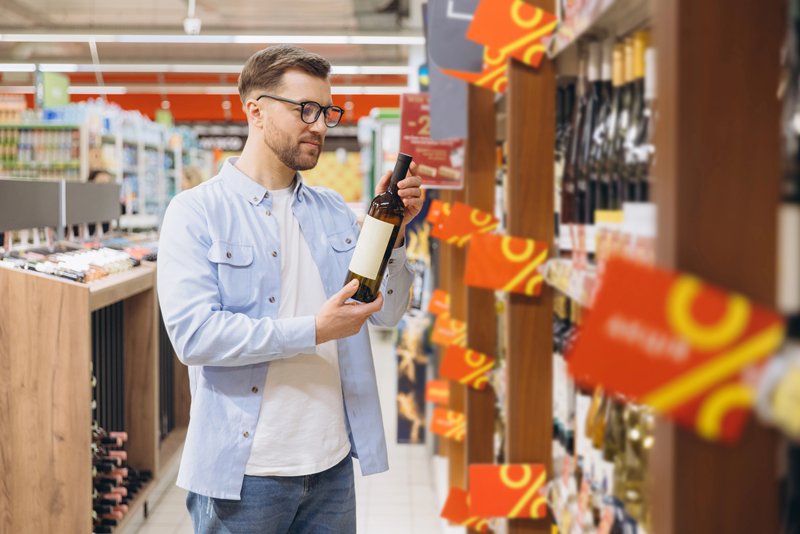
A third of British wine shoppers surveyed by WinesDirect said they now buy wine only when it is on sale, a sign that heavy supermarket discounting has become a central force in the U.K. wine market.
The research, based on a survey of 1,760 people and a price review across six major supermarket groups, found that deal-seeking has spread well beyond occasional bargain hunting. WinesDirect said 87% of respondents always or sometimes actively look for wine offers before they buy.
Its tracking of supermarket pricing pointed to near-constant promotions on some of the country’s best-known bottles. Across eight leading wine brands, every one was sold at a discount of at least 10% at a major supermarket on every day from January 1 through October 31, 2026, except for one wine that was not discounted on a single day. On nine out of 10 days in that period, WinesDirect found that at least one major supermarket was offering a discount of 20% or more.
The company monitored prices at Sainsbury’s, Tesco, Morrisons, Waitrose Cellar, Ocado and Asda. Wines tracked in the study included Oyster Bay Sauvignon Blanc, Freixenet Prosecco, Barefoot Merlot and Jam Shed Shiraz.
David Andrews, a digital marketing executive at WinesDirect, said the pattern risks changing how shoppers judge value in wine. He said constant promotions can “devalue some really good wine” that is not on sale and can lead shoppers to assume discounted prices reflect what wine should normally cost. In his view, that can make it harder for consumers to trade up or explore less familiar bottles.
Andrews said the scale of discounting appears to reflect intense competition among supermarkets for customer attention. He said one important shift is that retailers are increasingly extending offers instead of limiting them to fixed promotional windows. That, he said, has helped make discounted pricing feel more like a permanent feature of the market than a temporary sales tactic.
The findings also suggest the picture is more complex than a simple race to the cheapest bottle. While 87% of respondents said they seek out offers, 94% said taste is important or extremely important when choosing wine. By comparison, 67% said price is important or extremely important. WinesDirect said that indicates many shoppers still want quality and are not guided by price alone.
The research comes as household budgets remain under pressure in Britain, a factor Andrews said is playing a major role in buying behavior. But he also argued that some supermarkets may be using wine as a loss leader, keeping prices low on bottles to bring shoppers into stores even as other grocery prices rise faster and wine faces higher tax costs. He questioned how long that approach can last, especially with a duty increase scheduled for February 2027.
For the drinks business, the pattern matters beyond short-term sales volumes. If shoppers become used to buying only on promotion, that can reset their sense of what a normal price looks like, which may put pressure on margins, affect how retailers build their assortments and make it harder for newer or less-promoted labels to win space on shelves. Over time, that could reduce the visibility of smaller brands and narrow the path for consumers to try different wines.
Andrews said aggressive discounting can work well for shoppers who want an affordable glass of wine, but he warned that it may also discourage curiosity and deeper engagement with the category. He said it is “not great for the wine industry and people’s perception of the wine industry” because it can stop people from becoming more interested in wine.
WinesDirect said its results point to a more selective consumer base, with some shoppers actively chasing deals and others choosing retailers they see as offering dependable value, including chains such as Lidl. Jon Rebuck, the company’s managing director, said the message for retailers and brands is not necessarily to keep pushing prices lower, but to give shoppers a convincing reason to believe they are getting good value.