Italian Wine Exports Hit €8 Billion as EU-Mercosur Deal Slashes Tariffs by Over 90%
Farmers protest across Europe amid fears for local agriculture while exporters eye new markets in Brazil, Argentina, Uruguay, and Paraguay
2026-01-19
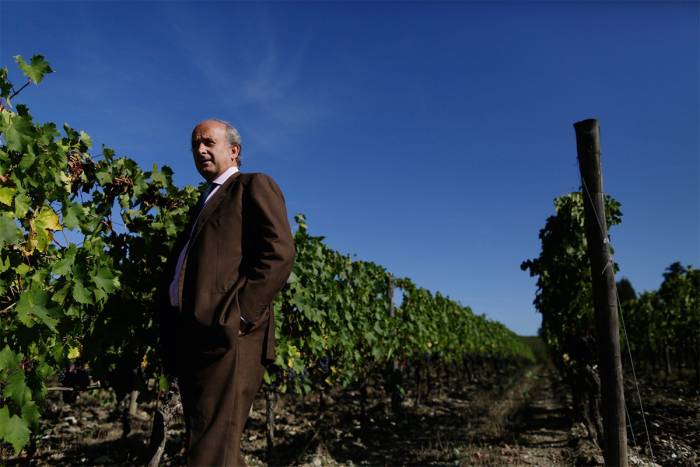
As the European Union and Mercosur signed a major trade agreement in Asunción, farmers across Europe staged protests, blocking roads with their tractors. This contrast highlights a deep divide within the continent. On one side, industries and exporters see new opportunities. On the other, farmers fear for their livelihoods. In Italy, where food and agriculture are central to both identity and economy, the debate has exposed a conflict between those who grow the products and those who sell them abroad.
Exporters of Italian wine, represented by Lamberto Frescobaldi, president of the Unione Italiana Vini (UIV), have expressed optimism about the deal. Frescobaldi acknowledged farmers’ concerns but insisted that expanding exports to South America is essential for Italian wine. Currently, tariffs on Italian wines in Mercosur countries can reach 27% for still wines and 35% for sparkling wines. The new agreement aims to gradually remove these barriers while protecting geographical indications such as Prosecco and Asti. Frescobaldi believes this will help Italian wine reach more consumers and diversify its export markets, which are now concentrated in a few countries.
Official data from the European Commission shows that in 2024, EU agri-food exports to Mercosur were worth about 3.3 billion euros, with wine facing some of the highest tariffs. The agreement includes safeguard clauses and a 6.3 billion euro agricultural reserve to address potential crises. For Italy, which exported over 8 billion euros of wine in 2024, removing tariffs in Brazil, Argentina, Uruguay, and Paraguay could be significant.
Recent figures support this view. According to UIV and ICE data from São Paulo, Brazilian imports of Italian still wine grew by 10.6% in 2024, with sparkling wines also showing steady growth. While Italy’s market share remains modest—6.5% for still wines and 14% for sparkling—the trend is positive. Lower tariffs could make Italian wines more affordable for South American consumers.
The broader food industry also welcomes the agreement. Federalimentare estimates it could add up to 400 million euros per year in exports for Italian food producers. Confartigianato notes that Italian exports to Mercosur reached 7.6 billion euros between October 2024 and October 2025, making Italy the second-largest EU supplier to the region. However, experts warn that small and medium-sized enterprises will need support—such as credit access and training—to benefit from these new opportunities.
On the other side of the debate are Italy’s main farming organizations, including Coldiretti and Confagricoltura. Their concerns focus less on wine—which benefits from strong branding and protected status—and more on products like beef, poultry, sugar, rice, honey, and soybeans. These goods may face competition from imports produced under different standards or with chemicals banned in Europe.
In December 2025, as negotiations continued in Brussels, Coldiretti called delays in signing the agreement a “victory for farmers” and criticized what they saw as weak protections. Confagricoltura also objected to early versions of safeguard clauses that they felt would be too slow or difficult to trigger if imports surged or prices fell sharply.
Pressure from farm groups led EU institutions to strengthen these mechanisms: now there will be semi-annual monitoring of imports and prices, with investigations launched if imports rise by more than 10% or prices fall by more than 10%. The final agreement was approved by EU ambassadors on January 9, 2026—with Italy’s support—and signed on January 17 in Asunción. It still needs ratification by both the European Parliament and Mercosur countries.
Farmers argue that the issue is not just about price competition but about different rules: if European producers face stricter regulations on pesticides or animal welfare, they say imports should meet similar standards. They call for three main safeguards: reciprocity (ensuring imported goods follow comparable rules), speed (quick action if imports threaten local markets), and traceability (clear labeling of origin).
The agreement promises protection for over 300 European geographical indications in Mercosur countries and alignment on winemaking standards. For Prosecco—a name also used locally in Brazil—the deal should prevent misleading uses like “Prosecco-style.” Frescobaldi called this an important achievement.
Brazil’s wine market is growing but dominated by nearby producers like Chile and Argentina who already benefit from free trade deals. In 2024, Brazilian purchases of European wine reached about 190 million euros; Italy accounted for around 40 million euros of that total. With lower tariffs, Italian producers hope to increase their share by focusing on high-value products such as sparkling wines and protected red wines.
Despite record export numbers—Italian wine sales abroad reached 8 billion euros in 2024—most exports go to just ten countries, with nearly a quarter going to the United States alone. Given new tariffs and geopolitical uncertainty affecting U.S.-bound shipments, expanding into South America is seen as a way to reduce risk.
The political stakes remain high. Recent weeks have seen farmer protests across Europe and last-minute changes to the deal before its signing in January 2026. The final text removes over 90% of tariffs but keeps quotas on sensitive products and protects key food names.
Italy’s challenge is balancing its dual identity as both an exporter of high-value foods like wine and cheese and a country with vulnerable farming sectors such as beef or rice production. The government faces pressure to ensure that gains for exporters do not come at the expense of rural communities.
Frescobaldi summed up the position of many exporters: “I am not afraid of competition when it is fair.” Whether this balance can be achieved will depend on how well safeguards are enforced at Europe’s borders—and whether both sides feel their interests are protected as trade increases between Europe and South America.

Founded in 2007, Vinetur® is a registered trademark of VGSC S.L. with a long history in the wine industry.
VGSC, S.L. with VAT number B70255591 is a spanish company legally registered in the Commercial Register of the city of Santiago de Compostela, with registration number: Bulletin 181, Reference 356049 in Volume 13, Page 107, Section 6, Sheet 45028, Entry 2.
Email: [email protected]
Headquarters and offices located in Vilagarcia de Arousa, Spain.