European Commission Begins Provisional Application of EU-Mercosur Trade Agreement After Argentina and Uruguay Ratify Deal
Move allows immediate tariff reductions and expanded market access for European exporters despite pending full ratification by EU institutions
Friday, February 27, 2026
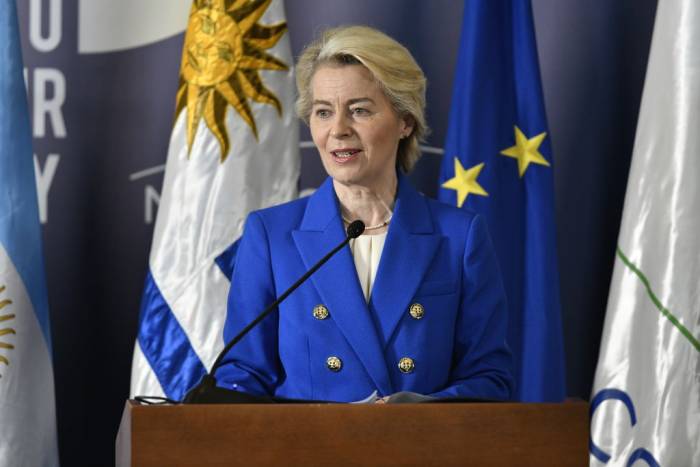
The European Commission announced on Friday the provisional entry into force of the trade section of the association agreement between the European Union and Mercosur. The decision follows the ratification of the agreement by Argentina and Uruguay, whose parliaments approved the deal late Thursday. This step allows the EU to begin applying the treaty provisionally, even though full ratification by European institutions is still pending.
European Commission President Ursula von der Leyen stated that Brazil and Paraguay are expected to ratify the agreement soon. She described the treaty as one of the most significant in recent years. The Commission’s move comes despite calls from the European Parliament to delay implementation until after a ruling from the European Court of Justice on whether the agreement complies with EU treaties. France and Poland, which have been vocal opponents of the deal, attempted unsuccessfully to block its entry into force.
Under EU law, a trade agreement can be applied provisionally once it is ratified by at least one Mercosur country and notification is sent to Brussels. The Commission must also inform Mercosur states that it will begin provisional application. Montevideo and Buenos Aires were first to complete parliamentary debates and ratify the agreement, showing broad support in South America, although some concerns remain.
The European Parliament has not yet voted on ratification, and a vote is unlikely before a legal opinion from Luxembourg judges. However, most areas covered by EU competence will be implemented provisionally. Von der Leyen emphasized that this status is temporary and that full entry into force requires approval from the European Parliament. She said the Commission will continue working with all EU institutions, member states, and stakeholders to ensure a transparent process.
The Commission estimates that the agreement could boost European exports by €84 billion and create up to 756,000 additional jobs. Mercosur will liberalize 91% of its imports from the EU, while the EU will do so for 92% of its imports from Mercosur. The opening will be gradual, with quotas and mechanisms to protect local markets. The agreement also includes stricter rules on environmental protection, labor rights, and food safety.
Negotiations for this treaty lasted 25 years, with a preliminary deal reached in Montevideo in December 2024. The wine and spirits sector in Europe has expressed optimism about new opportunities arising from reduced tariffs. Ignacio Sánchez Recarte, secretary general of the Comité Européen des Entreprises Vins (CEEV), said earlier this year that strengthening trade ties with reliable partners is crucial amid geopolitical uncertainty. The CEEV believes that progressive tariff elimination will open new opportunities for European producers, especially in Brazil, where they see strong potential for wine exports.
The CEEV has urged the European Parliament to ratify the agreement quickly. The organization argues that market diversification is essential for the sector and that this treaty offers a strategic chance to strengthen cooperation with key markets. Gradual removal of tariffs should help European producers become more competitive in South America.
For wine and alcoholic beverage producers in Europe, the agreement opens new commercial opportunities in Argentina, Brazil, Paraguay, and Uruguay. High tariffs have previously made it difficult for these products to enter markets like Brazil, where taxes could exceed 20%. Lowering these barriers will allow European wines to compete more effectively against local products or other exporters such as Chile.
Simplifying customs procedures is another important aspect of the agreement. Technical requirements and bureaucracy have delayed shipments and increased logistics costs until now. The new regulatory framework aims to harmonize rules for smoother trade between both regions.
Spanish producers of cognac, brandy, orujo, and other spirits are also expected to benefit from preferential access to South American markets. As some traditional markets in Europe or North America mature or become saturated, South America offers an alternative for diversifying export destinations. For Mercosur countries, preferential access to the EU market for certain alcoholic beverages could help balance trade between both blocs.
For the EU, this treaty strengthens its commercial position in a region where other countries already have favorable agreements. According to data analyzed by Del Rey AWM, global exports of wine and must to Mercosur countries reached 188 million liters in 2024, valued at €581.6 million. This represents 1.9% of global export volume and 1.6% of value. The average price was €3.09 per liter—below the global average of €3.63 per liter.
In comparison, exports to Mexico totaled 90.9 million liters worth €309.8 million—0.9% each in volume and value—with an average price slightly higher than Mercosur at €3.41 per liter. While these figures are modest compared to destinations like the United States—which absorbs over 1.2 billion liters annually—both Mercosur and Mexico have grown much faster than the global average.
Between 2015 and 2024, global exports to Mercosur increased by 86% in both value and volume; Mexican imports grew by 63% in value and 52% in volume during that period. In contrast, global wine trade rose by only 26% in value but fell by 4.4% in volume over those years.
The analysis shows that Mexico and Mercosur are dynamic markets for Spanish and European wines despite their current share being less than 2% each of total world exports; their growth rates outpace international averages. Future development will depend not only on tariff frameworks but also on commercial efforts and adaptation to local preferences.
However, controversy surrounds the agreement as some agricultural sectors see it as a threat rather than an opportunity. Protests took place across several European countries on Thursday and Friday as farmers argued that safeguards are insufficient to protect sensitive products from increased imports or sudden price drops while wine producers expect benefits due to their competitive position under new rules.