Global Wine Industry Faces Rising Costs as Top Concern in 2026, ProWein Report Finds
Survey of over 1,000 professionals highlights shifting consumer habits and export focus away from the United States
2026-03-02
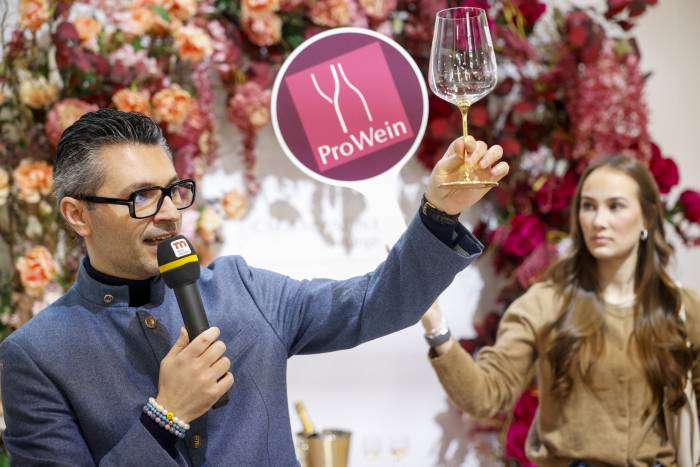
The global wine industry is entering 2026 with a cautious sense of stability, according to the latest ProWein Business Report, produced by Geisenheim University. Despite ongoing challenges, producers and traders are determined to spark a new phase of growth, even if modest. The report, based on a survey of over 1,000 industry professionals from more than 30 countries in late 2025, highlights both the difficulties and opportunities facing the sector as it prepares for ProWein Düsseldorf, one of the world’s leading wine trade fairs, scheduled for March 15-17.
Rising costs remain the most pressing concern for 75% of businesses surveyed. This is followed by reduced consumer spending power (67%) and declining consumption linked to health trends (59%). Stricter regulations on alcohol marketing and sales are also a worry for 57% of respondents. The global economic downturn is cited as a threat by 52%, alongside shifting consumer preferences toward other beverages. Issues like climate change (37%) and labor shortages (30%) have slipped down the list of immediate priorities. Only 28% see international trade restrictions such as tariffs as a major threat this year.
The report reflects on a difficult 2025, when most operators reported falling wine consumption volumes. Among small wineries, 57% saw declines, while the figure was even higher for cooperatives at 63%. Large companies reported a 44% drop, exporters 67%, wholesalers 62%, and specialized retailers 55%. Restaurants fared slightly better: 66% reported stable volumes, but only 9% saw growth while 25% experienced declines.
Price trends show that just over half of producers managed to maintain previous price levels with their customers. However, more than three-quarters noted a shift toward lower-priced wines. This trend was echoed across the commercial side of the industry.
Looking ahead to which wine categories are expected to perform best in 2026 and 2027, white wines lead the way. They are favored by 69% of producers and 64% of trade professionals. Producers also see potential in zero-alcohol wines (54%), low-alcohol wines (49%), rosé (49%), and sparkling wines including Champagne, Prosecco, and Cava (48%). For retailers, sparkling wines rank second (61%), followed by no- and low-alcohol options (54% and 53%) and rosé (51%). Confidence in red wines remains low: only 13% of producers and 26% of importers and distributors expect strong performance from this category.
The report also reveals significant changes in export market attractiveness. The United States, traditionally the world’s largest wine market, has dropped to nineteenth place due to uncertainty over tariffs and other factors. Only 17% of respondents consider it an attractive market this year. Instead, European markets dominate export strategies. Germany tops the list as the most attractive destination for wine exports in 2026, followed by the Netherlands and Japan. Canada, Denmark, Poland, South Korea, the United Kingdom, Switzerland, and Sweden round out the top ten. Brazil and China follow at eleventh and twelfth place respectively.
Italy remains a key player at ProWein Düsseldorf with 540 exhibitors—second only to Germany’s 599—despite a slight reduction compared to previous years. Italian producers continue to focus on Germany as their second most important market after domestic sales. The fair will also highlight opportunities in Northern and Eastern Europe.
ProWein organizers have positioned this year’s Business Report not just as an analysis but as a strategic tool for decision-making in a transforming industry. Early access has been granted to survey participants and exhibitors starting February 6. New initiatives include themed whitepapers on export strategies amid geopolitical uncertainty, opinion papers from leading industry figures, and “Visionary Talks” designed to connect analysis with future perspectives.
In parallel with the wine sector report, ProWein is launching its next survey round for spirits through the ProSpirits Business Report. This initiative aims to provide similar strategic insights for the international spirits market following its successful debut last year.
As ProWein Düsseldorf approaches, industry leaders are preparing for discussions that will shape strategies for navigating cost pressures, changing consumer habits, regulatory challenges, and shifting global demand. Italy will play a prominent role at both ProWein and Vinitaly in Verona from April 12-15 as producers seek new paths forward in an evolving global market.
