Bordeaux’s 2025 Primeurs Open With Mixed Prices
Buyers remain cautious as top châteaux raise or trim release prices despite praise for the vintage.
Friday, May 15, 2026
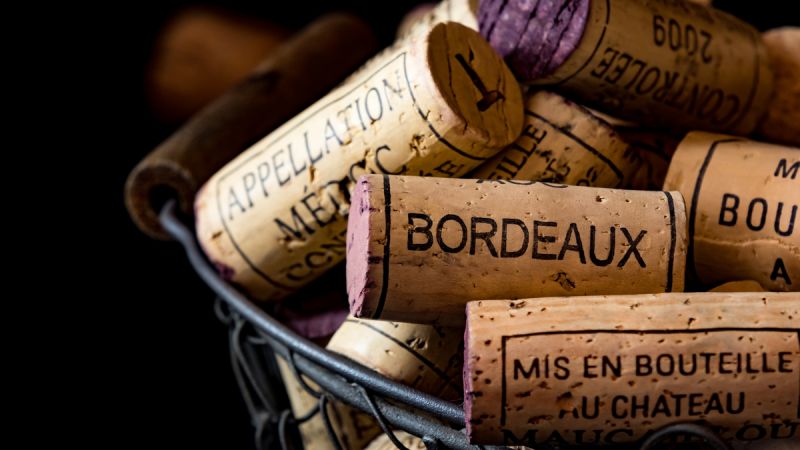
A few days after Bordeaux’s 2026 “Semaine des Primeurs,” the first releases from the 2025 vintage are showing a market that is still cautious, even as early reports point to very high quality and low yields. Some châteaux have cut prices slightly, others have raised them, and a few of the best-known names have pushed higher in a sign that producers are trying to balance strong critical praise with a trade that remains wary of buying wine years before delivery.
Cheval Blanc set one of the clearest signals so far, pricing its wine at 366 euros a bottle ex-négociant, up 20% from 2024. La Fleur-Petrus also moved higher, at 1,450 pounds a case in London, up 7%, while Pontet-Canet released at 756 pounds, up 5%. But other estates took a different path. Château Batailley priced its wine at 289 pounds a case in London, down 3.4% from last year, while Haut-Batailley rose 10% to 363 pounds a case. Château du Tertre followed a similar pattern with a price of 288 pounds a case. More releases are expected in the coming days, but the opening round already suggests that Bordeaux is entering this campaign without a clear direction on pricing.
That uncertainty reflects a broader problem for Bordeaux’s en primeur system. The model once gave buyers access to wines at attractive prices before bottling and release. Today, many négociants and distributors say the financial commitment no longer makes sense in the same way, especially when older vintages remain available on the market at competitive prices. Several Italian distributors contacted by WineNews said they are less interested in buying futures than they were in the past, and some participate only marginally or not at all.
Tom Burchfield, head of market intelligence at Liv-Ex, said there is still “a lot of reluctance” around Bordeaux en primeur and that members of the platform expect sales to fall again this year. He noted that Bordeaux remains the world’s most important wine region, but its share of Liv-Ex trade value has dropped from 85% 15 years ago to about 35% today. He said prices have stabilized over the past eight months, especially for 2021 and earlier vintages, and added that 2025 looks better than 2024. Still, he said demand will depend heavily on whether release prices offer enough of a discount to comparable wines already on the market.
The quality of the 2025 harvest has been widely praised, but low yields are also shaping the discussion. Burchfield said that scarcity alone will not guarantee strong sales if prices are too ambitious. He pointed out that recent vintages such as 2022 still appear to have room to fall further, while older vintages and some more recent ones that corrected quickly, including 2021, look more stable.
Italian distributors echoed that view. Cesare Turini of Heres said the mood around Bordeaux mirrors the wider wine market: high quality, but also caution. He described 2025 as potentially one of Bordeaux’s historic vintages from a technical standpoint, but said liquidity is now central to buying decisions. En primeur requires capital to be tied up for two or three years before bottles reach the market, and many operators now prefer wines that are ready to drink and can be sold immediately.
Turini said some wines will still perform well en primeur, especially when quality is paired with limited production. He cited Cheval Blanc as an example because its 2025 crop was about half of a normal year and is already being discussed as one of the vintage’s signature wines. But he said the market has become more selective and that Bordeaux no longer sells automatically on name alone.
Marcello Meregalli of Gruppo Meregalli was even more direct, saying the en primeur system “does not work anymore” in its current form. He argued that buyers no longer gain enough by committing money early and taking on market risk for two years or more. He said prices may continue to ease in order to bring bottles back into restaurants and retail channels after years when Bordeaux became too expensive for many buyers.
Alessandro Sarzi of Sarzi Amadè said only the most famous crus are likely to see strong demand in this campaign, while second-tier estates may struggle. He said Bordeaux remains the global reference point for red wine but is going through a difficult phase and responding with skill through style changes and commercial flexibility.
Carlo Alberto Sagna of Sagna said quality is no longer enough on its own because excellent wine can now be found in many regions. What matters more, he said, is consistent pricing over time. He added that distributors can often buy wines at release for prices close to en primeur levels without tying up capital in advance, which weakens the appeal of futures purchases.
Alessandro Rossi of Partesa said this year’s primeurs felt different from the more euphoric campaigns of the past. He described a climate of greater prudence and stronger attention to commercial realism. According to Rossi, many producers now understand that credibility matters more than aggressive pricing and that wines offering real value against current market levels are more likely to succeed.
Even among those who remain positive about Bordeaux’s long-term role, there is broad agreement that the market has changed. Gianluca Telloli of Proposta Vini said interest is returning to actual consumption rather than speculation and noted growing attention to Bordeaux whites as well as more accessible styles and price points. Pietro Pellegrini said early releases so far suggest an interesting quality-to-price relationship but added that too little has been released to draw firm conclusions.
At Monte Carlo’s Hôtel de Paris, Gennaro Iorio said any producer thinking about raising prices now would be making a strategic mistake given current conditions. He pointed instead to 2023 as an undervalued vintage with strong value for money.
For now, Bordeaux’s 2025 campaign is unfolding under pressure from both sides: producers want to defend prestige after two years of steep price cuts, while buyers want proof that en primeur still offers an advantage over wines already sitting in warehouses and cellars around the world.