High Court Decision Reopens U.S. Market to European Wines
Transatlantic shipments expected to rebound as uncertainty fades
Friday, February 20, 2026
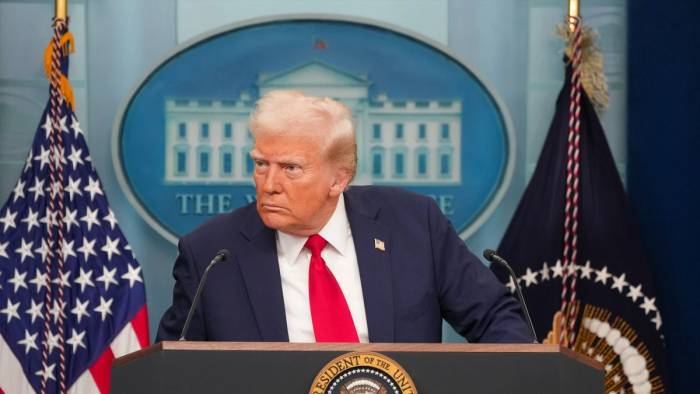
The United States Supreme Court ruled on Friday that the International Emergency Economic Powers Act (IEEPA) does not give the president authority to impose tariffs, marking a significant defeat for President Donald Trump’s trade agenda since his return to office. The decision, reached by a 6-3 majority, upholds a lower court’s finding that the White House exceeded its powers by using the 1977 law to levy so-called “reciprocal” or “global” tariffs. Justices Clarence Thomas, Samuel Alito, and Brett Kavanaugh dissented.
The ruling directly challenges the administration’s interpretation of IEEPA as a tool for imposing broad tariffs without explicit congressional approval. The majority opinion emphasized that while IEEPA allows the president to regulate imports during a national emergency, it does not mention tariffs or duties and cannot be used as a blanket authorization for such measures. The Court stated that any extraordinary power to impose tariffs must come from clear congressional authorization.
President Trump had warned in January that a ruling against his use of IEEPA would be “a complete disaster,” predicting it would force the government to reimburse “billions” of dollars in collected tariffs. The global tariffs announced in April 2025 were quickly challenged by several states and U.S. companies, including wine and spirits importers, who argued that the president overstepped his authority by bypassing standard legislative procedures.
The Supreme Court heard arguments in November 2025 after a federal court found that the administration had improperly invoked emergency powers to impose tariffs on dozens of trading partners. The Court of International Trade had already ruled in May that the president’s actions under IEEPA were unlawful.
With this decision, thousands of companies affected by increased import costs now have grounds to seek refunds. The Penn Wharton Budget Model estimates potential refunds could reach up to $175B, creating immediate fiscal and administrative challenges for U.S. Customs and Border Protection, which will need to process claims and documentation from importers seeking reimbursement.
For the wine and spirits sector, the impact is especially pronounced. V.O.S. Selections, a major wine and spirits importer, was among the lead plaintiffs challenging the tariffs. Industry groups such as Wine & Spirits Wholesalers of America welcomed the decision as restoring predictability and congressional oversight to tariff policy.
The ruling does not eliminate all tariffs imposed during Trump’s presidency—only those based on IEEPA. Other tariffs grounded in statutes like Section 232 or Section 301 remain in effect or could be reactivated through more traditional legislative or investigative processes. However, these alternative routes are slower and require more procedural steps, reducing the risk of sudden changes in trade policy.
Economists expect only modest relief for consumers in terms of lower prices, since much inventory was purchased under the old tariff regime and pass-through effects vary by product category. However, businesses that rely on imported goods—especially those with thin margins like wine importers—will benefit from reduced uncertainty and improved cash flow if refunds are processed efficiently.
The decision also shifts leverage in international trade negotiations. Without IEEPA as a rapid-response tool for imposing tariffs, future administrations will need to rely on slower statutory mechanisms or seek new authorizations from Congress. This change is likely to reduce abrupt policy shifts and provide more stability for global supply chains.
For European wine producers—particularly those in France, Italy, and Spain—the ruling opens an opportunity to regain lost market share in the U.S., especially in mid-priced segments where demand is sensitive to price changes. During the period when tariffs were in effect, many European exporters saw sales decline while U.S. producers benefited from reduced competition. With tariffs lifted, European wines are expected to become more competitive again.
U.S. producers may face renewed pressure as imported wines regain their price advantage. Some domestic wineries will need to adjust pricing strategies or increase marketing efforts to maintain their positions in restaurants and retail outlets.
Logistics providers specializing in beverage transport anticipate increased transatlantic shipments as trade flows normalize and distributors move away from stockpiling inventory out of fear of sudden tariff hikes.
The Supreme Court’s decision also raises questions about future trade policy frameworks. Congress may choose to clarify or redefine presidential authority over tariffs through new legislation, but any such move would likely spark further debate over executive versus legislative control of trade policy.
In summary, Friday’s ruling marks a turning point for U.S. trade law by reinforcing congressional authority over tariff policy and limiting the president’s ability to act unilaterally under emergency powers. The immediate effects will be felt most acutely by importers seeking refunds and by sectors like wine and spirits that were directly targeted by recent tariff measures. Longer term, the decision signals a shift toward more predictable—and potentially less volatile—trade relations between the United States and its global partners.