Green Gen Technologies Enters Liquidation After Failing to Secure Funding for Eco-Friendly Wine Bottles
French start-up’s collapse halts rollout of innovative flax and carton packaging amid industry skepticism and financial hurdles
2026-03-10
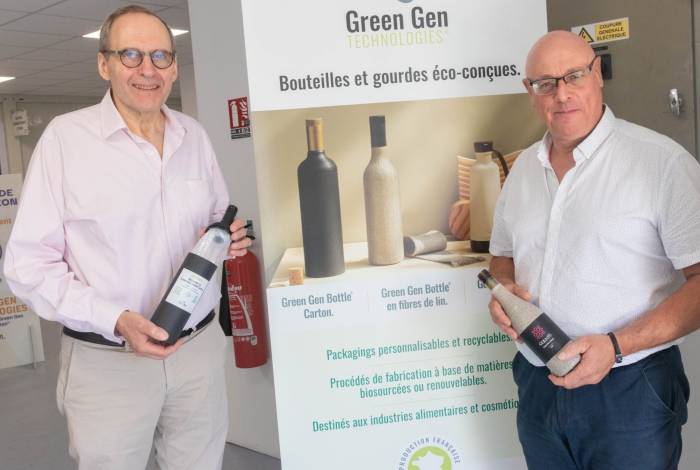
Green Gen Technologies, a start-up based in Bergerac, France, has been placed into judicial liquidation by the Bergerac commercial court. The decision, made on January 13, follows the company’s declaration of insolvency as of December 1, 2025. Green Gen Technologies specialized in developing eco-friendly packaging for wine and spirits, including a lightweight flax bottle and a carton bottle. The company announced that all interested parties are invited to contact the court-appointed liquidator in Bergerac regarding the acquisition of its assets.
Founded in 2022, Green Gen Technologies introduced three main products: a biosourced wooden water bottle, a 78-gram flax bottle for wine and spirits launched in 2022, and a 114-gram carton bottle for wine that began rolling out to select wineries in 2025. The carton bottle was at the center of a €1.8 million fundraising effort at the end of last year, intended to finance the industrialization of its production. According to the company’s statement, there was a test run of 200,000 units with Intermarché, a major French supermarket chain, as well as a project with the Société des Alcools du Québec (SAQ) in partnership with a prominent Médoc vineyard.
Green Gen Technologies promoted its bottles as having a lower carbon footprint compared to traditional glass bottles. The company claimed that its packaging solutions could help reduce the environmental impact of wine and spirits distribution. However, some industry professionals criticized these new containers for their use of plastic materials inside the bottles. For example, the inner lining of the carton bottle used recyclable polyethylene (PE-EVOH), similar to what is found in bag-in-box packaging. This plastic layer was necessary to ensure liquid containment and preservation but raised questions about the overall sustainability of the product.
Another point of contention was that Green Gen’s bottles were opaque, unlike traditional glass bottles that allow consumers to see the color and clarity of the liquid inside. While this limited visual inspection by buyers, it did provide producers with more space for branding and communication on the entire surface of the bottle.
Despite initial interest from retailers and international partners, Green Gen Technologies was unable to secure enough funding to continue operations. The planned industrial-scale production did not materialize after the failed fundraising round. Unless an investor steps forward to acquire and revive its assets, Green Gen’s innovations in sustainable wine packaging will remain unrealized.
The liquidation marks another setback for efforts to introduce alternative packaging in an industry dominated by glass bottles. While environmental concerns are driving innovation in wine and spirits packaging worldwide, challenges remain around consumer acceptance, regulatory approval, and balancing sustainability with product quality and safety. The outcome for Green Gen Technologies highlights both the opportunities and obstacles facing start-ups seeking to disrupt traditional beverage packaging with new materials and designs.

Founded in 2007, Vinetur® is a registered trademark of VGSC S.L. with a long history in the wine industry.
VGSC, S.L. with VAT number B70255591 is a spanish company legally registered in the Commercial Register of the city of Santiago de Compostela, with registration number: Bulletin 181, Reference 356049 in Volume 13, Page 107, Section 6, Sheet 45028, Entry 2.
Email: [email protected]
Headquarters and offices located in Vilagarcia de Arousa, Spain.