France will let farmers base social contributions on current-year income in 2027 and 2028
Eligible MSA members can elect the experimental option through their personal account from Oct. 1 to March 31, 2027
Thursday, November 12, 2026

Views › 211
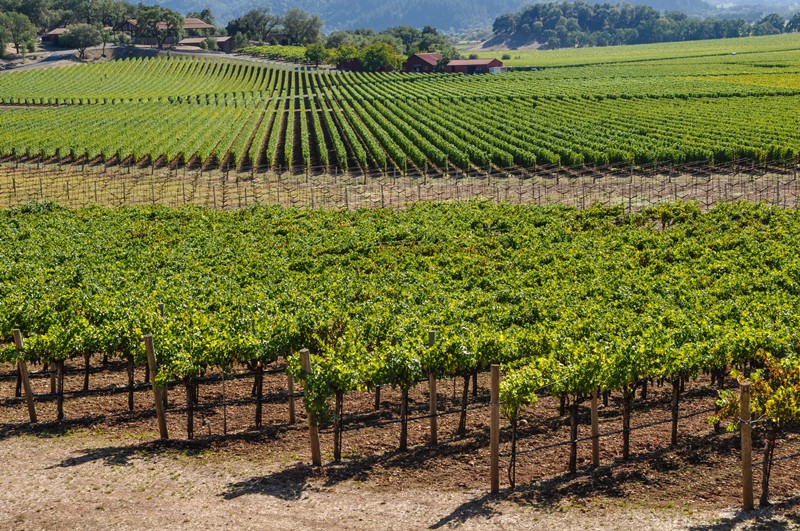
French farmers covered by the MSA, the country’s farm social security system, will be able to choose an experimental method in 2027 and 2028 that calculates social contributions on income earned in the same year, instead of relying only on the prior year’s income or a three-year average. The change is meant to bring contribution payments closer to current business conditions and, in some cases, reduce cash-flow strain.
The new option was created by France’s 2026 social security financing law and became operational after an implementing decree issued on Sept. 24. In an interview published Wednesday, November 11, by Réussir, Gaëlle Le Peltier, head of agricultural tax and social matters at Cogedis, said farmers can activate the option through their personal MSA account from Oct. 1 until March 31, 2027.
Until now, self-employed farmers generally had two choices for the contribution base: income from the previous year, known as N-1, or a three-year average covering N-1, N-2 and N-3. The new experimental option adds a third possibility, known as N, or the current year. Under that approach, farmers pay contributions provisionally on the basis of expected income for the same year in which the contributions are due.
The option is open to MSA members regardless of whether they currently use the prior-year method or the three-year average, as long as their contributions are based on actual income rather than a flat-rate basis. That means some newly established farmers who are still under flat-rate rules would not qualify.
When choosing the option, the farm operator must declare projected income for 2027. According to Réussir’s report, that projection cannot be lower than the income level tied to minimum contributions and cannot exceed the annual social security ceiling, placing the range between €8,300 and €48,900. Monthly or installment-based contribution calls would then be issued on a provisional basis using that estimate. A final adjustment would come in summer 2028, after the farmer files the 2027 income declaration in May 2028.
Le Peltier said farmers may have an interest in waiting until February 2027 before making the choice, because that would give them a clearer view of market conditions and expected earnings for the months ahead. Even if the forecast later proves far from the final result, the report said no penalty or surcharge would apply because of that gap.
The election is made one year at a time. It is not renewed automatically, but once chosen it cannot be reversed for that year. In the following year, the farmer can return to the system used before the experiment or choose the current-year option again. As the rules now stand, the trial applies only to 2027 and 2028 contributions.
Supporters of the measure present it mainly as a cash-flow tool. The logic is that a farm with weaker current income would no longer have to keep paying contributions based on stronger earnings from earlier years. That could matter in sectors where results change sharply from one season to another. For the drinks industry, the measure could be especially relevant for wine growers, whose social charges may be better aligned with the income of the current harvest year, potentially easing treasury pressure when production or sales fall after a stronger vintage.
The benefit is not the same in every case. Réussir reported that the system works most directly for projected income at or below the annual social security ceiling, because the provisional contribution calls would broadly reflect the final amount due. For income above that ceiling, the farmer would still have to account for a balance due starting in summer 2028.
Le Peltier said the option is likely to be most attractive for farms that close their accounts in the first half of the year and that posted solid results in 2025-2026 but expect lower income in 2027. In that situation, the current-year basis would prevent those stronger earlier earnings from remaining in the contribution base. Farms that close accounts in the final quarter of the year may find the choice harder, because by the March 31, 2027 deadline they would have less visibility on their likely annual result.
The new mechanism is different from France’s existing system that allows farmers to modulate advance payments. That older tool lets them report expected annual income in order to adjust installments and avoid a large balance at year-end if earnings shift sharply. But it does not change the legal basis on which contributions are calculated. The new N-year option does.
The measure also has tax implications. For farms under the micro-BA regime, Le Peltier said there is no tax effect. For farms taxed on actual agricultural profits, lower social contributions would mechanically increase taxable income. For many farmers, that may still leave more disposable income because income tax rates are often lower than social contribution rates, according to the interview. Even so, a higher taxable income could push some households above thresholds used for family benefits or other social support, which means advisers are urging farmers to run simulations before deciding.
The same caution applies to France’s precautionary savings deduction, known as DEP. Réussir reported that farmers who are currently under the prior-year method and switch to the 2027 current-year basis would not pay social contributions on their 2026 income, and any DEP amounts brought back into taxable income would therefore not automatically feed into the social contribution base for that year.
A simulation cited by the publication illustrated how the option can change timing. In one example, a farm that had income of €70,000 in 2025-2026 and then saw income fall to €40,000 in 2026-2027 would keep paying on the higher figure under the prior-year method in 2027, while the experimental current-year method would align the 2027 contribution base with the lower €40,000 result much sooner.