Osborne Debuts Its First Carlos I Whisky in Century-Old Sherry Casks
The Spanish drinks company is extending a brand long tied to Brandy de Jerez with a single malt aged six years.
Friday, October 9, 2026
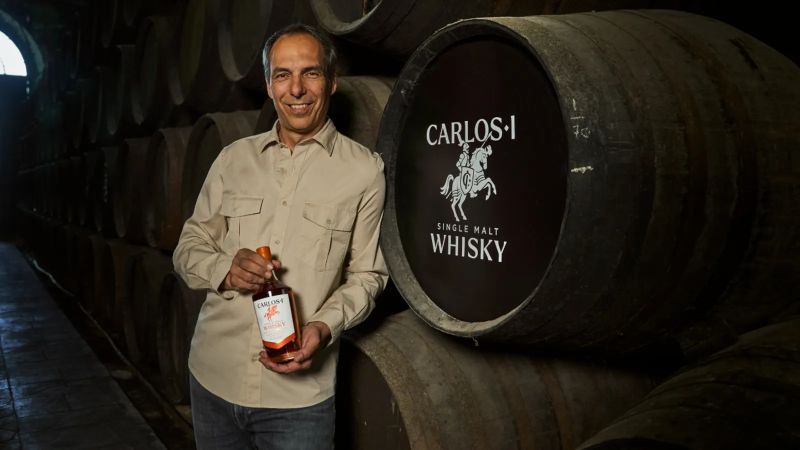
Osborne has expanded its Carlos I line beyond Brandy de Jerez with the release of Carlos I Single Malt, the first whisky sold under one of the company’s best-known historic brands. The launch marks the company’s entry into a category that had not previously been part of the Carlos I portfolio and reflects an effort to bring its long experience in the aging of sherry wines and brandies into the whisky market.
The new whisky is made with 100% Spanish malt and is tied closely to Osborne’s aging cellars in El Puerto de Santa María, in the province of Cádiz. The company said the product was created to connect the identity of a single malt whisky with the cask tradition that has shaped its business for more than two centuries in the Jerez region.
The central feature of the new release is its six-year aging process, which Osborne said is based on a two-stage maturation in casks linked to the company’s historic soleras. In the first stage, the spirit spends four years in casks that are about 70 years old. According to the company, those casks previously held Osborne Oloroso and Amontillado sherries for five decades and were later used for another 20 years to age Carlos I Solera Gran Reserva Brandy de Jerez.
The second stage lasts another two years in casks that had previously been used for VORS Amontillado 51-1ª and Oloroso Sibarita sherries. Osborne said those casks were made by hand more than a century ago and are part of the company’s historic stock. During the final period of aging, the whisky is also handled through the traditional criaderas and solera system, with repeated transfers intended to increase contact between the liquid and the wood and to shape the whisky’s final profile.
Osborne is selling Carlos I Single Malt as a non-age statement whisky, or NAS, a category in which the age does not appear on the label. In that part of the market, producers often place more emphasis on cask selection and blending decisions than on an age declaration. Even so, the company has disclosed that the whisky undergoes six years of maturation, a detail it presents as part of the product’s identity.
The company argues that the main point of difference lies in the casks. Osborne maintains a collection of soleras that includes old wines and premium brandies, among them VORS and other limited references aged for more than 30 and 40 years. Some of those soleras produce fewer than 800 bottles a year, while others are not sold commercially, the company said. Part of that stock has now been incorporated into the aging path of the new whisky.
Production begins outside Cádiz. The barley malt is milled in Granada, and the company said the mash is prepared with water from the Sierra Nevada thaw. The wort is then fermented and double-distilled in copper stills. After distillation, the spirit is moved to Osborne’s bodegas in El Puerto de Santa María, where the long aging process takes place in casks previously used for sherry wines and Brandy de Jerez.
The move is significant for a company whose Carlos I name has long been associated with Brandy de Jerez rather than whisky. By attaching the brand to a single malt, Osborne is broadening a label that has traditionally been linked to Andalusian fortified wine and brandy culture. The release also places the company in a segment where producers increasingly seek distinction through local raw materials, cask history and production methods tied to a specific region.
Marcos Alguacil, Osborne’s master blender and winemaker, said the choice of casks shaped the whisky from the beginning. In comments released by the company, he said each cask carries its own history and that aging the distillate first in Carlos I Brandy de Jerez casks and later in casks used for old Osborne VORS wines gave the whisky a profile meant to reflect the craftsmanship and heritage of the Jerez area.
Alguacil also said the goal was not to repeat established formulas in the whisky category. He said he wanted to create a product with a lasting identity and that this led him to select what he described as some of Jerez’s most historic casks. Osborne said the resulting whisky shows a golden amber color and notes of prunes, candied fruit, chocolate and wood on the nose, followed by spices, nuts and ripe fruit on the palate, with a long finish marked by the influence of sherry cask aging.