Golden Vines report finds fine-wine buyers are turning more selective
Some 52% of respondents cited choosier purchasing, saying drinkers now favor quality, authenticity and value over status
Friday, November 20, 2026

Views › 262
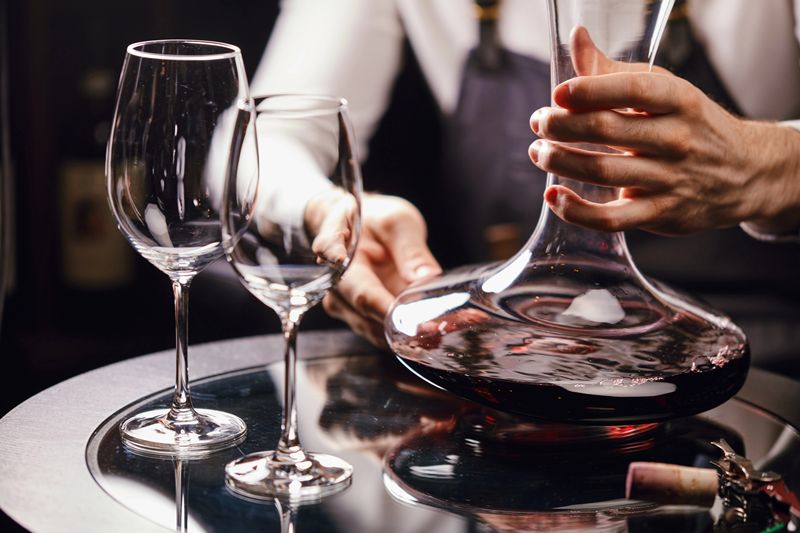
Buyers in the fine wine and rare spirits market are becoming more selective and are placing more weight on quality, authenticity and value than on status, according to the 2026 Golden Vines Report, a survey-based study of Golden Vines Academy members that points to a broad change in how high-end bottles are being bought and sold.
The report describes the change as a fundamental shift. Among respondents, 52% said the clearest change in buyer behavior is more selective purchasing. Another 40% said the market is going through a needed reset after years of excess and mispricing, while 28% said further declines are possible if the trade does not adjust to changing consumer expectations.
At the center of that change is a move toward buying fewer bottles with a sharper focus on what consumers actually want to drink. The report says buyers are giving more importance to the quality of the wine or spirit and to the experience of consuming it, rather than treating the purchase mainly as a symbol of wealth or prestige.
Lewis Chester, co-founder and chief executive of Liquid Icons, the organizer behind Golden Vines, said the findings show an industry in significant transition. He said the shift toward drinking less but drinking better reflects a growing interest in authenticity and in the experience of enjoying wine.
The report suggests that motivations for buying are also changing. Some 27% of respondents said consumers are moving away from purchases driven by investment or status and toward bottles meant for near-term enjoyment. It said that pattern is especially visible among younger buyers, for whom buying wine to cellar for long periods is becoming a more specialized activity.
One of the clearest warnings in the report concerns en primeur, the long-established system in which wine is sold before bottling and release. Only 2% of respondents said they believe the system can recover without major changes. At the same time, 31% said it is commercially outdated and 37% said it needs to be modernized.
That finding matters beyond the collector market because advance sales have long been an important commercial tool for wineries, merchants and distributors, especially in regions that depend on early allocations and futures-style offers. If buyer appetite for that model continues to weaken, producers and sellers may need to rethink pricing, release strategies and how they communicate value to customers.
The report also shows that confidence remains uneven across wine regions. Burgundy and Champagne were identified as the strongest performers in terms of long-term confidence, while Bordeaux moved back into third place. That ranking suggests that even as the market changes, established regions with strong brand power and clear identity continue to hold buyer trust.
At the same time, respondents pointed to several areas gaining momentum. Spain was cited by 15% of respondents, while Portugal and Piedmont were each named by 8%. South Africa was also highlighted as a region drawing greater attention. Those responses indicate that buyers may be broadening their interest beyond the most traditional centers of the fine wine trade, especially when they see stronger value or a more distinctive story behind the bottle.
For the drinks business, the survey offers a signal about demand at a time when many producers and merchants are trying to judge how much of the recent slowdown is cyclical and how much reflects a deeper change in consumer priorities. A market that rewards careful purchases, immediate enjoyment and perceived value could favor wineries and spirits brands that are able to build direct trust with buyers, while putting pressure on those still relying on scarcity, prestige pricing or older sales formats.
Chester said the findings also point to opportunity for producers and brands that are willing to adapt. He said meaningful connections with consumers, supported by clear storytelling, provenance and value, are likely to become more important in shaping the market.
Taken together, the survey paints a picture of a fine wine and rare spirits market that is not simply contracting, but changing in character. Buyers still appear willing to spend on top bottles, but the report suggests they are doing so with more caution, more scrutiny and a clearer idea of what they want from the purchase.