Bordeaux Winemakers Reopen the Irrigation Debate After Repeated Droughts
Growers say hotter summers and low yields are forcing France’s largest wine region to reconsider a longtime taboo.
Tuesday, October 6, 2026
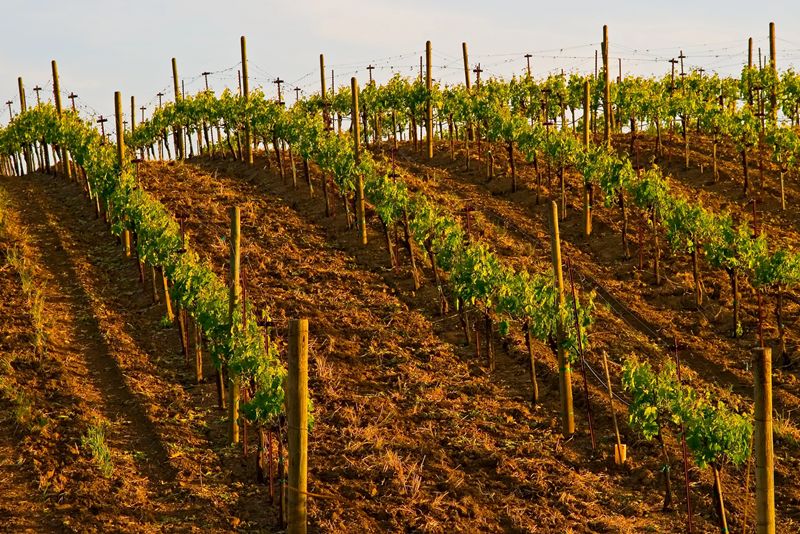
Bordeaux winemakers are reopening a debate that for years was close to untouchable in one of France’s most traditional wine regions: whether the area’s vineyards should be irrigated as drought and repeated heat waves put new pressure on vines and growers.
The discussion is gaining force across the Bordeaux region, the country’s largest appellation-controlled vineyard, as producers face hotter summers, lower yields and a long-running economic crisis that has already pushed thousands of hectares out of production. While the current harvest is expected to deliver good quality, the Bordeaux wine trade group, the CIVB, says volumes will be small because rain did not come in time to swell the grapes.
Last year’s harvest in Gironde, the department that includes most of Bordeaux’s vineyards, was already very low at 2.9 million hectoliters, after a state-backed vine removal program led to the uprooting of large areas. Growers say the latest dry season has intensified concern about how the region can adapt to climate change without undermining the identity of its wines or worsening pressure on local water supplies.
“We have rarely seen a drought like this,” Stephane Gabard, president of the Syndicat des Bordeaux and Bordeaux Supérieurs, said in remarks reported in France. His organization represents more than half of local production.
Gironde’s chamber of agriculture opened what it called a necessary review of irrigation in July, citing recurring drought. Its wine commission was due to take up the issue in early October. The debate reflects a clear shift in tone in Bordeaux, where irrigation has long been viewed with suspicion because of concerns about preserving the expression of terroir and protecting water resources.
Jean-Samuel Eynard, president of the departmental chamber of agriculture and a winegrower in the Côtes de Bourg area, said some parts of Bordeaux’s terroir will need irrigation, especially soils that hold little water. He said watering young vines may become essential to establish new plantings and replace dead vines, and suggested that treated wastewater could be one possible source.
Derogations already allow young vines to be watered during the growth phase. What some growers now want is broader permission for irrigation in times of severe drought, a major change for a vineyard that covers about 86,000 hectares and has long presented dry farming as part of its identity.
Eynard said the resistance remains strong among some traditionalists. In his view, the argument now is whether producers should simply accept what each vintage brings, even if extreme weather becomes more frequent, or whether adaptation has become unavoidable.
At Saint-Quentin-de-Caplong in eastern Gironde, grower Rolland Grenouilleau said the subject should no longer be treated as taboo, noting that irrigation is already accepted in other French wine regions, including parts of Occitanie. Grenouilleau, who is also a grain farmer and sheep producer, said the year had been especially difficult on his 15 hectares of vines. He recently pulled out another 20 hectares.
He said temperatures came close to 45°C to 50°C, conditions he described as very hard on plants. Vines do not need large amounts of water, he said, but they need a minimum supply to make it through the season, produce a crop and provide growers with a viable income.
Grenouilleau and several neighboring farmers are considering a hillside reservoir that would capture winter rainfall. The project would not only support the vines, he said, but also help diversify crops at a time when wine overproduction has become a serious issue in Bordeaux.
Gabard said he had long opposed irrigation on his own vines in Galgon, in Gironde. But he said repeated very dry and very hot years had changed the terms of the discussion, especially on gravelly soils that drain quickly. He said the region also cannot ignore the broader public question of whether using freshwater on vineyards would be socially acceptable.
That question is central to critics of wider irrigation. The Smegreg, a consultative body that monitors Gironde’s deep aquifers, has warned that the volumes required would be extremely large. It estimates that irrigating all 86,000 hectares of vineyard at a rate of 1,500 cubic meters per hectare each year would require more water than the 110 million cubic meters currently withdrawn annually for drinking water for the department’s 1.7 million residents. Those withdrawals already come from an aquifer system the body describes as overexploited.
The Adour-Garonne water agency has not yet formally taken up the issue, but it has indicated that the matter belongs on the agenda of its next basin committee meeting, where all water users are represented. That meeting is scheduled for December.
The scale of the possible need, however, is itself disputed. Cornelis van Leeuwen, a professor of viticulture at Bordeaux Sciences Agro, said parcels that are highly exposed to drought account for less than 10% of the Bordeaux vineyard and argued that the region still receives substantial rainfall overall. In his view, irrigation is not necessary in Bordeaux because growers still have significant room to adapt in other ways.
Van Leeuwen said those alternatives include changing plant material, especially grape varieties and rootstocks that are better suited to hotter and drier conditions. Trials on new varieties are already under way. If the most vulnerable parcels are replanted with the right combinations, he said, irrigation may no longer be needed.
For researchers and growers alike, the dispute is about more than farming technique. Bordeaux’s reputation has been built on the idea that its wines reflect place, climate and vintage variation. Some producers worry that routine irrigation would blur that model or weaken the region’s environmental claims at a time when consumers are paying closer attention to water use and sustainability.
Others say the issue is becoming practical rather than philosophical. The region is already under strain from climate change, falling consumption, weak prices and vineyard removals. In that context, some growers argue that refusing to consider irrigation could make parts of Bordeaux harder to sustain, especially where soils dry out quickly and young vines struggle to survive.
The pressure is likely to grow as the climate warms further. For now, Bordeaux has not embraced irrigation in the way some vineyards in Spain, Italy or the New World have done. But in a region where the idea once drew near-universal opposition, the fact that major industry groups, local officials and established growers are openly discussing it marks a significant change. Van Leeuwen said that if Bordeaux can adapt through varieties and rootstocks instead, the region would be better placed to present itself as an environmentally responsible producer.