Italy’s Agriculture Minister Signals a Pause in New Vineyard Plantings
Francesco Lollobrigida said high inventories may justify a temporary brake on the annual 1% planting allowance.
Friday, September 18, 2026
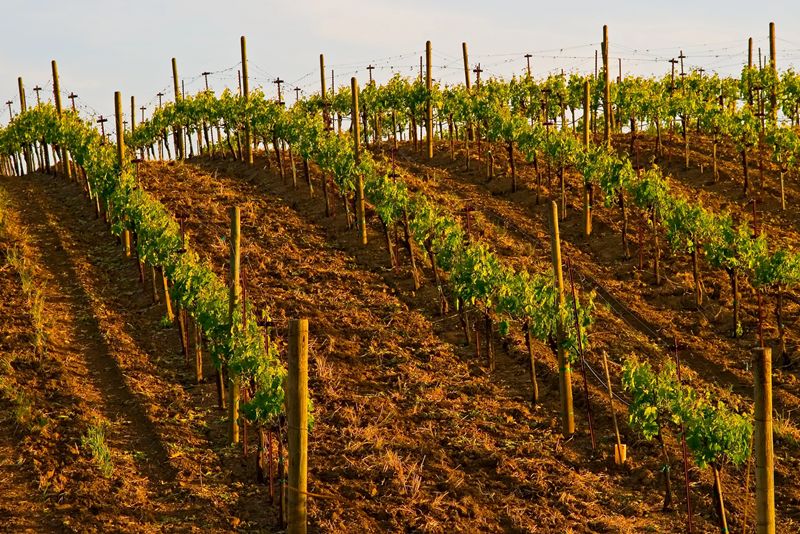
Italy’s agriculture minister, Francesco Lollobrigida, used a visit to the Langhe during the Barolo harvest to signal caution on vineyard expansion, saying the wine industry is going through what he called a “phase of adjustment” because of high stock levels.
According to Gambero Rosso, Lollobrigida spoke in the Piedmont wine region as growers began one of the country’s most closely watched harvests. The minister linked the current market strain to large inventories and indicated that Italy may need a temporary brake on the annual 1% allowance for new vineyard planting authorizations.
His comments point to a more defensive approach by the government at a time when producers are trying to balance supply with weaker market absorption. In practice, the authorization system governs how much new vineyard area can be added each year. A pause or reduction, even if temporary, would affect decisions on land purchases, planting schedules and medium-term production plans across the wine industry.
Lollobrigida’s remarks, as reported by Gambero Rosso, suggest the government is looking for a way to slow expansion without moving to harsher measures. The report said the idea of a temporary stop is being discussed as a way to avoid uprooting vineyards, a step that would carry stronger financial and political consequences for producers and rural communities.
The Langhe was a significant setting for the message. The area is home to Barolo, one of Italy’s most important and internationally recognized wines, and harvest-time statements there carry symbolic weight well beyond Piedmont. By making the case during the vendemmia, Lollobrigida placed the discussion in front of growers and wineries as they assess both the size and commercial value of the new crop.
The minister’s intervention comes as many European wine producers face pressure from slower consumption, changing export conditions and accumulated stocks. While the Gambero Rosso report centered on Italy, the issue is part of a broader debate in wine-producing countries over whether planted area has grown faster than demand in some parts of the market. In that context, limiting new authorizations is one of the fastest regulatory tools available to governments that want to manage supply without directly intervening in prices.
For the beverage sector, the issue matters because rules on new vineyard plantings can shape the balance between supply and demand for years. They can also influence investment decisions not only for grape growers and wineries, but for bottlers, distributors, equipment suppliers and other businesses tied to wine production. If fewer new vineyards are approved, that could help reduce the risk of deeper oversupply, but it could also slow expansion plans for companies that had expected more capacity.
The annual 1% ceiling on new planting authorizations has long been a key reference point for the industry because it sets the outer limit for growth. Any move to suspend or freeze that margin, even temporarily, would be read as a sign that Rome sees current stock levels as high enough to justify tighter control. At the same time, a pause would not have the same finality as uprooting, which removes productive capacity rather than simply delaying new expansion.
Gambero Rosso did not indicate in the material reviewed whether the measure has already been formally adopted or remains under discussion, and the report did not provide a detailed timeline for any administrative decision. That leaves open how quickly any change could take effect and whether it would apply nationally or be tailored in some way by region or appellation.
Even so, the signal from the minister is likely to be closely watched by producer groups and local consortia, especially in areas where vineyard values are high and new plantings are tightly linked to long-term brand strategies. A temporary halt could be welcomed by operators worried about excess supply, while others may argue that limiting new capacity risks penalizing younger producers or businesses seeking to enter the market.
Lollobrigida’s focus on an “adjustment” phase suggests the government is framing the problem as a cyclical imbalance rather than a structural retreat by the sector. That distinction is important for growers because it implies a short-term effort to stabilize the market, not necessarily a lasting reversal in policy. Still, the debate over new planting authorizations is likely to intensify if inventories remain elevated and if producers enter the next marketing cycle without a clear improvement in sales.
In the near term, the minister’s comments add a policy layer to a harvest season that is already economically sensitive. Producers in Barolo and other major wine regions are not only watching the vines, but also the signals coming from Rome about how much room the industry will have to expand while the market works through excess stock.