Napa Valley’s WineaPAWlooza raises nearly $1.93 million in its biggest auction yet
The charity event for Jameson Humane drew a record crowd, lifting lifetime fundraising to $17.9 million.
Tuesday, August 18, 2026
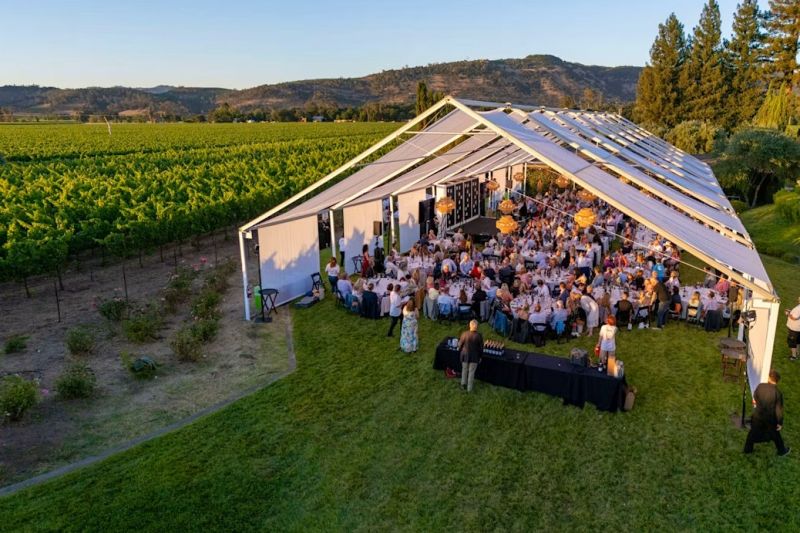
Napa Valley’s WineaPAWlooza charity wine auction raised nearly $1.93 million during its June event, marking the strongest turnout in the fundraiser’s history and adding to a long-running effort to finance animal welfare work in Northern California. Organizers said the 13th edition of the auction drew its largest crowd to date at Castellucci Estate in Oakville and pushed the event’s lifetime fundraising total to $17.9 million.
The money will support Jameson Humane, the Napa-based nonprofit behind the event. The organization was founded in 2014 by Monica and David Stevens and provides services that include animal rescue, adoption, foster care, spay and neuter programs, disaster-response support and financial help for pet owners. WineaPAWlooza has become one of the more visible charity gatherings on the Napa calendar by combining high-end wine donations with experiences tied closely to the region’s winemaking community.
This year’s auction included about 20 lots, many of them donated by Napa wineries and vintners. The offerings ranged from rare bottles and private tastings to meals and travel-style experiences built around well-known vineyard sites and winemakers. Several lots were structured to allow multiple winning bidders, which helped lift the final total.
The highest single bid of the event came for a 6-liter bottle of 1994 Screaming Eagle donated by winery founder Jean Phillips. The bottle sold for $290,000, making it the top lot of the evening. The price reflected both the rarity of the wine and the continuing demand for older vintages from one of Napa Valley’s most sought-after labels.
The second-largest total came from a lunch at the Beckstoffer To Kalon vineyard with vineyard owner Andy Beckstoffer and several prominent winemakers. Organizers said the lot raised $150,000 in less than two minutes as 30 bidders each secured tickets at $5,000. The rapid sale showed the strong appeal of access-based experiences tied to major Napa names, especially when the event’s charitable purpose is clear to buyers.
Other lots also brought in significant amounts. A golf and dinner package at Mayacama Golf Club in Sonoma with vintners Tor Kenward and Alex MacDonald raised $80,000 from three couples. A comparative Napa-Bordeaux tasting at Ovid, featuring wines from Dominus, Heitz, Eisele, Château Latour, Smith-Haut-Lafitte, Pontet-Canet and others, raised $45,000 from three couples. One bidder alone spent $100,000 for a 10-case allotment of a custom-made Martha’s Vineyard Cabernet Sauvignon from winemaker Russell Bevan. Organizers said the wine will be a one-off blend created specifically for the buyer and not offered elsewhere.
The fundraiser was structured as a two-day event rather than a single auction night. The opening evening began with a tasting of To Kalon wines and a discussion led by master of wine Vanessa Conlin, joined by Napa winemakers and Matt Stamp of Compline Restaurant. The second night featured dozens of Napa Valley wines paired with a vegan dinner prepared by Daniel Gomez Sanchez and Elliot Bell, both alumni of The French Laundry. Bell is now the owner and chef of Charlie’s in St. Helena, a restaurant that has received Wine Spectator’s Best of Award of Excellence.
Music was also part of the program. Napa band Wristrocket performed during the event, a detail that carried added meaning because the late David Stevens, who co-founded WineaPAWlooza with Monica Stevens, had been a member of the group. That link to the event’s origins remains central to how organizers present the fundraiser, which was built around a combination of local wine culture and animal welfare advocacy.
The event’s results reflect the continued willingness of Napa Valley collectors and donors to spend heavily on charity lots tied to rare wines and personal access to high-profile producers. In a region where auction giving has long been part of the philanthropic culture, WineaPAWlooza has carved out a niche by directing those dollars to animal-focused services rather than the more common education or health causes. This year’s nearly $1.93 million haul suggests that the model remains effective, especially when backed by scarce bottles, recognizable vineyard names and a cause that draws broad support across the valley.