Study finds Portuguese white grapes show greater aroma shifts across vintages
Researchers tracking six native Dão varieties found genetics shaped key volatile compounds, with red aroma precursors remaining more stable.
Thursday, September 3, 2026
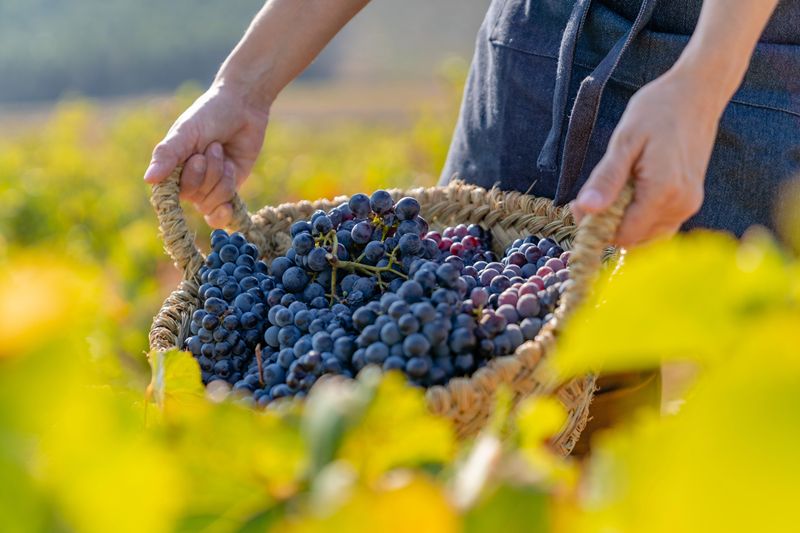
A two-year study of six Portuguese grape varieties has found that both grape genetics and annual weather patterns shape the aroma compounds that can later define a wine’s style, though the balance between those factors differs between white and red grapes. The research, published on Sept. 2 in the peer-reviewed journal OENO One, offers one of the most detailed looks yet at the aromatic profile of several traditional varieties grown in the Dão region of northern Portugal.
The work focused on three white grapes — Encruzado, Malvasia Fina and Terrantez — and three red grapes — Coração de Galo, Jaen and Touriga Nacional. Researchers followed fruit from the 2023 and 2024 growing seasons at the Dão Viticulture and Oenology Research Centre, where vineyard conditions and weather were tracked through the season. At harvest, they measured standard ripeness markers such as sugar, acidity and pH, and then analyzed volatile compounds, the molecules linked to floral, fruit, herbal and spice notes, with comprehensive two-dimensional gas chromatography and time-of-flight mass spectrometry.
The study comes at a time when many wine regions are reassessing lesser-known native grapes as climate pressures grow. The authors noted that minority and local varieties are drawing more attention because some have shown tolerance to drought and high temperatures, can ripen over longer cycles and may help preserve quality in warmer conditions. Portugal is especially important in that discussion. The paper noted that the country holds a large pool of grape diversity, with about 230 varieties native to Portugal or the Iberian Peninsula and 343 grapevine varieties authorized for wine production under national rules. Even so, detailed information on aroma chemistry remains limited for many of them, especially in northern Portugal.
The researchers set out to separate the effect of variety from the effect of year. The two vintages they studied were not identical. In 2023, the growing season was warmer, with a growing season average temperature of 19.5°C, compared with 19.1°C in 2024. The vineyard also recorded 50 days above 30°C in 2023, including five days above 40°C, versus 43 days above 30°C and two above 40°C in 2024. Nighttime temperatures during ripening were warmer in 2023. But the water story was more complex. Although rainfall totals from April to September were similar, September rain in 2023 helped refill soil moisture late in the season. In 2024, the soil water balance kept falling toward harvest, producing a stronger cumulative water deficit.
That contrast mattered. For the white grapes, the researchers found that the varietal aroma potential index, a measure tied to aroma precursors that can later release aromatic compounds, changed significantly depending on both the variety and the year. In practical terms, that means the three white grapes did not all react the same way to annual weather conditions. The results suggest that the pool of bound aroma compounds in white varieties may be more sensitive to year-to-year climatic variation.
For the red grapes in the trial, the picture was different. Their varietal aroma potential index did not show a significant response to year, variety or the interaction of both. The authors said that points to a more stable pool of aroma precursors in the red varieties they examined, at least under the conditions of this study. That does not mean the red grapes were unchanged from one year to the next. It means that the broader index of aroma potential remained steadier, while individual volatile families still shifted.
When the researchers looked at those individual volatile compounds, they found that white varieties were driven mainly by varietal identity, especially in terpenes and C13-norisoprenoids, two groups often tied to floral and fruit-related aromas. Year effects were stronger for C6 compounds, which are often linked to green or fresh notes, and especially for benzenoids. In red grapes, the volatile profile reflected a more mixed influence of genetics and season. Terpenes and C13-norisoprenoids showed strong year-by-variety interactions, meaning each red grape responded differently to the conditions of 2023 and 2024. C6 compounds were influenced largely by variety, while benzenoids were shaped mostly by year.
The basic fruit chemistry also showed consistent varietal traits. Among the white grapes, Terrantez stood out in both years with lower sugar levels, higher total acidity, lower pH and higher malic acid. Those traits can matter to growers and winemakers looking for freshness and balance in warmer seasons. Among the reds, Coração de Galo had the highest total acidity in both years, while Jaen repeatedly showed lower acidity and higher pH. Touriga Nacional, one of Portugal’s best-known red grapes, consistently had the lowest sugar concentration in the study.
The paper is also notable because some of the varieties in the trial remain lightly documented in aroma research. According to the authors, the volatile profile of these traditional grapes from the Dão region had not previously been explored in this way. By using a high-resolution analytical method, the team aimed to build a more complete “fingerprint” for each grape at harvest, rather than relying only on broad measures of ripeness or on finished wine assessments.
For the beverage industry, the findings could have practical value beyond academic description. Wineries and growers working with native or minor grapes often need clearer data on what each variety can deliver aromatically and how stable those traits are from one season to the next. That kind of information can help with planting choices, grape selection and vinification decisions aimed at preserving regional identity or building distinct wine styles. It may also support efforts to give lesser-known grapes a stronger commercial role, especially as producers look for ways to diversify portfolios rather than depend on a small group of international varieties.
The study does not settle how these grapes will perform in every site or every wine, since it covered one region over two consecutive years. But it adds a stronger base of evidence for varieties that have often been discussed more for heritage than for measured aroma potential. In Dão, where native grapes remain central to local viticulture, that evidence may give producers a clearer sense of which varieties hold the most promise for specific wine profiles as hotter and drier growing seasons become more common.