Stendhal Ristorante Locanda expands its appeal to Parma food travelers
The 10-room property in Colorno ties local dishes to overnight stays, betting on demand for rural experiences in Food Valley.
2026-08-17
A restaurant-and-inn property in Sacca di Colorno, near Parma in northern Italy, is expanding its profile as a food and lodging destination tied to the culinary identity of the Bassa Parmense, the lowland area along the Po River known for its cured meats, filled pastas and long dining traditions.
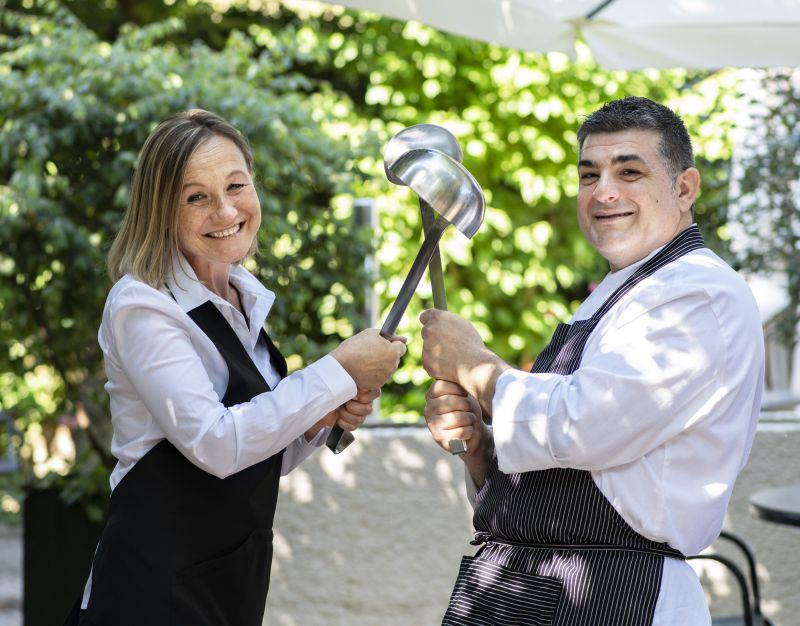
The business, called Stendhal Ristorante Locanda da Francesco, is run by chef Francesco Ambrosini and his wife, Eugenia Volkova. According to information released by the property, the couple have built the project around two linked activities: a restaurant focused on local cooking and an inn with 10 rooms for travelers visiting the wider Parma area.
The property is in Sacca di Colorno, a small locality a short drive from the Ducal Palace of Colorno, one of the area’s main historic landmarks. It is also roughly 15 kilometers, or about 9 miles, from both Parma and Brescello. That places it within reach of two strong draws for visitors: Parma, which has built an international reputation around gastronomy, and Brescello, known as the setting for the Don Camillo and Peppone films.
The Stendhal name reflects a literary connection that the owners have made central to the identity of the house. Inside the restaurant, they preserve a plaque recalling a passage from “The Charterhouse of Parma,” the novel by Stendhal, in which Fabrizio del Dongo and the Duchess Gina Sanseverina are said to stop in the area during their flight from the charterhouse. The business uses that reference to link the site to local memory and to a broader image of Parma as a place where culture and cuisine overlap.
Ambrosini, who was born in Castelnuovo Magra in Liguria and later settled in Emilia, presents his cooking as a meeting point between regional tradition and a more contemporary approach. The property says he trained within the orbit of chefs Angelo Paracucchi and Mauro Ricciardi before working for years between La Spezia and the Versilia coast. He later moved to Emilia-Romagna, where his kitchen shifted toward the products and dishes of the Parmense plain.
His public profile in Italy grew in 2011, when he won “Il Campanile Italiano,” a competition featured on the RAI Uno television program “La Prova del Cuoco.” The property also says he is a member of Disciples Escoffier International, serves as prefect of the Italian Association of Historical Gastronomy and belongs to a local consortium of Parma restaurants focused on quality standards and territorial identity.
The inn side of the business is designed on a small scale. It has 10 rooms in total, including 6 standard doubles and 4 French double rooms. Two of the double rooms are fully accessible for guests with disabilities. The interiors are described by the property as vintage in style, with furnishings meant to echo older residences rather than modern chain hotels. Breakfast is served in a dedicated room and is centered on regional products, part of a strategy that treats the overnight stay as an extension of the food experience rather than a separate service.
The restaurant occupies two floors and can handle both regular dining and private events. Indoors, it has about 120 seats, while the outdoor areas can accommodate about 140 more. Management says the layout is used for business lunches and dinners, ceremonies, private parties, meetings and conferences, in addition to regular table service. The structure also reflects the literary theme behind the name, with several rooms named after figures or settings connected to Parma’s historical and fictional past.
On the first floor, two of the most defined dining rooms are the Sala Ferrante Palla, which faces the garden and seats up to 20 guests, and the Sala del Conte Mosca, a smaller room for private tables with space for up to 14. Upstairs, the largest room is the Sala della Corte di Parma, which can hold up to 130 people and includes a partition wall and a bar area, making it suitable for larger receptions, meetings or dancing. Two more intimate rooms, the Sala della Certosa and the Sala della Torre Farnese, hold up to 8 and 12 guests respectively.
Outside, the garden space is known as Il Chiostro Verde, or the Green Cloister. The area includes a covered portico that is used heavily in warm weather for aperitifs, dinners and parties. The owners say wisteria covers the structure in summer, reinforcing the country-house atmosphere they want to associate with the property. The garden can host up to 130 guests.
The food program is rooted in dishes identified strongly with the lower Parmense area. The menu begins with local cured meats, served with torta fritta, the puffed fried dough that is a fixture of Emilia tables. From there, the kitchen moves into the fresh filled pastas that define the area’s home cooking. Among them are anolini served in a three-meat broth, tortelli d’erbetta filled with greens and ricotta, and pumpkin tortelli prepared alla parmigiana.
The restaurant also gives special attention to bread-making and to dishes that depend on slower service traditions. One of the best known is the boiled meats trolley, a classic presentation in which different cuts are cooked and served with sauces or condiments at the table. The kitchen also highlights farmyard poultry and small game, categories that have long been part of rural cooking in the region but that now appear less often in mainstream restaurant dining.
Desserts follow the same regional and handcrafted approach. The property points in particular to its cream gelato, made to order with vertical Carpigiani equipment, a reference that signals both technical method and Italian gelato tradition. The wine list is described as a selection of local and national labels chosen to match the kitchen’s dishes, though management did not provide figures for the size of the cellar or the depth of its regional representation.
For the tourism economy of Parma province, the model is familiar but still important: a business that combines lodging, event space and a kitchen tied closely to local products in order to capture travelers who increasingly plan trips around food. The Food Valley label, used widely in the area around Parma, has become a major tool for attracting those visitors. Properties like Stendhal are trying to build on that interest by offering not only meals but a broader immersion into place, using architecture, literary references and overnight stays to keep guests on site longer.
That strategy also reflects how competition has changed in the region. Travelers visiting Parma for Parmigiano Reggiano, prosciutto di Parma and related food routes are no longer looking only for city-center restaurants. Many now seek country addresses that can connect a meal with a historical site, a slower pace and a sense of local identity. In that context, a property in Colorno has an advantage. The town sits within easy reach of Parma while also carrying its own cultural weight through the former ducal palace and its ties to court life and cuisine.
Stendhal’s owners are presenting the house as an open, family-style destination rather than a formal luxury retreat. In practical terms, that means moderate room inventory, a restaurant large enough for local events and celebrations, and a menu built around foods that are immediately legible to travelers who come to Emilia-Romagna looking for a recognizable regional table. The combination is intended to serve day-trippers, wedding parties, business groups and longer-stay visitors moving through the Parma countryside.
