Champagne Shipments Fall 2% Globally as U.S. Market Defies Downturn With 1% Sales Growth
French domestic demand drops while American consumers boost Champagne and Prosecco, even as tariffs and economic uncertainty loom
2026-01-22
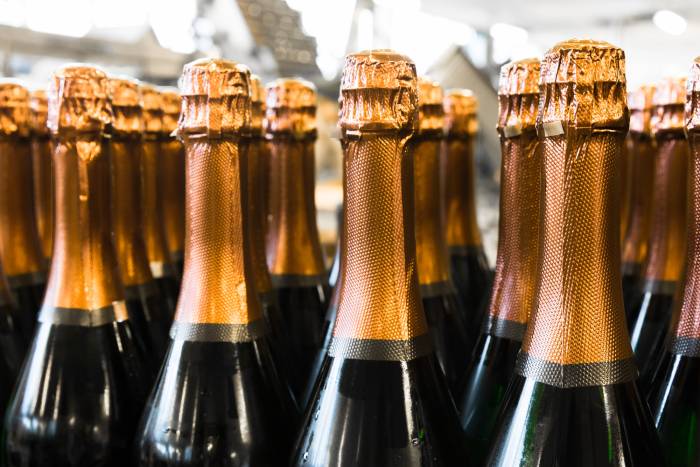
Initial figures for 2025 show that global Champagne shipments declined by 2% to 266 million bottles, or about 22 million cases, according to data released by the Comite Champagne. The drop was mainly driven by a 3.3% decrease in the French domestic market, which fell to 114 million bottles (9.5 million cases). Exports held steady at around 152 million bottles (12.7 million cases), showing resilience despite broader market pressures.
In the United States, Champagne remains a rare growth area within the wine sector. Moët Hennessy’s Veuve Clicquot and Moët & Chandon brands together account for 63% of the roughly 1.5-million-case Champagne market in the U.S., according to Impact Databank. While overall wine depletions in the U.S. have now declined for 52 consecutive months, with on-premise sales continuing to slip, Champagne has managed to buck the trend. The Wine & Spirits Wholesalers of America (WSWA) noted that Champagne now makes up nearly 17% of sparkling wine revenue and continues to show growth.
Retail data from NielsenIQ for the 52 weeks ending December 27 shows that total sparkling wine sales in the U.S. dropped by 4.2% in volume and 3% in value. However, Champagne sales grew by 1% in dollar terms and 0.4% in volume, outpacing the broader sparkling category.
Prosecco has also performed better than most other sparkling wines. In NielsenIQ channels, Prosecco’s volume increased by 0.1%, while value rose by 0.5% over the same period. Gallo’s La Marca brand led the Prosecco segment, finishing 2025 with approximately 3.5 million cases sold, according to Impact Databank.
The Prosecco DOC Consortium reported that shipments to the U.S. were up by 8% through September last year, making up nearly one-quarter of all Prosecco exports. This upward trend is notable as both Champagne and Prosecco likely benefited from U.S. importers increasing their orders ahead of higher tariffs that took effect last spring.
The future of these categories is uncertain as new U.S. threats loom over French wine imports, including possible tariffs of up to 200% on Champagne and other French wines. Industry leaders are watching closely to see how these potential levies will affect shipments and pricing in 2026.
The Comite Champagne highlighted ongoing challenges facing the industry, citing geopolitical instability, changing consumer behaviors, stock adjustments, and inflation as factors contributing to an unpredictable environment for producers and exporters.
Giancarlo Guidolin, president of the Prosecco DOC Consortium, acknowledged these difficulties but emphasized efforts to maintain value across the supply chain and continue sustainable practices. He also noted plans to expand Prosecco’s Low Alcohol line (8-9%) in response to growing consumer demand for lighter products.
As both categories navigate a complex landscape shaped by economic pressures and shifting trade policies, producers are focusing on adaptability and innovation to secure their positions in key markets like the United States.

Founded in 2007, Vinetur® is a registered trademark of VGSC S.L. with a long history in the wine industry.
VGSC, S.L. with VAT number B70255591 is a spanish company legally registered in the Commercial Register of the city of Santiago de Compostela, with registration number: Bulletin 181, Reference 356049 in Volume 13, Page 107, Section 6, Sheet 45028, Entry 2.
Email: [email protected]
Headquarters and offices located in Vilagarcia de Arousa, Spain.