Agroscope Approves Seven Disease-Resistant Grape Varieties After Fifteen Years of Research
New grapes promise to cut fungicide use by up to 90% and support sustainable winemaking in Switzerland and France
2026-02-05
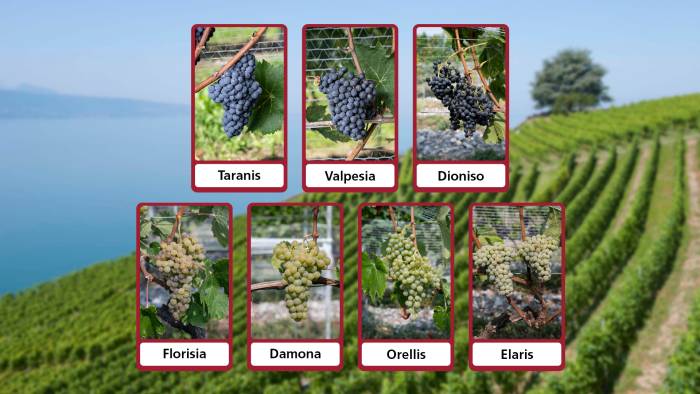
Agroscope, the Swiss center for agricultural research, has announced the official approval of seven new grape varieties that show strong resistance to major fungal diseases and offer promising winemaking qualities. The announcement was made on January 29 in Martigny, Switzerland, during the Agrovina trade fair. These new varieties are the result of more than fifteen years of research and selection work.
The newly approved grape varieties are named Florisia, Elaris, Orellis, Damona, Valpesia, Dioniso, and Taranis. Four of these are white grapes and three are red. Each variety carries at least two resistance genes against downy mildew and powdery mildew, which are the two most significant fungal threats to vineyards worldwide. This approach, known as gene pyramiding, is designed to provide more stable and long-lasting resistance by making it harder for pathogens to adapt.
In addition to their resistance to downy mildew and powdery mildew, these new grapes also show low sensitivity to black rot and botrytis. Field trials conducted in different wine regions across Switzerland and France have demonstrated that these varieties maintain their resistance even in years with high disease pressure. However, researchers recommend one or two fungicide treatments per year to prevent loss of resistance and to control other secondary diseases. This represents a reduction of 80% to 90% in phytosanitary treatments compared to traditional grape varieties.
The development of these new grapes was a collaborative effort between Agroscope and INRAE, the French National Research Institute for Agriculture, Food and Environment. The breeding program combined grape varieties selected by both institutes for their winemaking potential and disease resistance. The resistance genes were sourced from American grape species such as Vitis rupestris, Vitis aestivalis, Vitis rotundifolia, as well as from Asian species like Vitis amurensis.
The selection process involved several stages: crossbreeding parent vines, testing young plants for disease resistance in greenhouses, evaluating performance in vineyards, and conducting small-scale winemaking trials. Out of thousands of seeds planted since 2009, only the most promising plants were kept for further development. This rigorous method has already led Agroscope to create recognized resistant varieties such as Divico, which is now widely planted in Switzerland.
These new grape varieties are part of a broader effort to produce high-quality wines while reducing the environmental impact of viticulture. They address growing consumer demand for local, authentic, and sustainable products. The next step will be the multiplication of these varieties by nurseries. The first plants are expected to be available to winegrowers by 2029, meaning that consumers will need to wait a few more years before tasting wines made from these new grapes.

Founded in 2007, Vinetur® is a registered trademark of VGSC S.L. with a long history in the wine industry.
VGSC, S.L. with VAT number B70255591 is a spanish company legally registered in the Commercial Register of the city of Santiago de Compostela, with registration number: Bulletin 181, Reference 356049 in Volume 13, Page 107, Section 6, Sheet 45028, Entry 2.
Email: [email protected]
Headquarters and offices located in Vilagarcia de Arousa, Spain.