What Is a Wine Finish Really Telling Us?
Structured tasting methods and palate cleansing help experts evaluate complex aftertastes and avoid sensory fatigue during sessions.
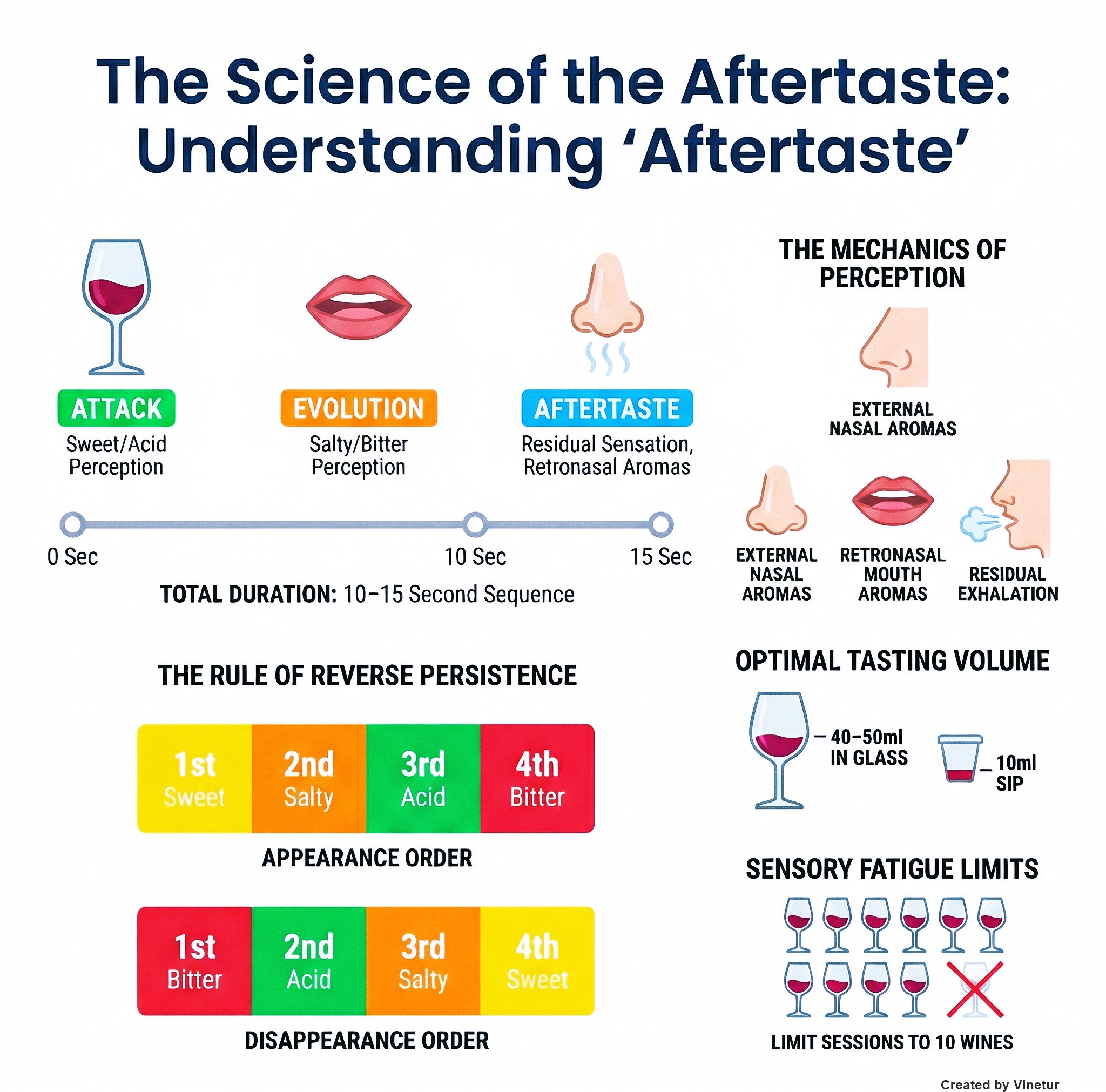
In wine tasting, the finish—also known as aftertaste—is the final phase of flavor perception that occurs after swallowing or spitting out the wine. At this point, the mouth feels empty, but residual sensations remain, mainly from aromas and, to a lesser extent, from taste and tactile impressions. The process of evaluating wine in the mouth is complex and goes beyond identifying basic flavors. The mouth not only detects taste but also tactile sensations such as temperature, volume, and tingling. Additionally, through retronasal olfaction, aromas are perceived that enrich the overall experience.
A structured approach is essential for consistent sensory analysis. The amount of wine used in tasting is one of the first factors to consider. While there is no strict rule, it is generally recommended to pour about 40 to 50 ml into the glass and take sips of around 10 ml. This ensures that each sample is manageable and not diluted by saliva, allowing for uniform analysis across different wines.
When tasting, the wine should be spread from the front to the back of the mouth using the tongue and cheeks. This allows both tactile sensations and flavors to be evaluated. Movements should be natural and not exaggerated. Flavors are typically perceived in succession: sweet first, followed by salty, then acidic, and finally bitter. These flavors fade in reverse order, with bitterness disappearing first and sweetness last.
The perception of flavor unfolds in several stages. The initial contact—known as the "attack"—is dominated by sweet and acidic notes. This is followed by an "evolution" phase where salty and bitter nuances emerge. The aftertaste comes last, characterized by indirect aromatic sensations and subtle tactile impressions that can linger for 10 to 15 seconds.
After swallowing or spitting out the wine, the aftertaste becomes apparent. Aromatic sensations usually dominate at this stage, though some residual flavors may also be present. It is important to distinguish between perception—the moment a flavor appears—and length—the time it takes for that sensation to disappear. In evaluating finish, both the duration and quality of lingering aromas or memories are considered.
To enhance retronasal aroma perception, some tasters hold wine at the front of their mouth and draw in air through pursed lips. This technique sends more aromas to the nose but is best reserved for technical settings rather than social occasions or restaurants due to its noticeable sound.
When tasting multiple wines—especially those with intense characteristics like reds or oaked whites—it is advisable to cleanse the palate between samples using water or a neutral food such as plain white bread or lightly toasted bread. Despite these measures, repeated tastings can lead to sensory fatigue. Experts recommend limiting sessions to 8 to 10 wines each and no more than 3 to 4 sessions per day with adequate breaks in between.
The overall flavor of wine results from a combination of taste, smell, and touch. This process occurs in three stages: external nasal aroma perception while sipping; in-mouth perception where retronasal olfaction releases additional aromas; and finally, the aftertaste experienced upon exhaling after swallowing when residual sensations persist in the mouth, nose, and throat.
The duration of a wine’s finish varies widely depending on its quality. High-quality wines tend to have longer-lasting finishes with more complex aromatic profiles. These stages are not unique to wine; similar processes occur with other foods and beverages where taste, aroma, and tactile sensations combine to create a complete sensory experience.
Understanding these mechanisms helps both professionals and enthusiasts appreciate wine more fully by recognizing how each phase contributes to overall enjoyment. Consistency in tasting methods ensures reliable comparisons between different wines and supports objective evaluation within both technical tastings and casual settings.