Argentina’s 2026 Grape Harvest Faces 9% Drop as Industry Grapples With Uncertainty
Producers warn that falling yields, weak demand, and lack of official controls cloud outlook for prices and stock levels
2026-02-09
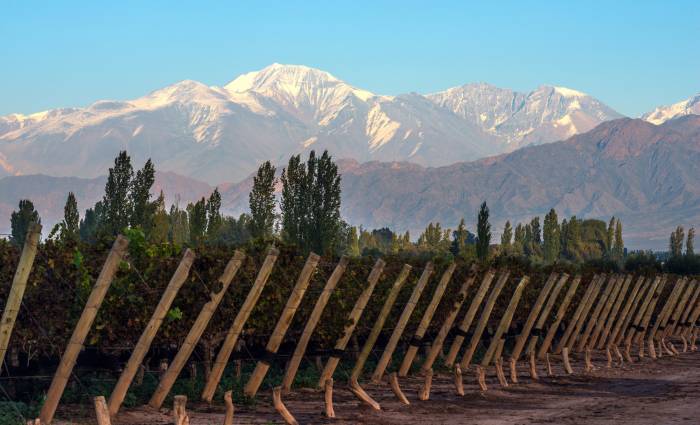
The 2026 grape harvest in Argentina is expected to fall by 9% compared to the previous year, according to the latest forecast from the National Institute of Viticulture (INV). This decline comes after a series of challenging years for the wine industry, marked by lower domestic sales and a drop in exports. In 2025, internal market sales fell by 2.7%, following a 1.2% decrease in 2024. Wine exports also declined by 6.8% in volume last year, reversing the 5.5% growth seen in 2024.
Industry leaders say that while the INV’s forecast provides some clarity on production volumes, it does not resolve ongoing uncertainty about stock levels and pricing. Diego Stortini, a wine entrepreneur and vice president of the Mendoza Economic Federation’s Central Oasis division, said that the real impact will depend on how this year’s volume interacts with existing stocks, grape quality, and especially demand, which remains unpredictable. He noted that with weak domestic consumption and selective export markets, the harvest data alone is not enough to predict price trends.
Fabián Ruggeri, president of the Argentine Wine Cooperatives Association (Acovi), said that INV’s estimate aligns closely with Fecovita’s December projection of a 7-8% reduction for 2026. However, Matías Manzanares, secretary of the Mendoza Grape Growers Association (AVM), believes the actual decrease could be higher due to additional hail damage after February 3, which was not included in the official forecast. He also pointed out that this year, due to deregulation, INV will not conduct winery harvest controls as it did previously, making it harder to verify final figures.
Mauro Sosa, manager of the East Mendoza Grape Growers and Wineries Center, said their own estimates—based on frost damage reports from members—suggest a production drop between 15% and 20%. He explained that their calculations are based on direct reports from producers and wineries, while INV uses sample plots and other surveys.
The question of stock levels is central as both domestic and export sales have declined. Despite this, most industry representatives do not expect significant overstocking. Ruggeri said that if an appropriate share of grapes is allocated to concentrate production (mosto), only a small amount will be added to existing stocks. Manzanares noted that San Juan province expects a 3% increase in its harvest compared to last year—the lowest in a decade—but this will not have a major impact overall. Mendoza’s harvest remains below average and is now set to fall further. Sosa estimated that projected stocks as of June 1 would cover about 6.5 months of sales—a manageable figure—and that with part of the estimated 13.5 million quintals going to concentrate production, stocks should remain near equilibrium even if the reduction is only 9%.
Price uncertainty remains a major concern for growers and wineries. Manzanares said grape prices are currently at or below last year’s levels, which is problematic for producers facing rising costs. In San Juan, must producers are reportedly offering $210 per kilo of grapes—the same as last year—but when converted to dollars for export purposes, this equates to just $0.14 per kilo compared to $0.20 in 2025. San Juan’s Minister of Production Gustavo Fernández has called for must producers to pay at least $260 per kilo to avoid taking advantage of low prices paid by the struggling wine sector.
Both San Juan and Mendoza governments are working on legislation to encourage the use of fruit juices as sweeteners in beverages as a way to diversify markets and support primary producers. This initiative aims to help growers maintain or even increase production despite ongoing challenges with demand and pricing.
The combination of lower yields due to weather events like frost and hail, weak domestic consumption, falling exports, and stagnant prices has left many questions open for Argentina’s wine industry as it heads into the 2026 harvest season. The lack of official controls on winery stocks this year adds another layer of uncertainty for producers trying to plan ahead in an unpredictable market environment.

Founded in 2007, Vinetur® is a registered trademark of VGSC S.L. with a long history in the wine industry.
VGSC, S.L. with VAT number B70255591 is a spanish company legally registered in the Commercial Register of the city of Santiago de Compostela, with registration number: Bulletin 181, Reference 356049 in Volume 13, Page 107, Section 6, Sheet 45028, Entry 2.
Email: [email protected]
Headquarters and offices located in Vilagarcia de Arousa, Spain.