Rioja Wine Stocks Plunge 20% in Three Years as Sales Hit Lowest Level Since 2001
Market equilibrium nears as production drops and crisis measures shrink surplus, despite Rioja’s continued dominance in Spanish wine exports
2026-03-02
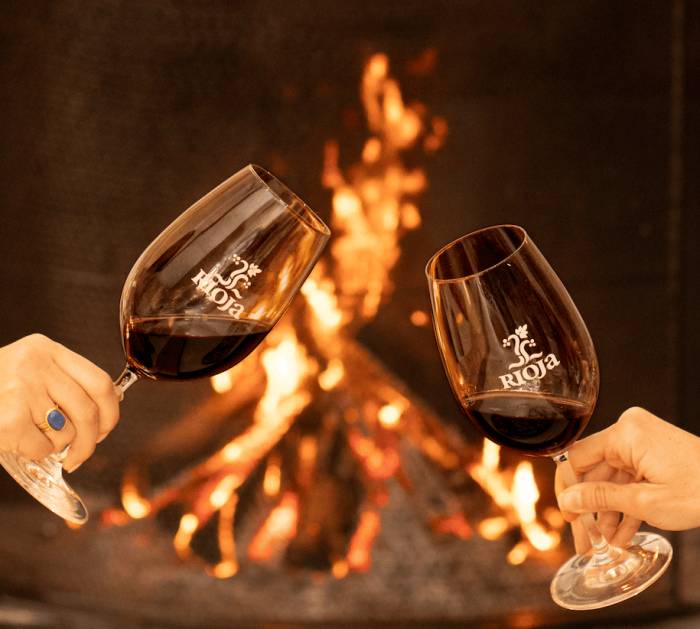
The Rioja wine region in Spain is facing a period of adjustment as sales decline and production drops, but the area is moving closer to a balance between supply and demand. In 2025, Rioja maintained its position as the leading wine denomination in Spain, holding a 26.23% share of the national market. It also led Spanish wine exports with denomination of origin (DO), reaching a record 39.1% share. Despite these achievements, Rioja experienced a decrease in sales, selling 312.86 million bottles (229.46 million liters) in 2025, which is 4.5% less than in 2024 and the lowest figure since 2001.
The drop in sales coincided with a significant reduction in wine production. The Regulatory Council of Rioja approved 155 million liters of wine in 2025, a level not seen for decades. For comparison, 30 years ago the figure was 217.91 million liters, and five years before that, in 1990, it was 161.24 million liters. The lower production was caused by several factors: fertility problems in vineyards, hailstorms, high pressure from mildew fungus, reduced yields in some municipalities, and green harvesting measures.
As a result of these conditions, the amount of wine stored in Rioja’s wineries has also decreased sharply. By the end of 2025, stocks stood at 755.9 million liters, down nearly 85 million liters from the previous year and far below the peak of 937.67 million liters recorded in 2022. Over three years, stored volumes have dropped by about 20%. This trend is partly due to crisis measures such as voluntary distillation and green harvesting.
The ratio between stocks and sales—a key indicator for market balance—has improved significantly. At the end of 2024, this ratio was at 3.38; by the end of 2025 it had fallen to 3.16, approaching the equilibrium range of between 2.90 and 3.15 that had not been seen since 2018 (when it was at 3.14). This is also an improvement from the ratio of 3.77 recorded at the end of 2023. The highest ratio on record was in 2000 when sales were around 160 million liters and stocks were close to 770 million liters—a situation driven by rising prices and falling international sales.
Outside Rioja, most major Spanish denominations do not publish detailed bottle sales figures but instead report on the number of guarantee labels issued to wineries—a measure that does not directly reflect actual sales to consumers. In Rioja’s case, about 308.4 million guarantee labels were issued in 2025 compared to 327 million in 2024 (which itself was a rise of about 2% over the previous year). Even so, Rioja remains ahead of other major denominations.
Other regions show mixed results based on label issuance data for 2025. The Rueda DO reached a record with 118.6 million labels for white wines, up just slightly by 0.27% from the previous year. Ribera del Duero issued over 92 million labels to its wineries, an increase of about 1.6%. Rías Baixas delivered more than 36 million guarantee labels to its registered wineries—up by just over 3%—and certified a total volume of more than 27 million liters.
Catalan denominations are among those that do provide actual volume data: they reported a drop in sales volume by about 4.6% and a decrease in value by about 3.4% compared to last year.
The overall picture for Spanish wine regions is one of declining consumption and unstable markets leading to lower sales and production levels across most denominations. However, measures taken within Rioja have helped bring supply closer to demand, reducing excess stocks and moving toward market equilibrium after several years of imbalance caused by both domestic and international factors.

Founded in 2007, Vinetur® is a registered trademark of VGSC S.L. with a long history in the wine industry.
VGSC, S.L. with VAT number B70255591 is a spanish company legally registered in the Commercial Register of the city of Santiago de Compostela, with registration number: Bulletin 181, Reference 356049 in Volume 13, Page 107, Section 6, Sheet 45028, Entry 2.
Email: [email protected]
Headquarters and offices located in Vilagarcia de Arousa, Spain.