Bordeaux Launches New White Wines to Attract Younger Consumers
Wine region unveils Médoc Blanc and expands innovation as vineyard area for whites rises to 13% by 2025
2026-03-30
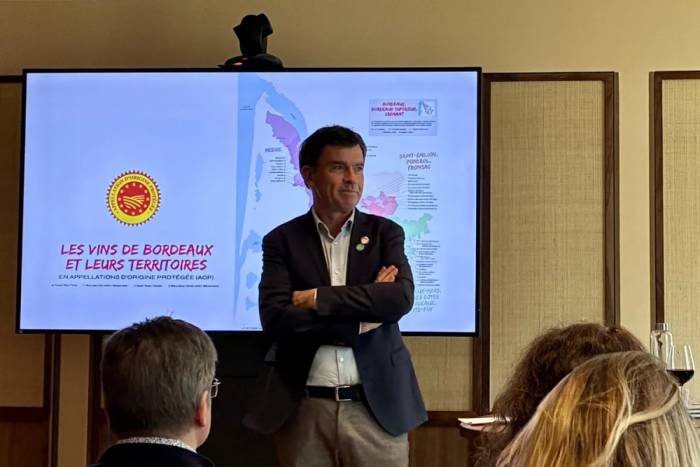
Bordeaux is taking new steps to attract a younger and more diverse group of wine consumers. On Tuesday in Paris, Bernard Farges, president of the Bordeaux Wine Council (CIVB), and Jean-Pierre Durand, a wine merchant and co-president of the CIVB’s promotion commission, presented what they called “the new face of Bordeaux.” The region is responding to a historic drop in wine consumption with a series of innovations aimed at revitalizing its image and market reach.
The Bordeaux region has faced significant challenges in recent years. Overproduction has led to necessary vine-pulling plans, resulting in major changes across the landscape. In some towns, more than half of the vineyards have disappeared or are expected to disappear soon. Since 2021, vineyard areas under protected designation of origin (AOP) have shrunk by 20%, and another reduction plan is scheduled for this year.
Despite these difficulties, Bordeaux’s wine leaders are focusing on positive actions to share their wines with new audiences. Farges described a strong collective effort within the industry, marked by determined discussions and a shared desire to innovate. One key area of change is the growing emphasis on white wines. By 2025, white wines (excluding sweet varieties) are expected to account for 13% of Bordeaux’s vineyard area, up from 9.3% in 2016.
A new Médoc Blanc appellation was created in 2025, with its first bottles set to reach the market by the end of April. The organizers hope to expand from 60 hectares today to 500 hectares in the coming years. Hélène Larrieu, director of the Médoc Defense and Management Organization (ODG), said the goal is to surprise consumers and move beyond the stereotype of Médoc as only red wine for formal meals. The target price range for these new whites is between €15 and €30.
Other regions are also considering changes. Saint-Emilion is exploring a white wine appellation, while Sauternes producers are preparing for a “dry” appellation alongside their traditional sweet wines. Crémant sparkling wines are giving red-wine vineyards an opportunity to produce whites as well.
Bordeaux is also experimenting with lighter reds and even alcohol-free wines. The Entre-Deux-Mers area now includes red wines, and during Wine Paris, Bordeaux introduced Claret, a lighter style of red wine. Alcohol-free wine, once seen as a curiosity, is gaining momentum thanks to both large producers and prestigious estates like Château Sigalas Rabaud, which now offers an alcohol-free sweet wine.
To reach consumers aged 25-45, Bordeaux is organizing gastronomic events, working with wine shops, and launching campaigns in cafés. For the first time this April, Bordeaux will have a stand at Vinitaly in Verona. Jean-Pierre Durand explained that this move aims to show not only Italians but also Americans—who are very active at Vinitaly—that Bordeaux is changing its approach to the market.
These efforts reflect a broader transformation as Bordeaux seeks to adapt to shifting consumer preferences and secure its place in an evolving global wine industry.

Founded in 2007, Vinetur® is a registered trademark of VGSC S.L. with a long history in the wine industry.
VGSC, S.L. with VAT number B70255591 is a spanish company legally registered in the Commercial Register of the city of Santiago de Compostela, with registration number: Bulletin 181, Reference 356049 in Volume 13, Page 107, Section 6, Sheet 45028, Entry 2.
Email: [email protected]
Headquarters and offices located in Vilagarcia de Arousa, Spain.