Unexpected relatives in the glass
Knowing where these grapes come from helps you read a label more clearly, but family ties are only a guide: the wine in the glass depends on far more than a family tree.

Views › 271
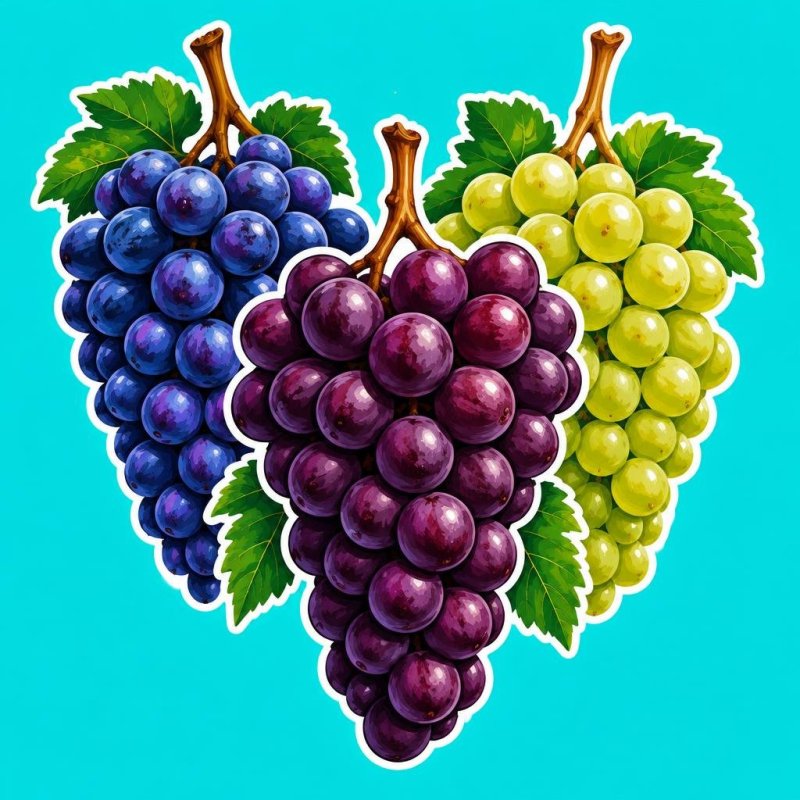
Wine family trees can look like a specialist’s game, but they are genuinely useful for any curious drinker. Knowing which grapes are related, how a variety is preserved over time and why that still does not guarantee identical wines makes labels easier to read and expectations easier to manage.
A white grape among the parents of a red
One of the most useful surprises to start with is this: Cabernet Sauvignon comes from a cross between Cabernet Franc and Sauvignon Blanc. In other words, a white grape is among the documented parents of one of the world’s best-known reds. That is not based on similar-sounding names or repeated tradition, but on genetic analysis. It also helps to frame this properly: this is not the complete vine family tree or a ranking of famous grapes, but a selection of well-documented relationships that make a few major varieties easier to understand.
Genealogy helps you get your bearings; it does not let you predict an entire bottle. The studies behind these relationships support specific family links, but they do not create a hierarchy of quality, prove that two grapes must smell alike or establish the exact moment when each variety first appeared. What they do offer is a reliable map for reading some important wine families more clearly.
How to read this map and understand the descriptions
When you see a formula here such as A × B → C, it means parentage: a cross between two varieties produced a seed with a new genetic combination, and from that selected plant a new variety emerged. After that, growers do not start again from seed each time. To preserve it, they propagate the chosen plant vegetatively, creating new vines from parts of it. That system keeps its varietal traits, although mutations can still appear over time, and not all of them are visible. In other words, a variety may be born once from a seed and then continue as the same variety through propagation.
It also helps to separate relationship from identity. A slash between names, such as Malbec/Cot or Syrah/Shiraz, means we are talking about the same variety under two names used in different contexts. An arrow between parents and offspring, by contrast, shows a family link, not equivalence. Chardonnay and Gamay, for example, share parents and are still not the same grape. Reading those signs correctly avoids one of the most common mistakes in family-tree diagrams.
You only need three simple ideas to follow the tasting descriptions. Body is the sense of weight or volume in the mouth; acidity is a dimension of freshness; and tannins, especially in reds, are recognised through astringency, the tactile sensation of grip or roughness in the mouth that can feel firmer or softer. That feeling does not tell you how sweet the wine is. When people mention plum, blackcurrant or pepper, they do not mean the wine contains those ingredients: they are aroma and flavour comparisons that help describe what the wine brings to mind.
Two signs to keep straight
A × B → C shows parentage: that cross produced a new variety.
A slash, as in Malbec/Cot or Syrah/Shiraz, shows two names for the same variety.
Cabernet Sauvignon, Merlot and Malbec: relatives on different branches
The easiest family to follow has its crossroads at Merlot. Cabernet Sauvignon comes from Cabernet Franc × Sauvignon Blanc. Merlot comes from Cabernet Franc × Magdeleine Noire des Charentes. And Malbec, also called Cot, comes from Prunelard × Magdeleine Noire des Charentes. That means Cabernet Sauvignon and Merlot share Cabernet Franc, while Merlot and Malbec share Magdeleine Noire des Charentes. The key is not to oversimplify: all three do not share the same parent, and Malbec/Cot are not two different grapes but two names for one variety.
In the glass, Cabernet Sauvignon often leans towards medium to full body, with firm tannins and black-fruit notes such as blackcurrant and plum. Those are common traits, not obligations. Where the grapes are grown and how the wine is made can change the result considerably, so this is best read as a useful starting point rather than an automatic promise dictated by family ties.
Merlot is a red grape whose wines often suggest plum and cherry, with a medium to generous body and tannins that are frequently rounder in feel. That does not make it automatically simple or soft: it can also produce structured wines, and its freshness does not behave the same way everywhere. Malbec, meanwhile, is another red grape that can show black fruit and floral notes, with some versions offering more volume and others more freshness; its tannins can feel supple or firmer depending on ripeness and winemaking style. The important point for the reader is not to infer these sensations from parentage or reduce Merlot and Malbec to a quick comparison with Cabernet Sauvignon.
What a family can tell you, and what it cannot guarantee
What it does help with
Which varieties are related.
Which equivalent names are worth recognising on a label.
What it does not guarantee
That two relatives will smell or taste the same.
That a bottle will have a specific quality or style simply because of its DNA.
Chardonnay and Gamay: same parents, different varieties
Another branch shows that sharing both parents does not make two varieties the same grape. Both Chardonnay, a white grape, and Gamay Noir, a red, are documented as descendants of crosses between Pinot and Gouais Blanc. Here, Pinot is used as the umbrella name for its different forms. For wine drinkers, the key point is simple: the same pair of parents can produce very different offspring.
Chardonnay can bring to mind apple and citrus, or in other cases riper fruit. Its body and acidity vary widely depending on growing conditions and winemaking choices. That makes it especially useful for learning to separate grape from cellar work: vanilla or toasty notes often point to oak; certain buttery impressions may be linked to malolactic fermentation, a process that can soften acidity; and lees contact, meaning time spent with the spent yeast after fermentation, can alter texture. None of that is mandatory for the variety or a direct consequence of its family tree.
Gamay can suggest raspberry, strawberry and cherry, sometimes with floral or peppery nuances. Many styles made with whole bunches stand out for fruit and lighter tannins, but that lightness should not be turned into a universal law. Winemaking matters a great deal: carbonic maceration, carried out with whole grapes in a carbon dioxide-rich environment, can lower acidity, while early pressing limits the transfer of tannins into the wine. There are also versions designed not only for early drinking, but for development over time as well. Once again, genetic family offers guidance; the final style is decided by the wine itself.
| Variety | Documented parents | Helpful clues in the glass |
|---|---|---|
| Chardonnay | Pinot × Gouais Blanc | It may recall apple, citrus or riper fruit; body and acidity vary; oak, malolactic fermentation or lees contact can all change its expression significantly. |
| Gamay Noir | Pinot × Gouais Blanc | It may recall raspberry, strawberry and cherry, with possible floral or peppery nuances; some styles stand out for fruit and lighter tannins. |
Syrah and Tempranillo: two more branches on the route
Not every part of the map needs to be forced into a single connection. Syrah is a red grape with its own documented branch: it comes from Mondeuse Blanche × Dureza. And Syrah and Shiraz are two names for the same variety, not two different grapes. Tempranillo, for its part, is also a red grape and has been linked to Albillo Mayor × Benedicto. In its case, another useful agronomic detail is often mentioned: its relatively early ripening. That tells you something about the plant in the vineyard; on its own, it is not a description of the wine in the glass.
Syrah, or Shiraz, can produce medium- to full-bodied wines with black fruit and spicy notes. Black pepper is a well-known reference in some expressions, but it does not appear with the same intensity in every bottle. Nor does the name on the label automatically impose a single style. If anything, the documentation used here points in the opposite direction: expression depends on growing conditions and winemaking, and the pepper note may be favoured by certain cooler conditions without becoming a universal rule.
Tempranillo can recall cherry, raspberry and plum, with younger wines more fruit-driven and others more concentrated and structured. Here too, it helps to keep variety and ageing clearly separate: notes such as vanilla or coconut may reveal oak influence, while characters such as leather or dried fruit can appear with development. Acidity does not behave the same way in every place, so it makes little sense to impose one global template on a grape that can express itself in quite different ways.
What this family can tell you about your next glass
For a beginner, this information has an immediate use. First, it helps you recognise equivalent names and avoid confusion: Malbec/Cot and Syrah/Shiraz are the same variety in each case. Second, it helps you ask better questions about the specific bottle. Instead of trusting the grape surname blindly, it is more useful to ask whether the wine is lighter or fuller-bodied, whether freshness stands out, whether the tannins feel firm or rounded, and whether oak plays an important role. With Chardonnay and Tempranillo, for example, that last question can change the experience dramatically.
What parentage cannot do for you is just as important. It does not guarantee that two related grapes will appeal to you for the same reason, it does not let you infer the quality of a bottle, and it does not replace information about origin, climate or winemaking. Nor is it a good excuse to swap one bottle for another simply because the grapes are related. A family tree helps explain wine’s diversity and makes labels easier to read, but the final glass is always shaped by more than DNA.
Useful questions for the specific bottle
- Is it a lighter wine or a fuller-bodied one?
- Does freshness stand out, or does it feel rounder?
- Are the tannins firm or softer?
- Does oak play an important role in the style?