Japan inspects four brewers that control 90% of its beer market
The Fair Trade Commission is examining whether Asahi, Kirin, Suntory and Sapporo shared pricing plans for years.
Wednesday, October 7, 2026
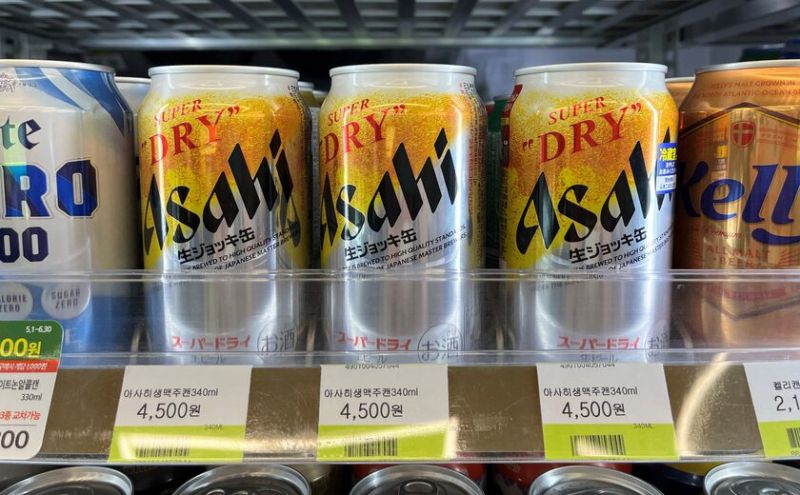
Japan’s Fair Trade Commission carried out on-site inspections on Wednesday at the offices of the country’s four biggest beer makers as it investigates whether they coordinated wholesale price increases in a market they collectively dominate.
The companies under scrutiny are Asahi Group Holdings, Kirin Holdings, Suntory Holdings and Sapporo Breweries. Together, they account for more than 90% of Japan’s domestic beer market, according to the information cited by Reuters and Japanese media. The commission suspects the companies may have shared information for years about the timing and size of price increases for beer, happoshu and so-called new genre products sold to wholesalers.
The investigation does not mean a violation has been proven. Japanese authorities have not publicly quantified any possible overcharge, the value of sales that may have been affected, or any potential fines. There has also been no public finding of harm to wholesalers or consumers at this stage.
Public broadcaster NHK reported that investigators are focusing in particular on price revisions introduced in October 2022 and April 2025. Reuters said those dates came from NHK reporting rather than from a published ruling by the commission. The price increases were introduced during a period when manufacturers were publicly pointing to higher raw material, packaging, energy and logistics costs.
The Fair Trade Commission did not provide details beyond confirming the inspections. Reuters, citing a person familiar with the matter, reported that the watchdog is expected to continue the investigation and could eventually file a criminal complaint. The person was not identified because they were not authorized to speak publicly.
All four companies acknowledged the inspections and said they would cooperate. In separate statements reported by Japanese media and Reuters, each company confirmed that antitrust officials had entered its premises. None of the brewers admitted wrongdoing, and none publicly addressed the substance of the suspected coordination.
Investors reacted quickly. Sapporo’s shares fell as much as 3.73% in Tokyo trading. Kirin dropped a little more than 3% at one point and touched its lowest level in more than three months. Asahi fell about 2.5% before paring some of its losses. Suntory is not listed on the stock market, so there was no direct share price reaction for the company.
The case reaches nearly the entire Japanese beer industry at a time when competition between product categories is shifting. Japan has long taxed traditional beer, happoshu and newer beer-like drinks at different rates, which has shaped pricing and product strategy across the sector. Those tax differences have encouraged brewers over the years to push consumers toward substitutes that could be sold more cheaply than standard beer.
Recent tax changes have started to alter that balance. As the gap narrows between tax rates on conventional beer and lower-tax alternatives, producers have been adjusting pricing and marketing in categories that had previously followed different competitive dynamics. That makes wholesale pricing a particularly sensitive issue for distributors, retailers and consumers.
In Japan, happoshu refers to beer-like drinks made with lower malt content, while new genre products are alternative alcoholic beverages developed partly to fit into more favorable tax brackets. These categories became major parts of the market because they let brewers offer lower shelf prices. Any coordinated move on prices across all three segments would therefore carry broad implications for wholesalers and for households that buy across categories rather than sticking to one type of drink.
The investigation also adds to a series of recent antitrust actions in Japan involving major consumer brands. In June, the Fair Trade Commission inspected six ice cream makers, including Morinaga Milk Industry and Meiji Holdings, over suspected cartel activity. That inquiry, like the current beer case, centered on whether rivals may have coordinated price moves rather than competing independently.
For the beer makers, the stakes are significant because of their dominance in a mature home market where volume growth is limited and price changes can have an immediate effect on margins. For wholesalers, the key question is whether negotiations with suppliers were shaped by independent cost decisions or by information exchanges among companies that were supposed to compete against one another. The commission’s next steps are likely to focus on internal communications, pricing records and contacts between executives and sales units during the periods under review.
The four companies have all raised prices in recent years as costs climbed across the food and beverage industry. What regulators now appear to be examining is not whether those increases were justified by inflation, but whether rival brewers may have aligned the timing or scale of the revisions before presenting them to wholesalers. That issue has drawn unusual attention because the companies involved cover almost the whole national market, from standard beer to the low-malt and beer-like alternatives that became central to Japan’s tax-driven drinks landscape.