Italian Wine Tourists Favor Family-Run Winery Visits Over Discount Bottles
New 2026 data show 27% now prefer visiting producers on-site, signaling a shift from purchases to experience.
Tuesday, October 6, 2026

Views › 3444
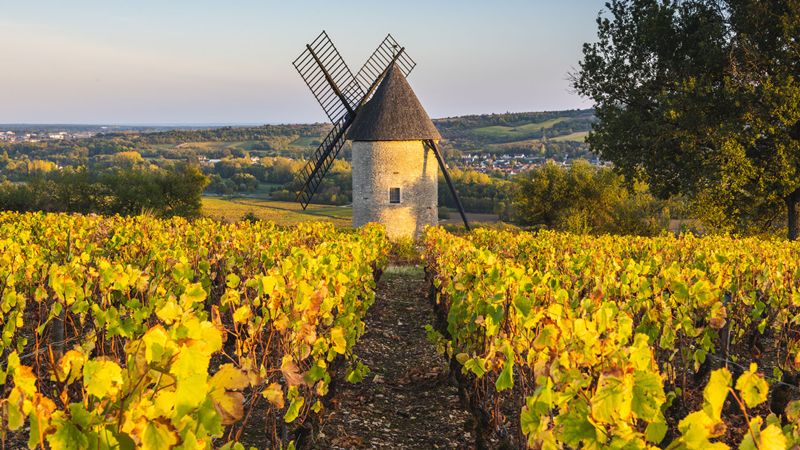
Visiting a family-run winery has become a bigger draw for Italian wine tourists than buying bottles at discounted prices, a shift that industry officials and researchers say reflects a broader change in how travelers experience wine in Italy.
The change emerged in new 2026 data presented in recent days at “In Collina,” a conference organized by La Collina dei Ciliegi in Valpantena, near Verona, in the Veneto region. The figures, presented by Roberta Garibaldi, a tourism management and marketing professor at the University of Bergamo and president of the Italian Association of Food and Wine Tourism, show that 18 million Italians are now involved in wine-related experiences, up by 4.5 million from 2024.
For the first time in a decade, the most sought-after activity among Italian wine tourists was not buying winery wine at attractive prices. Instead, 27% said their preferred experience was visiting a family-run winery. Buying wine at advantageous prices ranked second at 25%, while 24% said they were interested in going to a winery with a restaurant for lunch or dinner.
The figures point to a market that is moving away from a purely transactional model and toward one centered on personal contact, place and experience. Garibaldi said the ranking change is an important sign because it shows growing value placed on meeting producers and spending time where the wine is made.
The shift comes as Italian institutions are also giving wine tourism a broader role in economic development. Italy’s Agriculture Ministry recently announced the signing of a decree aimed at promoting wine tourism in wine-producing regions. The goal is to support initiatives that can strengthen knowledge of Italian vineyards and improve their reputation, not only as wine producers but as destinations.
The conference in Valpantena brought together public officials, producers, consortia and tourism operators to discuss that wider role. Speakers focused on how wine can help build destinations and distribute spending across different local sectors, including hospitality, food, culture and transport.
Garibaldi’s research also showed strong interest in Italy’s food and wine offer among international travelers. According to the data she presented, 56% of German tourists, 59% of British tourists, 57% of American tourists, 70% of French tourists and 81% of Austrian and Swiss tourists say food and wine experiences are a main reason to visit Italy.
Among Italian regions, Veneto ranked fifth in average interest at 42%. Tuscany, Sicily and Sardinia ranked ahead of it, according to the data cited at the event.
Even with demand growing, Garibaldi said many wineries have not yet adapted their offer to international travelers. In a sample of 200 Italian wineries that are among the most active in wine tourism, foreign visitors accounted for 30% of guests. That compares with an international average of 40%, suggesting Italian wineries are underperforming in attracting overseas visitors.
The same study found gaps in digital access and visibility. About 35% of wineries in the sample still offer websites or visitor information only in Italian. Just 25% are listed on platforms dedicated to selling tourism experiences, and only 8% are on TikTok. That matters because 38% of international tourists book experiences through dedicated online portals, while even among more structured wineries, presence on those channels stops at 25%.
Garibaldi said the issue is no longer only expanding supply. It is also about making winery experiences easy to find, understand and book, especially for smaller producers. Without that, she warned, future growth in wine tourism could remain concentrated in the best-known destinations.
Regional officials said wine tourism fits into a broader strategy to spread visitors beyond Italy’s most crowded areas. Stefano Sisto, director of tourism and territorial marketing for the Veneto region, said Veneto records more than 74 million tourist stays, but about 80% of them are concentrated in 20 destinations. In that context, wine can help bring visitors to less saturated places and connect agricultural production with local identity.
Sisto said wine should be seen as a territorial brand, one that links local communities, products and visitor experiences. He argued that the region needs stronger networks among businesses in different sectors, including wine, olive oil, culture and stone, along with a system of governance that allows regional authorities, organized destinations and private companies to work together.
Other participants argued that attractive wine experiences are not enough on their own. Luca Carnesecchi, an expert in international inbound tourism and wine travel, said destinations also need basic services and infrastructure, including parking and the ability to stop easily in smaller towns. Without those elements, he said, even a strong local offer can be difficult for visitors to use.
Beatrice Benoni of Destination Verona Garda described the work of connecting operators, consortia and institutions to create a shared territorial offer. Christian Marchesini, president of the Valpolicella Wines Consortium, said cooperation is especially important in areas with many small producers. He said Valpolicella has 2,240 growers and 360 wine companies, and that coordinated promotion can help smaller businesses benefit from tourism growth.
National officials used the event to argue for a more coordinated approach. Senator Gian Marco Centinaio, vice president of the Senate, said Italy should think of itself as a country of many forms of tourism rather than one single tourism model. He said agrifood tourism is driven by travelers looking for distinctive experiences and emotions, and that producers and institutions move faster when they work together.
Industry leaders also tied winery visits to the commercial challenges facing wine producers. Gianni Bruno, managing director of Veronafiere, said cellar-door visits remain important both as direct sales opportunities and as a way for companies to build relationships with consumers at a time when the wine market is under pressure.
Several speakers returned to the case of Valpantena, where organizers said the aim is to build a recognizable destination rather than market wine in isolation. Igor Boccardo, vice president of the Valpantena network, said the area already has the main ingredients needed for tourism, including a nearby city, local products and a strong historical identity, but those assets need to be connected and presented as part of one shared destination.
Massimo Bullo, chief executive of Duomo18 and chief marketing officer of La Collina dei Ciliegi, said memorability has become a central factor in wine tourism. He argued that travelers remember the meal, the people and the setting as much as the technical quality of a wine, and that those memories shape how a destination is valued.
Massimo Gianolli, president of La Collina dei Ciliegi, used the conference to describe how his winery project was developed through study of the local land and collaboration with outside experts. He said the business was built with a long-term approach and with attention to the specific characteristics of the territory, including decisions about grape varieties and high-altitude cultivation.
The broader message from the event was that wine tourism in Italy is expanding, but the market is changing. Travelers are showing more interest in direct contact with producers, local identity and immersive experiences. Researchers and officials said the next challenge is to make those experiences easier to access and to use them to spread tourism benefits across entire regions, not only the most famous winery destinations.