U.K. cask beer sales fell 19.7% in the year to August.
Volumes dropped to 979,000 hectoliters after 8.2% fewer pubs stocked cask, with average prices rising to £8.22 a liter.
Thursday, September 17, 2026
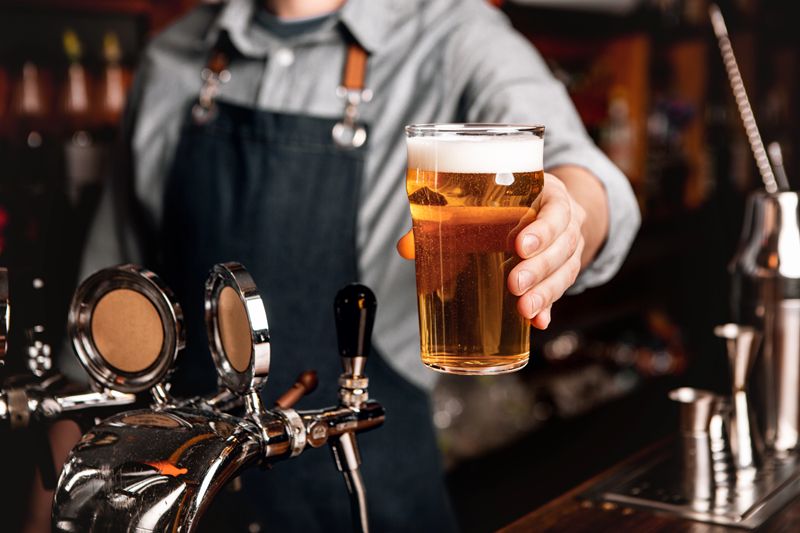
Cask beer sales in the UK pub trade fell sharply over the 12 months to August, as fewer outlets stocked the category and prices kept rising even while volumes weakened.
The latest NIQ on-trade OPM data, reported by The Morning Advertiser, showed total cask volume dropped to 979,000 hectoliters in the 12 months to August 2026. That was down 19.7% from a year earlier and 10.4% lower than two years ago. The decline was much steeper than the broader draft beer market, where total volume fell 3.9% year over year and 1.7% over two years.
Sales by value held up better than volume, helped by higher prices. NIQ said cask was worth £805m over the period, down 7.4% from a year earlier and 3.1% from two years ago. The figures suggest drinkers are paying more for cask beer even as the category loses scale.
Price growth has remained strong. NIQ said the average price per liter for cask reached £8.22 in the period, up 15.2% year over year and 8.2% versus 2024. That outpaced price growth for total draft beer. Separate figures from the MA’s Beer Report 2026 also pointed to higher pub prices, putting the average pint of cask in the on-trade at £4.91. Among the brands surveyed, Timothy Taylor’s Landlord had the highest average price at £5.42 a pint, followed by London Pride at £5.22 and Tribute at £5.07.
Distribution remains a central problem for the category. NIQ said cask was available in 24,000 outlets, down 8.2% from a year earlier and 5.1% from 2024. That matters because cask beer depends heavily on regular turnover and local visibility. When fewer pubs carry it, brewers lose shelf space, drinkers see fewer opportunities to order it, and the economics of keeping the product in circulation become harder for suppliers and operators.
Even so, pubs that continue to sell cask appear to be getting slightly more value from it. The data showed rate of sale improved modestly, with RoS up 0.8% in 2025 and 2.1% over two years, according to The Morning Advertiser’s report on the NIQ figures. In other words, while the category is shrinking overall, cask can still perform reasonably well in venues that keep it on the bar and sell through it effectively.
That pattern is also visible at brand level. Larger cask brands have generally proved more resilient than the category as a whole. The Morning Advertiser reported that Timothy Taylor’s Landlord and Fuller’s London Pride have broadly maintained volumes, supported by better distribution and stronger productivity in the outlets that stock them. Other well-known names have struggled more. Doom Bar and Greene King Abbot Ale were cited as continuing to post notable declines in both volume and distribution.
The numbers underline a structural strain in one part of the beer market. For the drinks business, the issue is not only falling sales but the combination of fewer points of sale, weaker physical reach, and rising prices. That can create a difficult balance for brewers, wholesalers, and pub operators. Higher prices may support revenue and margins in the short term, especially in venues where cask still has a loyal audience, but continued losses in distribution can limit future growth and narrow consumer choice.
There are still signs of demand in specific parts of the market. The Morning Advertiser recently reported that operators across the sector see growing interest in cask among Gen Z adults and younger millennials, broadly those aged 18 to 35. Industry participants told the publication that established brands have been among the fastest-growing within the segment. They also said cask tends to perform especially well in food-led pubs, where it accounts for 12.5% of beer spending, compared with 7.4% of draft beer sales by value across the market.
That has left the category trying to solve two problems at once. On one side, cask has to defend its presence in pubs as operators review product ranges and labor demands. On the other, it is trying to bring in new drinkers who may not fully understand the style. Operators cited by The Morning Advertiser said education remains important because many younger consumers still lack awareness of what cask beer is and how it differs from other beer formats.
The latest figures suggest that cask remains capable of generating value in the right venues, but only where it is stocked, maintained, and explained well to customers. For now, the market is moving in the opposite direction on availability, with fewer pubs carrying it and total volumes continuing to fall.