Comité Champagne Sets 2026 Harvest Limit at 8,800 Kilograms per Hectare
The unusually low cap aims to keep supply closer to demand as the region works through large wine stocks.
2026-08-14
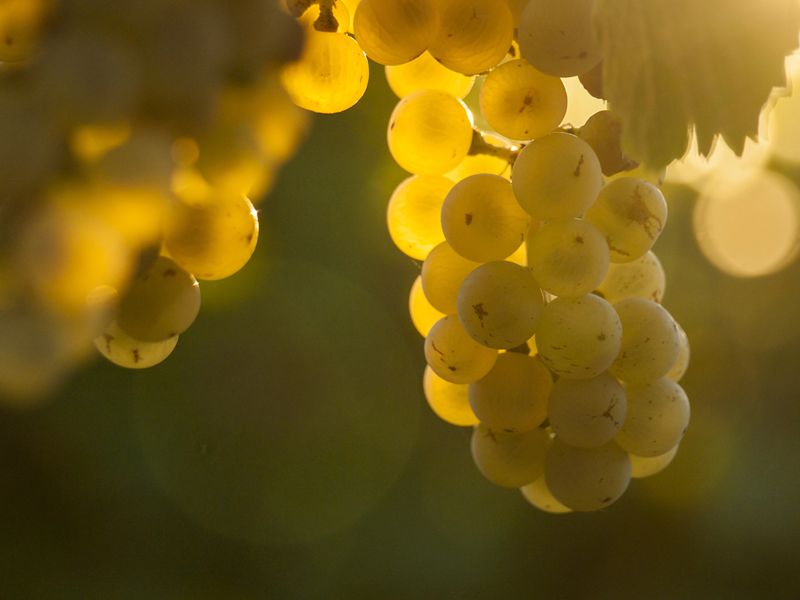
Champagne’s governing body has set one of the region’s lowest production limits in decades for the 2026 harvest, capping the marketable yield at 8,800 kilograms per hectare, or enough wine for about 250 million bottles.
The decision, announced by the Comité Champagne, comes as the French sparkling wine region tries to keep supply closer to demand after several years of softer sales and large inventories. The cap is lower than the one set for the 2025 harvest, at 9,000 kilograms per hectare, and below the 10,000 kilograms allowed in 2024. It is also far below the 11,400 kilograms approved for 2023 and the 12,000 kilograms set for 2022.
By recent standards, the new ceiling is the lowest of the modern era except for 2020, when the Covid pandemic pushed the region to cut the yield to 8,000 kilograms per hectare, equivalent to fewer than 230 million bottles.
In Champagne, the annual yield decision is one of the industry’s most important economic tools. Growers and houses jointly decide how much of the harvest can be turned into marketable wine under the appellation’s rules. The system is designed to protect pricing, preserve the value of the name Champagne and prevent the region from producing more than it can realistically sell.
The Comité Champagne said the new limit was a collective choice meant to gradually reduce stock while protecting growers’ finances and maintaining quality. The decision reflects a balancing act for a region that remains one of the world’s most valuable wine appellations but is also facing a more uncertain business climate, shifting consumer habits and uneven demand across markets.
David Chatillon, president of the Union des Maisons de Champagne and co-president of the Comité Champagne, said the yield had been set with long-term value in mind. He said the region’s collective model allows it to respond to market conditions while continuing to protect the appellation. In the current economic environment, he said, the lower yield represents a cautious approach as the trade works to bring inventories back into line.
The production cap comes even as shipments have shown modest improvement this year. According to the Comité Champagne, shipments rose 1.2% in the first half of 2026 to 107.1 million bottles, helped by exports. If that pace continues through December, the region would end the year at roughly 269 million bottles shipped.
That would mark a small rebound from 2025, when shipments totaled 266 million bottles. Even so, the 2025 figure was down 2% from 2024, when the region shipped 271 million bottles. Those numbers help explain why producers are still choosing restraint despite signs that sales may be stabilizing.
For Champagne, the issue is not only how much wine can be sold this year, but also how much wine is already in reserve. The region relies on stocks to support its nonvintage blends and to smooth out differences between large and small harvests. But high stocks also tie up cash and can become a burden when demand cools. A tighter yield gives growers and houses a way to manage that risk without changing the region’s broader production model.
Maxime Toubart, president of the Syndicat Général des Vignerons de la Champagne and co-president of the Comité Champagne, said the figure reflected both vineyard conditions and the industry’s future needs. His comments underscored the two pressures facing the region at once: a difficult growing season in the field and a cautious commercial outlook in the marketplace.
This year’s growing season in Champagne has been marked by sharp weather swings. The trade body described conditions as complex, with episodes of frost early in the season, extreme heat in June and the recent arrival of dry conditions. The effect has varied widely across the region’s vineyards, a reminder that Champagne’s northern climate is becoming more erratic and that ripening can now move much faster than in the past.
The official start of the harvest is scheduled for Aug. 15, and picking is expected to take place on average between Aug. 20 and Aug. 25. That is about 10 to 15 days earlier than usual. Industry observers have said the season could lead to one of the earliest harvest starts in the region’s history.
An earlier harvest is not automatically a problem for Champagne, and in some years it has helped preserve freshness and healthy fruit. But rapid ripening after frost and heat can create uneven vineyard conditions, making decisions about yields and picking dates more sensitive. It also adds to the pressure on growers, who must move quickly once the grapes reach the right balance for sparkling wine production.
The lower cap for 2026 also shows how far the region has moved from the higher-yield years of the recent past. The step down from 12,000 kilograms per hectare in 2022 to 8,800 kilograms now amounts to a drop of more than 26% over four harvests. From the 2023 level of 11,400 kilograms, the decline is a little more than 22.8%. The comparison with 2024 is also sharp, with the new limit 12% lower than last year’s 10,000-kilogram ceiling.
For growers, a smaller authorized yield can mean less revenue from the current crop, especially in a year when weather has already brought uncertainty. For the major houses, it can support pricing and help avoid adding too much finished wine to cellars at a time when the market is still adjusting. The annual negotiation often exposes those different interests, but the Champagne system depends on both sides reaching a shared position.
That shared position this year is one of caution. While export demand has lifted shipments modestly in 2026, the region is still operating below the volumes seen in stronger post-pandemic years. Producers appear unwilling to read too much into one half-year of growth, especially when broader consumer spending remains under pressure in several key markets.
The result is a harvest that will begin unusually early and under a notably tight commercial ceiling. For one of France’s best-known wine regions, the message is clear: Champagne is still selling, but not yet strongly enough for the trade to risk a larger crop.
