Santiago Will Host the World’s 50 Best Vineyards Awards in November
The event follows a year in which seven Chilean vineyards made the ranking, including Vik at No.1.
2026-08-05
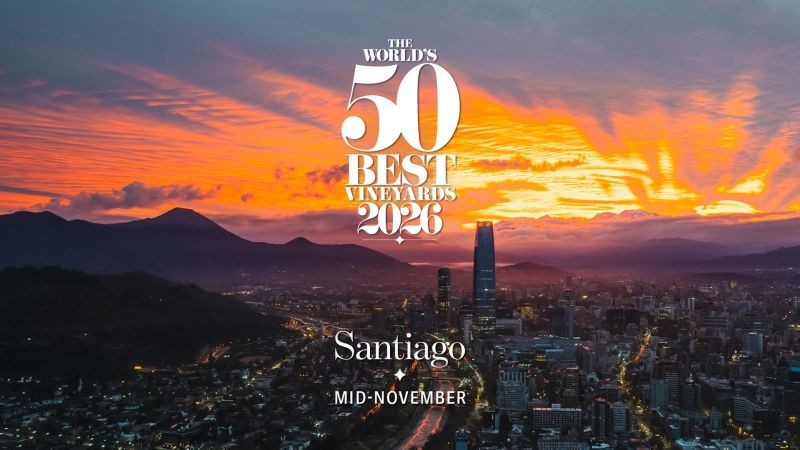
The World’s 50 Best Vineyards awards will be held in Santiago, Chile, in November, bringing one of the wine tourism industry’s main annual rankings to the country for the first time, organizers said on Wednesday.
The program will take place during the week of Nov. 16 in partnership with the Santiago regional government, its development corporation and Grupo Liderazgo, a Chilean business group involved in the event. The annual list, produced by the organization known as 50 Best, ranks vineyard and winery visits around the world and has become a closely watched marker for wine tourism, hospitality and destination marketing.
The announcement places Chile at the center of a global event that has increasingly overlapped with gastronomy and travel, not just wine production. Santiago, the capital, sits next to the Maipo Valley and serves as a common starting point for visitors heading to some of the country’s best-known wine regions. Organizers said the broader Santiago region has more than 40 vineyards open to tourists.
The ceremony is expected to close a multiday program in the city, with guests from the wine, travel and hospitality sectors. Organizers said the events will also highlight Chilean food, culture and landscape, a strategy that reflects how wine rankings now function as tourism platforms as much as industry awards.
The list was previously known as World’s Best Vineyards. Since 2025, it has been part of the 50 Best portfolio published by William Reed, the company behind the group’s restaurant, bar and hotel rankings. That change folded the vineyard awards into a larger set of global hospitality brands that already carry weight with chefs, hotel groups, bartenders and destination marketers.
For Chile, the event comes after several years of stronger visibility in the ranking. In 2025, seven Chilean vineyards made the list, according to the organizers. Vik was named the world’s best vineyard that year and also received the South America distinction. Almaviva, in Maipo, placed at No.34, and Viña Santa Rita, also in Maipo, placed at No.41.
That recent performance helped make the case for taking the ceremony to Santiago. Rikki Tidball, managing director of events for The World’s 50 Best Vineyards, said in a statement that Chile had earned broad recognition for both the quality and diversity of its wine offer. She said the country had continued to stand out through innovation, authenticity and its ties to winemaking tradition.
Claudio Orrego, the governor of Santiago, said hosting the awards supported the region’s effort to strengthen its position as a wine and tourism hub in South America. He described Santiago as the main gateway to wine tourism in Chile, where the energy of the capital meets the wine culture of the Maipo Valley.
Max Raide, president of Grupo Liderazgo, said the event would give international visitors a chance to see not only the country’s better-known valleys and grape varieties, including Cabernet Sauvignon and Carménère, but also Chilean food products from both land and coast that shape the visitor experience in restaurants and vineyards around Santiago.
The ranking itself is built around travel experience rather than wine scores alone. Organizers describe it as a guide to public-facing vineyard destinations that combine wine with hospitality, architecture, food, scenery and service. The list often includes a wide range of properties, from large, design-driven wineries and historic estates to smaller family-run operations.
Voting is handled by an academy of more than 700 wine and travel professionals, including sommeliers and industry specialists. The world is divided into regions, each led by an academy chair. Each region recruits 36 experts, and every academy member casts votes for seven vineyard experiences that were open to the public during the voting period.
There is no formal checklist for what counts as best. Organizers say voters may weigh factors such as atmosphere, food, tours, activities, views, staff, service and value in different ways. Vineyards cannot apply to be included, and organizers say sponsors do not influence the voting.
That system has helped the ranking position itself less as a technical wine competition than as a measure of how vineyards receive visitors. In practice, the list rewards places that have turned wine estates into broader tourism destinations, often with restaurants, hotels, art programs, architecture, outdoor activities or deep historical appeal.
For Santiago and the surrounding region, that focus matters. Chile’s wine industry has long carried international weight in exports, but tourism has become a more visible part of the business as wineries invest in hospitality and direct visitor experiences. The Maipo Valley, within easy reach of the capital, has been one of the clearest examples, with estates that combine cellar visits, tastings, dining and event programming.
The choice of Santiago also reflects a broader pattern in international wine tourism, where capitals and major gateway cities play a larger role in drawing travelers into nearby vineyard regions. Rather than separating urban tourism from rural wine travel, many destinations now market the two together. Organizers appear to be using that model in Chile, where visitors can combine city restaurants and cultural sites with day trips or longer stays in wine country.
The event is also likely to draw attention from wineries elsewhere in Latin America, a region that has gained a stronger place in global wine travel conversations in recent years. Argentina has long attracted international visitors to Mendoza, while Uruguay, Brazil and parts of Peru have been building tourism programs tied to wine and food. Chile’s recent success in the ranking, capped by Vik’s top finish in 2025, has given it added momentum.
The 2026 list will be revealed at the Santiago ceremony in mid-November. Until then, the announcement serves as an early signal of where the wine tourism business sees growth, and of how much influence these hospitality-driven rankings now have in shaping travel plans, brand image and investment across wine regions worldwide.
