Six Lombardy wineries test agroforestry against climate stress in vineyards
The VitiSilvA project will study whether wooded areas improve water retention, protect vines from heat and raise soil quality
Saturday, November 7, 2026
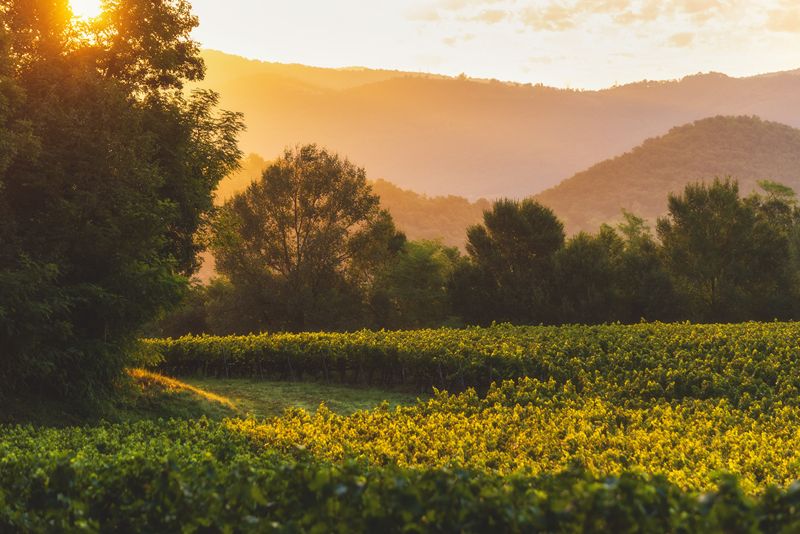
A new research project in northern Italy is testing whether trees, hedges and wooded areas can help vineyards cope with climate pressure while improving biodiversity and soil health.
The project, called VitiSilvA, brings together six long-established wine estates in Franciacorta and Oltrepò Pavese, two important wine areas in Lombardy. It was designed and is being coordinated by the agronomy firm Sata and is being funded through Lombardy’s Rural Development Complement. The participating wineries are Corte Bianca, Mosnel, Villa Franciacorta, Azienda Agricola Frecciarossa, Cordero San Giorgio and Tenuta Mazzolino.
The initiative focuses on agroforestry, a farming approach that combines crops with trees or other permanent vegetation. In this case, researchers want to understand how those elements affect vineyards in places where woods, hedgerows and other natural features are already part of the landscape. The work is aimed at a problem that is becoming more urgent for wine producers: vineyards are increasingly exposed to heat waves, drought, late frosts and other extreme weather events linked to climate change.
Sata founder and agronomist Pierluigi Donna said the project was created to study, on a scientific basis, whether agroforestry can reduce climate stress, improve soil condition and make vineyards more resilient. While agroforestry is used in other farming systems, he said it remains little explored in Italian viticulture.
The scientific lead for the project is Lorenzo Rossi, a professor at the University of Milan, with support from the University of Modena and Reggio Emilia. Researchers are examining how vines interact with surrounding vegetation by tracking root development, canopy and bud temperatures, vine growth and grape ripening. The study will also use specialized underground observation windows to look more closely at how roots compete for water and how access to water changes when trees and vines grow near each other.
Another part of the work centers on the environmental effects of agroforestry. The research team plans to measure how much carbon can be stored in soil and plant biomass, whether the system improves water retention and how it affects biodiversity. The analysis will include tests of the biological quality of soils, an inventory of habitat trees and mapping of natural elements across the participating estates.
Lombardy regional agriculture official Alessandro Beduschi said the region sees the project as an important opportunity for experimentation, research and innovation. He said the trial fits into a broader effort to strengthen the reputation of Lombardy’s wine sector, which is increasingly marketed on the basis of product quality, farming practices and environmental sustainability. He also said the ability to innovate has become more important as wine producers face a more competitive international market.
The wineries involved are contributing different settings and production histories to the study. In Oltrepò Pavese, Tenuta Mazzolino views the project as a way to deepen vineyard management practices that protect both wine quality and the surrounding land, while also helping spread new methods among other producers. Frecciarossa is placing particular attention on whether tree species can reduce climate stress in Pinot Noir vineyards, while also improving the landscape and the estate’s hospitality setting.
In Franciacorta, Corte Bianca offers a site surrounded by woodland, which researchers see as useful for studying the relationship between cultivation, built space and the landscape in low-impact wine production. Villa Franciacorta is contributing experience in managing biodiversity and the coexistence of vineyards, woods and natural areas. Mosnel said its participation is tied to preserving a territory where embankments, field edges and turning areas are also considered part of the natural heritage. Cordero San Giorgio completes the network and adds another point of comparison among the vineyard environments included in the trial.
The project is expected to produce a technical document for farms, protection consortia and agricultural knowledge and innovation groups. The aim is to turn the findings into practical guidance that wine producers can use as they adapt to changing climate conditions while maintaining the ecological value of vineyard landscapes.