Castilla-La Mancha produced more wine than the rest of Spain combined through September
Spain declared 29.38 million hectoliters in the first two months of the 2026/2027 campaign, with the region accounting for 54.6% of output
Friday, November 6, 2026
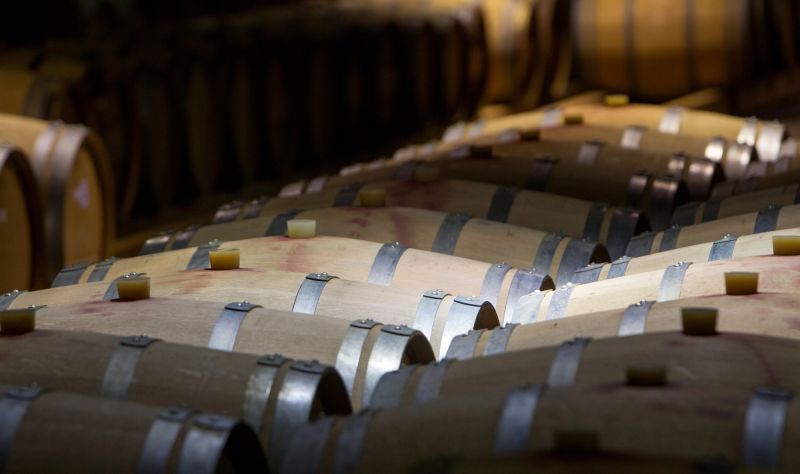
Spain declared 29.38 million hectoliters of wine production between Aug. 1 and Sept. 30, the first two months of the 2026/2027 marketing year, according to data published in November by the Agriculture, Fisheries and Food Ministry. White wines accounted for 16.95 million hectoliters, or 57.7% of the total, while reds and rosés reached 12.43 million hectoliters.
Castilla-La Mancha dominated the early campaign figures. The region produced 16.04 million hectoliters, or 54.6% of all wine declared during the period, more than the combined output of the rest of the country. By the end of September, operators covered by the statistics reported 53.62 million hectoliters of wine in storage. When unconcentrated must is included, total stocks reached 61.58 million hectoliters.
The figures come from Spain’s Wine Sector Market Information System, known as INFOVI, using an extraction made on Oct. 28. The ministry said the production data cover producers with annual volumes of at least 1,000 hectoliters, while the stock and movement tables also include storage operators. That means the report is a partial snapshot of the campaign rather than a final harvest result or a full-year production figure for 2026.
The volume of grapes entering those facilities totaled 4.58 billion kilograms during the two-month period. White grapes accounted for 2.76 billion kilograms, or 60.3%, and red grapes 1.82 billion kilograms, or 39.7%. September alone contributed 3.07 billion kilograms of grapes and 18.70 million hectoliters of wine, meaning the month represented 63.7% of the wine declared since the campaign began.
Castilla-La Mancha led both major categories of production. Its total included 9.55 million hectoliters of white wine and 6.49 million hectoliters of reds and rosés. The region also received 2.67 billion kilograms of grapes.
Extremadura ranked second in cumulative production with 3.32 million hectoliters, followed by Catalonia with 2.27 million. Those three regions together accounted for 73.6% of the declared national volume. Next came Castile and León with 1.85 million hectoliters, La Rioja with 1.56 million, and the Valencian Community with 1.22 million. The top six regions made up 89.4% of declared output through September.
The mix of wine styles varied sharply across the country. White wines made up 76.6% of output in Extremadura and 78.9% in Catalonia. Their share rose to 89.8% in Galicia and 97.5% in Andalusia, where total production reached 389,210 and 750,193 hectoliters, respectively. In La Rioja, reds and rosés represented 90.1% of declared wine, while in Murcia they accounted for 92.9%. Castile and León showed a more even split, with whites at 53.6%.
Wine stocks rose sharply during September as the new harvest entered the system. Declared wine inventories increased from 37.12 million hectoliters at the start of the month to 53.62 million by the end, a gain of 16.50 million hectoliters, or 44.4%. Unconcentrated must increased from 2.87 million to 7.96 million hectoliters. Combined wine and unconcentrated must stocks therefore climbed from 39.99 million to 61.58 million hectoliters during the month. The ministry said that comparison reflects the internal change during September and should not be read as a year-over-year increase.
Most of the stock build took place in bulk wine. At the end of September, bulk holdings stood at 47.73 million hectoliters, equal to 89% of all wine stocks. Packaged wine totaled 5.89 million hectoliters, down from 6.11 million at the start of the month, a decline of 223,470 hectoliters, or 3.7%. By color, inventories were nearly even, with 26.83 million hectoliters of reds and rosés and 26.79 million hectoliters of whites.
Castilla-La Mancha also held the largest share of stored wine, with 21.69 million hectoliters, or 40.4% of the national total declared. Catalonia followed with 6.16 million hectoliters, ahead of La Rioja with 5.37 million, Castile and León with 4.21 million, Extremadura with 3.74 million, and Andalusia with 3.25 million. The ministry said those stocks reflect wine remaining in facilities at the end of September and not only wine made during the new campaign.
The concentration was even greater in unconcentrated must. Castilla-La Mancha held 6.45 million hectoliters, or 81% of the national total. The Valencian Community had 704,683 hectoliters, Catalonia 296,334, and Extremadura 236,016. When wine and unconcentrated must are combined, Castilla-La Mancha’s stocks reached 28.14 million hectoliters, or 45.7% of Spain’s total. INFOVI separately counted another 243,096 hectoliters of concentrated musts, rectified concentrated musts and partially fermented musts.
Wine movements during September showed 3.69 million hectoliters of outgoing wine. Of that amount, 2.33 million hectoliters were destined for the domestic market and 1.37 million for foreign markets. External destinations therefore accounted for 37% of the declared outflows. The ministry noted that these are monthly movements and should not be confused with the 29.38 million hectoliters of cumulative production declared between August and September.
Domestic outflows other than distillation and vinegar production totaled 2.29 million hectoliters. Bulk wine represented 1.40 million hectoliters and packaged wine 884,611 hectoliters. Castilla-La Mancha recorded 978,940 hectoliters of these domestic movements, followed by Catalonia with 249,699 and Castile and León with 187,531. The ministry said those figures do not directly measure household or restaurant consumption because they also include transfers between operators. At the same time, incoming wine from other Spanish operators to the reporting facilities totaled 1.69 million hectoliters.
Other domestic outflows were smaller. Distilleries received 21,189 hectoliters and vinegar plants 20,011 hectoliters. Castilla-La Mancha and Catalonia accounted for most of those volumes, with a combined 18,913 and 12,623 hectoliters, respectively, across the two destinations. In a separate category, own-account operations accounted for 96,654 hectoliters, including 58,429 hectoliters of white wine and 38,225 hectoliters of reds and rosés.
Exports reported through the system reached 1.37 million hectoliters in September. European Union countries received 924,098 hectoliters and non-EU markets 441,585 hectoliters, meaning the bloc accounted for 67.7% of declared external shipments. The ministry said those figures are only indicative because they cover declarations from operators included in INFOVI and may not capture exports handled by other companies. It said the official reference for exports actually carried out is Datacomex.
The form of wine shipped differed by market. For EU destinations, bulk wine totaled 664,003 hectoliters, or 71.9% of the total, while packaged wine accounted for 260,095 hectoliters. For non-EU markets, the pattern was reversed: packaged wine reached 297,253 hectoliters, or 67.3%, while bulk wine stood at 144,332 hectoliters. The ministry said those proportions describe shipment volumes only and do not allow conclusions about revenue or prices.
Castilla-La Mancha led foreign shipments with 788,771 hectoliters, including 661,634 hectoliters sent to the EU. The Valencian Community ranked second with 176,287 hectoliters, followed by Catalonia with 105,117, Extremadura with 78,307, and Murcia with 73,988. The Valencian profile differed from Castilla-La Mancha’s. Its shipments to non-EU markets reached 136,723 hectoliters, exceeding Castilla-La Mancha’s 127,137 hectoliters to those destinations. Of the Valencian total sent outside the EU, 110,138 hectoliters were bulk wine.
Incoming wine from abroad totaled 75,156 hectoliters in September, with 50,946 hectoliters arriving from the EU and 24,210 from non-EU countries. Bulk wine made up 73,567 hectoliters, compared with 1,589 hectoliters of packaged wine. Castilla-La Mancha received 29,699 hectoliters, Murcia 15,293, and Extremadura 13,196, the largest regional volumes recorded.
Unconcentrated must remained overwhelmingly oriented toward the EU market. Of the 117,388 hectoliters declared as foreign outflows, 117,222 hectoliters went to EU countries and only 166 hectoliters to destinations outside the bloc. Castilla-La Mancha accounted for 84,463 hectoliters of those shipments, followed by Catalonia with 19,825 and the Valencian Community with 13,100. Other must products were recorded separately, with 19,448 hectoliters of concentrated must, 19,519 hectoliters of rectified concentrated must and 72 hectoliters of partially fermented must.