Brazil’s Registered Cachaça Producers Reached a Record 1,538 in 2025
Declared production fell 15.77% to 234.48 million liters, exposing a widening gap between formal growth and output
Monday, August 3, 2026
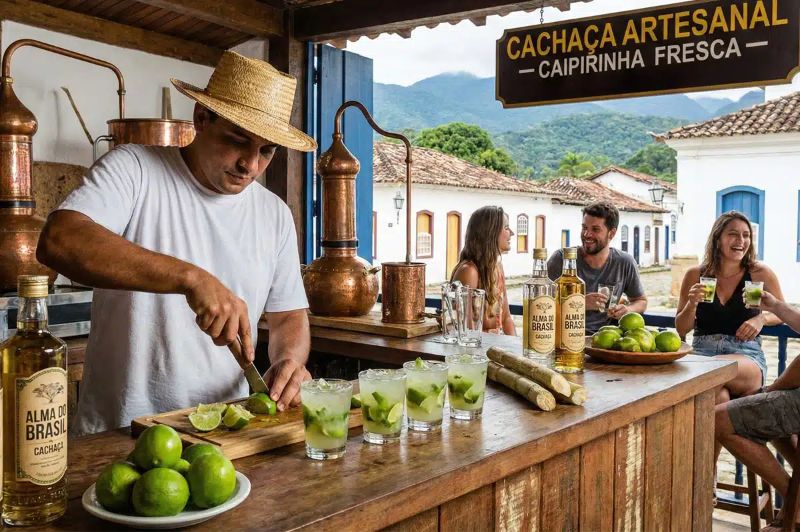
Brazil ended 2025 with a record 1,538 registered cachaça producers, even as declared production fell sharply, according to the Anuário da Cachaça 2026 released by the Ministry of Agriculture and reported by Times Brasil–CNBC.
The figures show a widening gap between the formal expansion of the sector and the volume it produced. The number of registered manufacturers rose 21.5% from 1,266 in 2024 to 1,538 in 2025. At the same time, declared production dropped 15.77% to 234.48 million liters. Based on the reported percentage change, comparable output in 2024 was about 278.4 million liters, which implies a decline of roughly 43.9 million liters.
The data suggests that average declared production per establishment fell steeply over the year, even as more companies entered the formal market. That divergence is one of the main signals in this year’s report, which tracks the structure of Brazil’s cachaça industry and its registered output.
Other indicators also pointed to growth in the formal business base. Brazil had 8,379 registered cachaça products at the end of 2025, up 16% from a year earlier. Registered brands reached 11,131, an increase of 16.8%. The number of municipalities with cachaça production rose to 844, up 14.8%, showing that production remained geographically broad even with lower total volume.
The ministry’s report, dated July 31, was summarized by Times Brasil on August 1. The publication highlighted that the sector added producers, brands and products despite a contraction in supply. Because some prior-year volumes are derived from rounded percentages, absolute comparisons should be read as estimates rather than exact official totals.
Cachaça exports moved in the opposite direction from domestic production. Brazil exported 7.96 million liters in 2025, up 19.4% from the previous year, according to the same report. Export revenue reached $17.07 million, a gain of 17.4%.
Using those rates, export volume appears to have increased by about 1.29 million liters from roughly 6.67 million liters in 2024. Export value rose by about $2.53 million from around $14.54 million a year earlier.
Even with higher sales abroad, average export revenue per liter edged down. Based on the reported totals, the average value slipped from about $2.18 per liter in 2024 to about $2.14 per liter in 2025, a decline of roughly 1.7%. That indicates export volume grew faster than export earnings, though the change does not necessarily reflect a broad price cut across all markets because export values vary by destination, packaging and product mix.
Brazilian cachaça reached 76 foreign destinations in 2025, matching the highest level in the series that began in 2011. The United States accounted for about 24% of export value, making it the leading market by revenue. Paraguay led by volume.
The latest figures leave Brazil’s cachaça industry with two distinct trends at once: a larger and more formal producer base at home, and stronger shipments abroad, but lower overall declared production and slightly weaker average export income per liter. For a category closely tied to Brazil’s food and drink identity, the numbers point to an industry that is expanding its footprint without yet translating that growth into higher output.