Ireland puts seaweed at the center of a tourism drive on its western coast.
Along the Wild Atlantic Way, visitors now join foraging walks, tour cultivation sites, taste coastal dishes and book seaweed baths.
Thursday, August 6, 2026
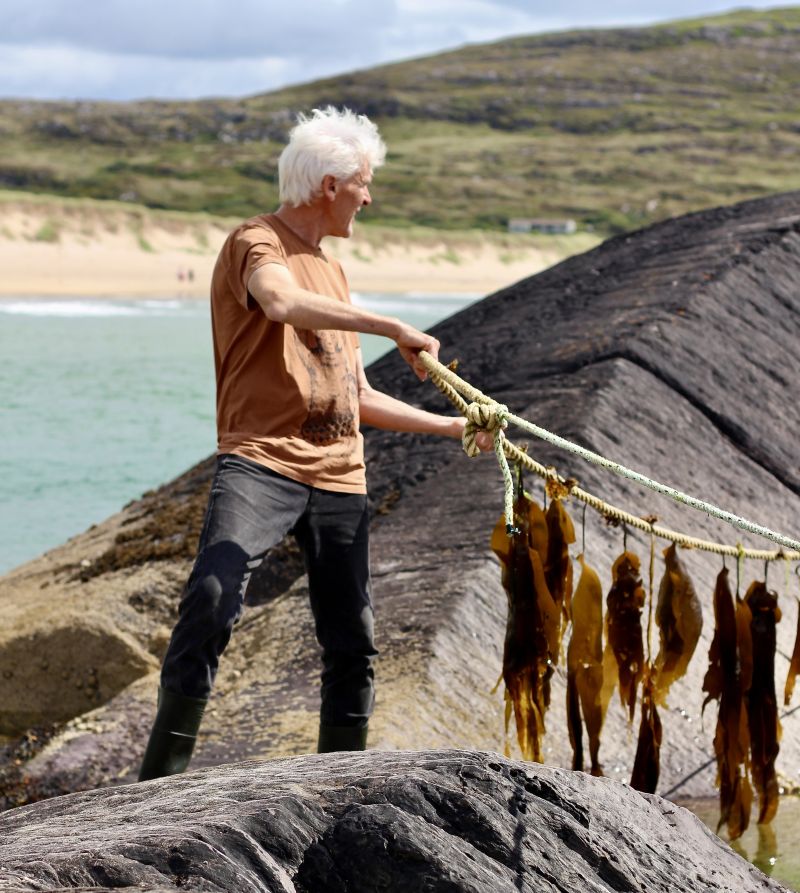
Ireland is putting seaweed at the center of a new food and tourism push along its western coast, where travelers can now join foraging walks, visit cultivation sites, taste marine ingredients onshore and at sea, and book traditional seaweed baths that have been part of local life for more than a century.
The effort draws on a long Irish relationship with edible seaweeds, especially along the Atlantic shore in counties such as Kerry, Sligo and Galway. While seaweed has long been common in parts of Asia, it is only recently gaining wider space in Western fine dining and wellness culture. Irish tourism and local producers are trying to turn that shift into a visitor experience rooted in landscape, history and sustainable food.
Much of that activity is concentrated along the Wild Atlantic Way, the coastal route that runs past beaches, rocky coves and small towns where seaweed still washes ashore in large quantities. There, companies and guides are offering hands-on introductions to species that chefs increasingly treat as ingredients rather than curiosities. Visitors are shown how to identify edible varieties, how to harvest them responsibly, and how they are used in broths, seasonings, salads and snacks.
In south Kerry, one of the best known seaweed experiences now takes place near Derrynane and Abbey Island, close to the Ring of Kerry. Atlantic Irish Seaweed, founded by John and Kerryann Fitzgerald, leads shore-based walks that mix tasting, foraging and local history. The company also takes visitors to an archaeological site that the operators say may date to 8000 B.C. and may point to very early seaweed consumption in Ireland.
The setting is part of the appeal. Abbey Island holds the ruins of a 6th-century abbey that can be reached at low tide, and the nearby shoreline offers a close view of the species that have shaped local food traditions. During the walks, guides discuss varieties such as Himanthalia elongata, often sold as sea spaghetti, and pepper dulse, or Osmundea pinnatifida, which is used as a seasoning for its peppery, garlicky notes. Dulse and nori are also part of the tastings, linking modern cooking trends to ingredients long used in coastal households.
Seaweed’s historic role in Ireland goes beyond present-day gastronomy. Local guides and food historians often point to Skellig Michael, the larger of the Skellig Islands off Kerry, where monks once lived in severe isolation. Dulse, a red seaweed abundant in these waters, is part of the traditional account of how they supplemented their diet. Skellig Michael, now a UNESCO World Heritage site, sits about 7 miles from the coast and is reached by boat in summer weather. The island has also drawn visitors since it appeared in “Star Wars: The Force Awakens,” adding a pop culture layer to a place already important for religion, ecology and food history.
Interest in seaweed is being helped by a wider argument about sustainability. In 2020, the United Nations Food and Agriculture Organization and partners published a Seaweed Manifesto that presented marine algae as a tool for food security, coastal jobs and lower-impact production. The document argued that seaweed farming does not need arable land, fertilizer or freshwater, making it attractive at a time when food systems are under pressure from climate change and resource use.
That global case is now feeding into local business in Ireland. In Connemara, on the west coast, Mungo Murphy’s Seaweed offers foraging sessions, tastings, farm visits and seaweed-focused food experiences. Operators say visitors want more than a meal. They want to understand how the crop is grown, what distinguishes wild from farmed seaweed, and how marine ingredients can fit into everyday cooking. The business reflects a broader shift in tourism, where food is increasingly sold as education and participation rather than only consumption.
Chefs have helped drive the change. Seaweed is showing up more often in restaurants as a seasoning, a garnish, a preserved product and a vegetable in its own right. Its appeal lies partly in flavor. Depending on the species, it can bring salinity, umami, minerality or a mild nutty edge without relying on imported ingredients. For a country marketing place-based cuisine, that gives Ireland a product that is both local and distinct.
The seaweed revival in Ireland is also tied to older bathing traditions. In County Sligo, several businesses continue the practice of hot seaweed baths, which locals have used for generations. In Strandhill, Voya Seaweed Baths sits near the ocean and offers treatments built around hand-harvested seaweed. In Enniscrone, Killcullen’s Seaweed Bath, an Edwardian bathhouse, has been operating since 1912. These businesses promote seaweed as part of relaxation and skin care, continuing a tradition that blends coastal labor, folk practice and tourism.
The bathhouses are different from the newer foraging tours, but they serve the same broader idea: that seaweed can be experienced as food, heritage and wellness at once. For visitors, that may mean a morning collecting edible varieties from the shore and an afternoon in a wooden tub filled with heated Atlantic water and cut seaweed. For local businesses, it is a way to keep a traditional material economically relevant in a changed travel market.
Irish producers are also trying to move beyond the image of seaweed as a niche health product. Some now sell condiments, dried sea vegetables, bath products and crafted household items made from marine materials. Atlantic Irish Seaweed, for example, uses large kelp stems in handmade utensils and other goods. That commercial range reflects how businesses are trying to widen the market without losing the story of place.
For tourism officials and small operators alike, timing matters. Travelers are showing more interest in low-impact food experiences, wild landscapes and activities tied to local knowledge. Seaweed brings all three together. On Ireland’s west coast, that now means visitors can step onto a beach, learn the names of what is attached to the rocks, taste it a few feet from the tide line, and then find the same ingredient later on a plate in Connemara, Kerry or Sligo.