Scientists identify a molecular switch that helps grapevines survive cold
The study found that the protein VpCDPK13 strengthens frost tolerance by activating VpCAMTA3, offering targets for future breeding
2026-07-24
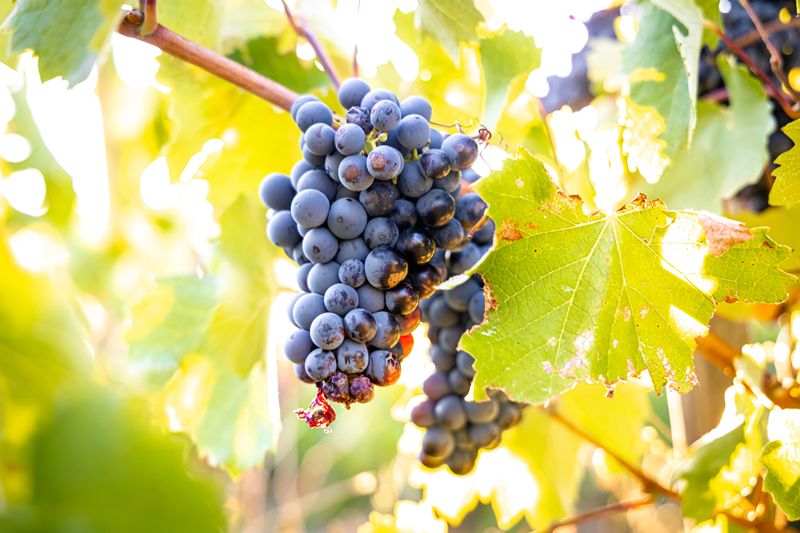
A study published Friday in Horticulture Research reports that researchers have identified a molecular pathway that helps grapevines withstand cold, a finding that could support future breeding work as vineyards face more unstable winter and spring temperatures.
The paper, led by scientists at Northwest A&F University in Yangling, China, focused on Vitis pseudoreticulata, a wild grape species used in stress-resistance research. The team found that a calcium-dependent protein kinase known as VpCDPK13 is activated by low temperatures and improves the plant’s ability to tolerate cold. It does so by interacting with and modifying another protein, the transcription factor VpCAMTA3, which then strengthens the vine’s defense response.
Cold remains one of the main environmental threats to grape production. Freezing events can damage buds, reduce vine vigor and cut yields across seasons. That risk has become more important for growers as climate variability brings sharper temperature swings, including warm spells followed by sudden frosts.
According to the study, VpCDPK13 acts early in the plant’s cold response. Its gene activity rose quickly when leaves were exposed to 39.2°F, and the protein accumulated more strongly in the nucleus under cold conditions. The researchers describe this as evidence that the kinase may help translate calcium signals triggered by low temperature into protective changes inside the cell.
To test its role, the team created grapevine plants that overexpressed VpCDPK13 and compared them with normal plants and with plants in which the gene was silenced. Under cold treatment, vines with higher VpCDPK13 expression kept greener leaves, showed less wilting and maintained better photosynthetic performance. They also had lower electrolyte leakage and lower levels of malondialdehyde, a marker of membrane damage.
The same plants accumulated less hydrogen peroxide and superoxide, two reactive oxygen species that rise under stress and can injure cells if not controlled. At the same time, they showed higher peroxidase activity, suggesting a stronger antioxidant defense system. When VpCDPK13 was silenced, the pattern reversed: plants became more sensitive to cold, with more membrane injury, more oxidative stress and weaker photosynthetic efficiency.
The researchers then looked for proteins that interact with VpCDPK13 and identified VpCAMTA3. Several assays confirmed that the two proteins physically bind to each other. VpCAMTA3 itself was also induced by cold in leaves and roots, and plants in which it was silenced showed poorer cold tolerance, again with higher oxidative damage and lower photosystem performance.
The central finding of the paper is that VpCDPK13 phosphorylates VpCAMTA3, meaning it adds phosphate groups to specific sites on the protein. Laboratory assays identified three major sites: Thr588, Ser834 and Ser1049. When those sites were altered so they could no longer be phosphorylated, VpCAMTA3 lost much of its protective effect under cold stress. When they were changed to mimic phosphorylation, the protein performed better than the unmodified version.
In transient expression tests on grapevine leaves, the phospho-mimic form of VpCAMTA3 produced the strongest cold tolerance. Those leaves retained higher Fv/Fm values, a standard measure of photosystem II efficiency, and showed lower ion leakage, lower malondialdehyde content and less reactive oxygen species accumulation than leaves expressing either the normal protein or the phospho-dead version.
The authors say this establishes a VpCDPK13-VpCAMTA3 signaling module that promotes adaptation to cold stress by helping maintain membrane integrity, preserve photosynthetic function and improve reactive oxygen species scavenging.
The work adds to a growing body of research on how perennial fruit crops manage abiotic stress at the molecular level. In grapevines, cold hardiness has long been studied through pathways involving ABA signaling, CBF genes and sugar accumulation. This study points to a different layer of regulation centered on calcium signaling and protein phosphorylation.
It also suggests that CAMTA3 proteins may be regulated differently across species. The paper notes that in Arabidopsis, phosphorylation of CAMTA3 by other kinases has been linked to reduced stability of the protein. In this grapevine system, by contrast, phosphorylation by VpCDPK13 appears to enhance VpCAMTA3 function during cold exposure.
That distinction may matter for breeding programs. While the study does not present a commercial application or field trial, it identifies two molecular targets that could be useful in efforts to develop grape varieties with improved tolerance to freezing conditions. Such traits are increasingly relevant not only in traditionally cold regions but also in areas where erratic weather can expose vines to damaging frost after early budbreak.
The authors said their findings provide new insight into cold-stress signaling in grapevine and may offer targets for improving resilience in perennial fruit crops. The study was supported by the Ningxia Hui Autonomous Region Key R&D Program.
