E.U. Officials Reviewed EFSA’s Glycerol Safety Opinion at a Brussels Wine Policy Meeting
The discussion paired a food additive risk assessment with preparations for upcoming OIV decisions that often shape European wine rules.
Wednesday, July 1, 2026
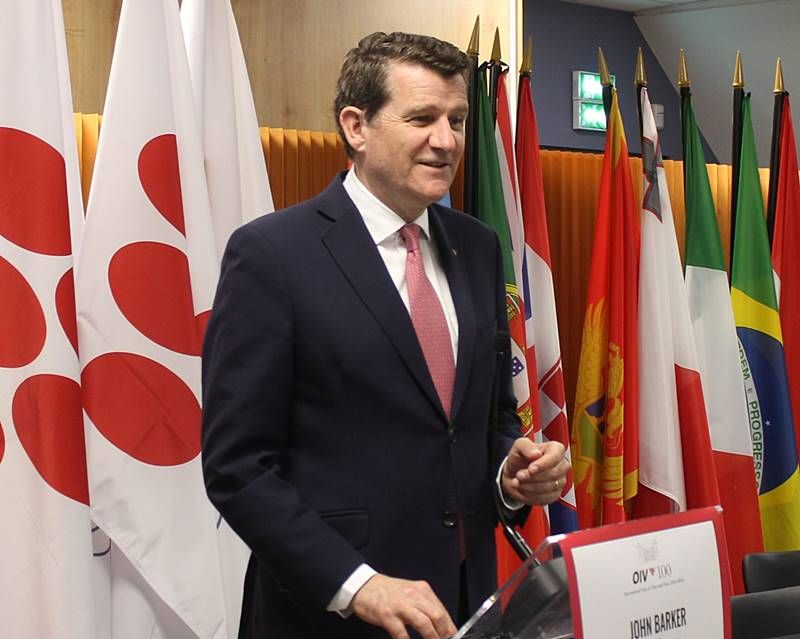
The Council of the European Union convened its Working Party on Wines and Alcohol on June 25 in Brussels, bringing together national delegations to review recent developments at the International Organisation of Vine and Wine, known as the OIV, and to discuss a new food safety opinion that could matter for beverage producers across Europe.
The meeting took place at 10 a.m. in the Justus Lipsius building, the Council’s main headquarters in Brussels, according to the notice circulated by the General Secretariat of the Council on June 18. The agenda shows how the European Union is preparing common positions on technical and regulatory matters affecting wine and alcohol before discussions advance further at the international level.
At the center of the session was a presentation by the rotating presidency on the main outcomes of OIV meetings held in April. Delegates were asked to examine structural and procedural changes proposed by the OIV Executive Committee, or COMEX, linked to the implementation of the organization’s Strategic Plan 2025-2029. They also reviewed draft OIV resolutions that have reached step 7, a late stage in the organization’s decision-making process, where texts are close to final adoption.
The agenda also included preparations for two major OIV events later this year: the 47th World Congress and the 24th General Assembly. Delegations were due to discuss meeting dates and deadlines for October 2026, when those gatherings are expected to shape technical standards and policy guidance used by wine-producing countries and industry bodies around the world.
For Europe’s wine sector, these working party meetings are often an early signal of where regulation may move next. The OIV does not legislate for the European Union, but its scientific and technical standards carry weight in Brussels and in national capitals. Its resolutions can influence rules on winemaking practices, labeling, analytical methods, product definitions and trade criteria. When EU member states coordinate their views ahead of OIV votes, producers, exporters and trade groups watch closely because those positions can later feed into European law or administrative guidance.
Another item on the June 25 agenda pointed to a more immediate food safety issue. Delegates exchanged views on a scientific opinion from the European Food Safety Authority concerning the safety of acute exposure to glycerol, also known as food additive E422, from beverages. Glycerol is used in parts of the food and drinks industry for technical purposes, and EFSA’s assessment could affect how regulators view acceptable exposure levels, especially in products where consumption patterns may lead to short-term intake spikes.
The inclusion of EFSA’s opinion alongside OIV business suggests that EU officials are treating scientific risk assessment and international standard-setting as linked parts of a broader regulatory process for alcoholic beverages. While no legislative decision was scheduled at this meeting, such exchanges often help define member states’ concerns before formal proposals emerge from the European Commission or before common positions are taken in international forums.
The official notice identified the meeting as No. 366811 and said it would be held in a 1+2 room format, meaning each delegation could attend with one principal representative and two additional participants. The document was issued under Council reference CM 3096/1/26 REV 1 and listed subject areas including agriculture, agricultural markets organization and OIV matters.
A related Council report dated June 25 was also circulated to delegations under reference ST 11049 2026 INIT. That document confirms that the Working Party on Wines and Alcohol met as planned on that date under the authority of the General Secretariat of the Council. Such reports typically serve as part of the internal record used by member states to track discussions and prepare follow-up work.
The Working Party on Wines and Alcohol is one of several specialized bodies through which EU governments coordinate technical positions before issues reach ministers or become part of broader negotiations. In practice, much of the detailed work that shapes future policy on wine is handled at this level. Discussions can cover everything from oenological practices and compositional standards to health-related assessments that may affect ingredients or processing aids used in beverages.
That matters for a sector facing pressure from several directions at once. European wine producers are dealing with changing consumption patterns, climate-related production challenges and tighter scrutiny over health claims, additives and labeling. At the same time, they remain deeply tied to export markets where alignment with international standards can ease trade or reduce disputes over product categories and production methods.
The June 25 meeting did not announce new rules. But its agenda made clear that Brussels is actively organizing its response to upcoming OIV decisions while also weighing fresh scientific advice relevant to beverage safety. For wineries, trade associations and regulatory advisers, that combination offers a useful view of what may shape policy debates in the months ahead.