










Monastic branding drives a vast alcohol business beyond Vatican ritual
The Church still regulates altar wine for Mass, but global drinks companies profit far more from abbey imagery and religious heritage
2026-06-08
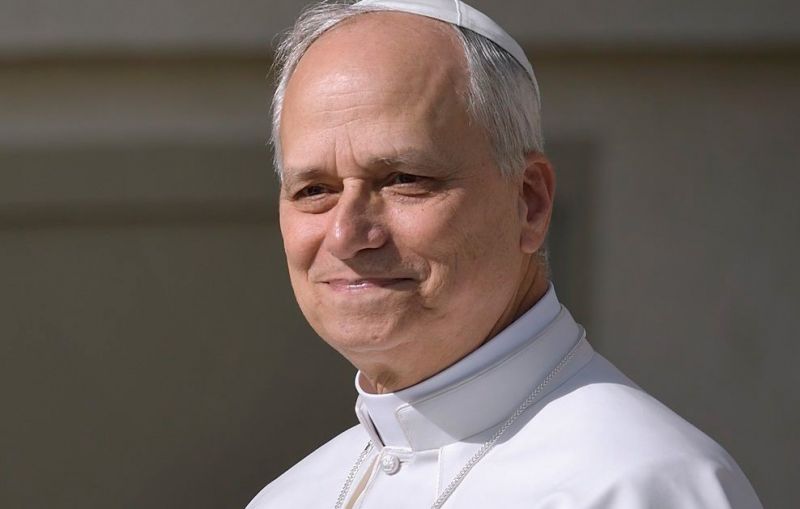
Behind the ritual of the Catholic Mass and the pageantry of Vatican diplomacy, alcohol remains part of a global business that mixes theology, agriculture, trade and branding. The Roman Catholic Church still depends on tightly regulated wine for the Eucharist, the Vatican remains an influential buyer and showcase for premium bottles, and monastic imagery continues to generate large sales in beer and spirits far beyond monastery walls.
The system works on several levels at once. At the parish level, sacramental wine is a niche but durable market governed by Canon Law. At the state level, Vatican City operates as a tax-exempt buyer and retailer with unusual influence for a territory of about 800 residents. In the broader consumer market, abbey names, monk imagery and religious history have become valuable commercial assets for multinational drinks companies that often have limited or no direct monastic involvement in production.
For altar wine, the rules begin with doctrine. Canon 924 requires that Eucharistic wine be natural, made from grapes and uncorrupted. That standard has created a specialized supply chain in which producers must satisfy both winemaking demands and church oversight. The wine cannot be flavored or altered in ways that would invalidate its use at Mass. Yet it also has to survive storage and shipping across long distances without turning to vinegar.
That tension has shaped how sacramental wine is made. Producers generally follow a minimal-intervention approach, while relying on small amounts of sulfites or fortification to preserve stability. Fortified styles are common because they last longer after opening and suit parishes that use only small quantities each week. White and pale wines are also widely used for practical reasons, since they stain altar linens less than red wine.
The market is small compared with the broader wine industry, but it has high barriers to entry. In many dioceses, bishops or local church authorities issue formal approval confirming that a producer meets canonical standards. Without that approval, wineries face difficulty selling to parishes that want certainty about the validity of the sacrament.
Several producers have built longstanding businesses around that demand. In Australia, Sevenhill Cellars, founded by Jesuits in 1851 in South Australia’s Clare Valley, supplies altar wines domestically and exports across parts of Asia and the Pacific. In California, Cribari Vineyards in Fresno and San Antonio Winery in Los Angeles and Paso Robles remain established names in the U.S. sacramental market. In Spain, De Muller in Tarragona traces its liturgical wine business to the 19th century and has long sold vino de misa in Spain and abroad. In Sicily, Carlo Pellegrino produces vino da messa under episcopal authorization and has also been identified as a supplier to the Vatican.
The Vatican’s own role in alcohol goes beyond religion. As a sovereign state created under the Lateran Treaty of 1929, it benefits from duty-free status that shapes its retail market. That helps explain why Vatican City has long ranked among the world’s highest consumers of wine per capita, with estimates commonly ranging from 74 to 79 liters per resident each year. The figure reflects not only clergy consumption but also the structure of a tiny state with tax-free purchasing channels used by employees, officials and accredited buyers.
Wine enters Vatican life through controlled outlets such as the Annona store and the railway station duty-free shop, where access is restricted. For producers, winning shelf space or supply contracts can carry prestige well beyond sales volume. Reports on the Vatican wine trade indicate that Italian wineries dominate imports, accounting for between 96% and 99.9% of bottles entering the city-state.
That dominance gives Italian producers an advantage in one of the world’s most symbolic beverage markets. Premium labels from major houses such as Antinori appear in Vatican retail channels alongside wines from smaller religious or regional producers. The Holy See has also moved toward limited internal production at Castel Gandolfo, where a vineyard project under consultant Riccardo Cotarella is expected to yield a proprietary Vatican wine sold inside the state.
Wine also serves diplomatic purposes. At official meals and receptions, bottle selection can signal national identity, hospitality and restraint at once. Italian sparkling wines and still wines are often used when hosting dignitaries, reinforcing both local prestige and protocol. Gifts matter too. In April, Pope Francis gave King Charles III and Queen Camilla a magnum of Aneri Amarone from the 2005 vintage during celebrations marking their 20th wedding anniversary, according to wine industry reports.
The symbolism extends to papal travel. On outbound international trips from Rome, papal flights are typically operated by Italy’s national carrier, now ITA Airways, while return flights are usually handled by an airline from the host country. Food and beverage service on board has long reflected both logistics and papal style. Accounts from church reporters and wine writers describe Pope Benedict XVI as favoring beer and sweet wines tied to his German background, while Pope Francis has projected a simpler approach, preferring modest service and often sharing the same meal offered to journalists traveling with him.
If sacramental wine remains closely regulated, the consumer market built around monastic identity is far looser and far larger. Here the Church’s economic relationship with alcohol shifts from direct religious use to licensing, royalties and brand storytelling.
The clearest line is found in Trappist beer. To carry the “Authentic Trappist Product” label, beer must be brewed within a Trappist monastery, under monastic supervision, with revenue directed to support the abbey and charitable work rather than corporate profit. That standard sharply limits supply and protects brands such as Chimay, Orval, Rochefort and Westmalle.
Outside that category lies the much broader abbey beer business. These beers may use monastery names, religious imagery and centuries-old origin stories without being brewed by monks or inside abbeys. Instead, they are usually produced by commercial breweries under licensing agreements that pay royalties to religious institutions.
Leffe is one of the best-known examples. Its roots lie in Notre-Dame de Leffe Abbey in Belgium, but today it is owned by AB InBev and brewed on an industrial scale. Grimbergen follows a similar model through rights held by Heineken in Belgium and Carlsberg internationally. Affligem is another major licensed abbey brand now tied to Heineken’s global brewing system. Maredsous is produced by Duvel Moortgat under license from the abbey.
These arrangements are legal and often financially useful for religious communities that receive royalties for restoration or charitable work. But they also show how far monastic branding has moved into mainstream consumer marketing. The appeal rests on ideas of heritage, craftsmanship and authenticity even when production is fully secular.
The split between authentic monastic production and commercial adaptation can be seen in Belgium’s famous Westvleteren-St. Bernardus story. Westvleteren remains a true Trappist beer brewed under strict limits at St. Sixtus Abbey. St. Bernardus continued brewing related recipes after an earlier licensing arrangement ended, but without Trappist status. Both benefit from shared history; only one retains formal monastic certification.
The same pattern appears in spirits and fortified wines. Chartreuse remains one of the strongest examples of genuine monastic control in modern drinks production. The Carthusian monks still oversee the herbal liqueur based on a secret recipe associated with a 1605 manuscript. In recent years they have refused to expand output despite strong global demand driven by cocktail culture, saying their goal is to sustain monastic life rather than maximize growth.
Other monasteries continue to produce beverages directly on a smaller scale. The monks of Lérins Abbey off Cannes make wine from their island vineyards. Kloster Ettal in Bavaria maintains brewing and liqueur production as part of its economic base.
But some famous “monastic” brands are largely products of historical marketing rather than living religious enterprise. Bénédictine D.O.M., despite its strong Benedictine imagery, was created in the 19th century by merchant Alexandre Le Grand and is now part of Bacardi’s portfolio after passing through corporate ownership changes. Frangelico uses a friar-shaped bottle and monk-centered narrative but was developed by a secular Italian company before becoming part of Gruppo Campari’s holdings.
Buckfast Tonic Wine occupies an uneasy middle ground. The Benedictine monks of Buckfast Abbey developed its roots, but commercial distribution has long been handled by J. Chandler & Company under a royalty arrangement that generates millions for the Buckfast Abbey Trust. At the same time, Buckfast has faced years of criticism in Scotland because of its association with street violence and antisocial behavior. That case shows how religious institutions can benefit financially from alcohol brands while remaining distant from day-to-day marketing battles over public harm.
Taken together, these markets reveal two different economies linked to Catholic identity. One remains narrow, rule-bound and tied directly to worship or diplomacy: altar wine approved by bishops, Vatican procurement shaped by protocol, official gifts chosen for symbolic value. The other is broad consumer commerce: beers, liqueurs and fortified wines sold through stories about monks, abbeys and spiritual tradition to drinkers looking for authenticity on supermarket shelves or bar menus.
In both cases, religion still carries economic weight in alcohol sales. Sometimes it acts as law, determining what may be poured at Mass or served inside Vatican walls. Sometimes it acts as image, lending centuries of credibility to products made far from cloisters by some of the world’s largest beverage groups.
