














Italian Wine Exports to U.S. Drop 35% as Industry Leaders Urge Production Cuts
Sector faces overproduction, shifting consumer habits, and calls for renewed focus on quality and international promotion
2026-03-31
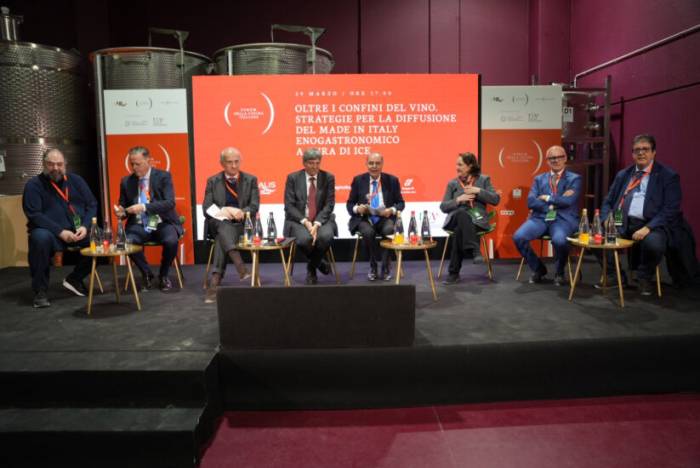
The Italian wine industry is facing one of its most challenging periods in recent history. At a recent event titled “Beyond the Borders of Wine. Strategies for the Promotion of Made in Italy Food and Wine,” organized by the Italian Trade Agency (ICE) at Masseria Li Reni in Manduria, leading figures from the sector gathered to discuss strategies for navigating this difficult moment. The forum, part of an economic and political series led by journalist and winemaker Bruno Vespa, brought together key players such as ICE president Matteo Zoppas, Albiera Antinori of Marchesi Antinori and Federvini, Lamberto Frescobaldi of Frescobaldi and Unione Italiana Vini (UIV), Federico Bricolo of Veronafiere, and Andrea Cipolloni of Eataly.
A central theme was the need to adapt production to current market realities. Lamberto Frescobaldi emphasized that reducing yields per hectare is necessary, as cellars are full and demand has slowed. He pointed out that overproduction leads to falling prices, while lower supply can help stabilize the market. According to data from “Cantina Italia,” white wine stocks have increased significantly between February 2025 and February 2026. Frescobaldi argued for blocking new plantings and lowering yields, especially in regions where production exceeds demand. He also highlighted a generational shift: young people today reach economic stability later than previous generations, which affects their consumption habits. He cited a study indicating that kitchen tables are no longer a staple purchase, with many people eating on couches or beds instead.
Albiera Antinori stressed the importance of promoting Italy’s tradition of moderate wine consumption with meals, which distinguishes it from other countries. She referenced a recent study by Federvini and La Sapienza University showing that 80% of wine in Italy is consumed with food, contributing to the country’s high life expectancy. Antinori sees this as an opportunity for communication and marketing, especially as Italian cuisine has been recognized as UNESCO heritage. She also called for institutional support for wine tourism, suggesting that responsibility for this sector should return to the Ministry of Agriculture.
Matteo Zoppas noted that ICE is increasing its support for wine exports during this downturn. He identified three main challenges: tariffs, euro-dollar exchange rates, and changing consumer behavior. In January 2026, Italian wine exports to the U.S. dropped by 35%, though this figure is skewed by a surge in stockpiling ahead of anticipated tariffs in January 2025. Adjusted for these anomalies, the real decline is closer to 16%. Zoppas said ICE is working to offset negative trends by increasing international buyer attendance at trade fairs like Vinitaly, which saw a 20% rise in participation this year. He also pointed to emerging opportunities in Mercosur countries, India, and Australia.
Federico Bricolo highlighted Vinitaly’s role in promoting Italian wines globally, with buyers from 130 countries expected at the upcoming edition in Verona. He emphasized Italy’s unique biodiversity and culinary heritage as key assets for international promotion. Bricolo also called for better regulatory support for wine tourism within Italy.
Andrea Cipolloni described rapid changes in U.S. dining habits since the pandemic. Restaurants now see peak business earlier in the evening, with little activity after 9 p.m., forcing menu adjustments and affecting wine sales. He noted a growing trend toward health-conscious choices among American consumers.
Raffaele Alajmo, founder and CEO of Gruppo Alajmo, observed that younger consumers are more attentive to organic and natural products but stressed the importance of preserving the unique experience offered by Italian restaurants. He warned that many traditional family-run establishments may not survive unless they adapt to new business models or join larger groups.
The discussions at Masseria Li Reni reflect a consensus that Italy’s wine sector must balance tradition with innovation. Reducing production where necessary, investing in quality over quantity, promoting responsible consumption linked to food culture, and exploring new markets are seen as essential steps for ensuring the future vitality of Italian wine both at home and abroad.
