Italy’s Wine Industry Faces a Deepening Surplus
Exports and domestic consumption fell as producers struggled to absorb excess supply across key markets
2026-05-29
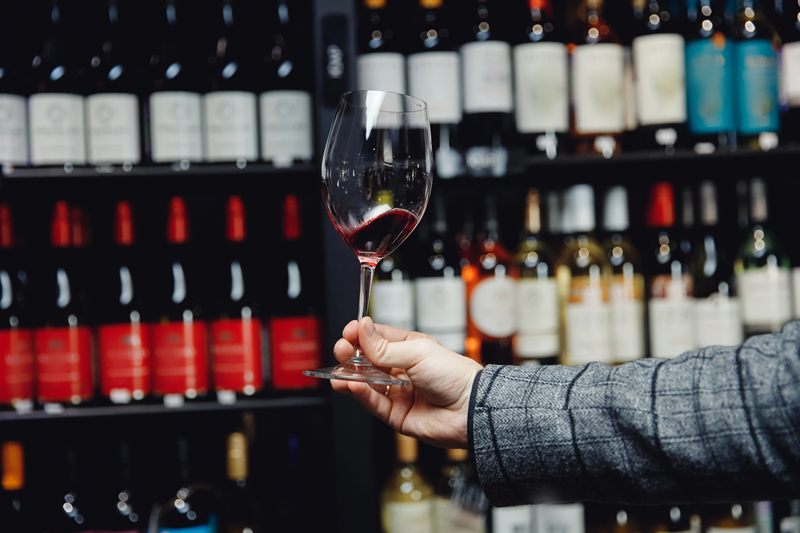
Italy’s wine industry is facing a growing imbalance between supply and demand, with exports falling, domestic consumption weakening and no clear solution yet to the country’s surplus production, according to Mediobanca’s annual research report on the sector.
The report, released Wednesday, examined 225 of the largest wine groups in Italy and found that total sales fell 2.8% last year compared with 2024, while exports dropped 3.4%. That decline matters because foreign sales have long helped offset softer demand at home. Instead, the domestic market contracted sharply, with internal consumption down 9.4% last year.
Italy remains the world’s largest wine producer. Mediobanca estimated global wine production at 227 million hectoliters in 2025, up 0.6% from 2024, while global consumption is expected to fall to 208 million hectoliters, down 2.7%. Italy accounted for 44.4 million hectoliters, or 19.7% of global output, up 0.7% from the previous year.
The report said the pressure is not limited to Italy. Exports to the United States fell 6.3%, a decline analysts linked in part to tariffs. Shipments to European Union countries also dropped 2.8%. For Italian producers, those losses come at a time when many are already dealing with excess supply and slower demand across key markets.
Mediobanca said that over the past five years, 80% of Italian producers have seen wine consumption decline. About two-thirds expect that trend to continue in the coming years. Even so, 70% still view the sector as attractive, arguing that weaker players are being pushed out and that the market is becoming more selective.
Producers are responding by trying to diversify their offerings and reach new customers. The report said 72% see product diversification as the main tool for adapting to changing drinking habits. Expanding into new markets was another priority, followed by stronger marketing and communication efforts, cited by 60% of companies. Roughly 45% pointed to new sales channels and greater attention to sustainability.
The study also described a shift toward tighter control over production and distribution. Half of the companies surveyed said an integrated model covering the full chain from production to sales was the best structure. Mergers and acquisitions are also moving in that direction, along with local consolidation and succession planning.
Quality remains central to how producers think about their business, but price is increasingly important as consumers become more cautious. About half of the companies said quality is a key factor for buyers, while two-thirds said price is crucial.
Investment has continued despite the slowdown. Over the past three years, major producers focused spending on wineries in 90% of cases, energy efficiency in 77% and technology in 57%. Total investment is expected to rise 3.5% in 2025 from a year earlier, even as advertising spending is projected to fall 5.4%, to 2.6% of total sales.
Still, some producers remain optimistic about next year. Mediobanca said 58% of leading companies expect sales growth in 2026.
