Cornell Scientists Prepare to Release Disease-Resistant Grape Hybrids for Northeastern Vineyards
New varieties aim to help growers combat climate change, reduce chemical use, and maintain high-quality wine production
2026-02-19
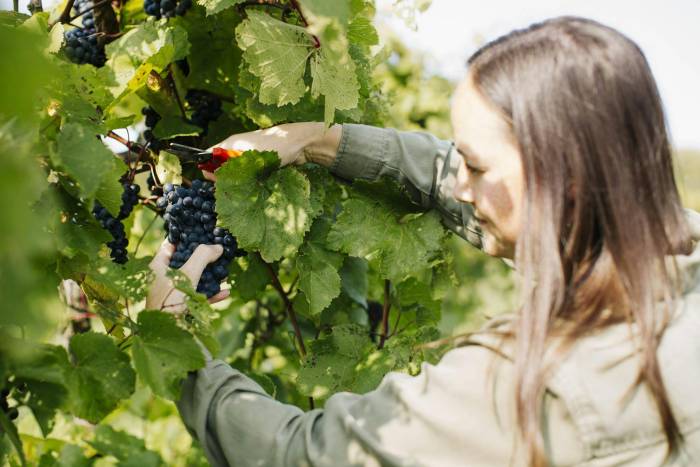
The Cornell Grapevine Breeding Program, based at Cornell AgriTech and led by Professor Maddy Oravec, is nearing the release of new grape hybrids designed to withstand disease and adapt to the changing climate of the northeastern United States. The program, which focuses on selective breeding, aims to produce grapevines that are both resilient to common diseases and capable of yielding high-quality wine.
Selective breeding in grapevines involves choosing parent plants that show strong disease resistance and crossing them to produce offspring with the same traits. This approach has become increasingly important as climate change brings milder winters and wetter, more humid conditions to grape-growing regions, raising the risk of diseases such as powdery mildew, downy mildew, and black rot. These diseases can severely impact vine health and fruit production. Powdery mildew and black rot are fungal diseases that attack living tissue, while downy mildew is a waterborne microbial disease.
Graduate students Aliyah Brewer and Victoria Lan Cheng are key researchers in the program. They use advanced imaging technology to monitor disease progression in grapevines. The Blackbird camera detects visible symptoms of disease, while the Hyperbird hyperspectral camera collects data across wavelengths from 400 to 1000 nanometers, revealing early signs of infection not visible to the naked eye. Brewer also imports seeds from Europe and California to introduce new resistance genes into the breeding program, developing genetic markers to track these traits in future generations.
Climate change has also led to earlier bud break in grapevines, making them vulnerable to late spring frosts that can destroy young buds. To address this, the program breeds for later bud break and increased cold hardiness by crossing wild grape species—known for their ability to survive harsh winters—with Vitis vinifera, the species used for most European wines. This strategy produces hybrids that combine cold tolerance with desirable wine qualities.
In northern New York, where winters are too severe for V. vinifera alone, growers rely heavily on these hybrids. Even in milder parts of the state where V. vinifera can grow, these vines require intensive management due to their sensitivity to cold and disease. By developing hybrids with greater resilience, the program hopes to reduce environmental impacts and lower production costs for growers.
The breeding process is continuous throughout the year. In June, the team removes male flower parts from selected vines and cross-pollinates chosen parents. Over summer, they monitor vine growth and disease resistance. Harvest occurs in fall, with grapes sent to Cornell’s Craft Beverage Institute for wine production and analysis. Seeds are collected for planting in greenhouses over winter. During this time, researchers analyze data and plan new crosses based on genetic information gathered from plant tissue samples.
The program collaborates with several other research groups at Cornell. Professor Katie Gold’s team studies grapevine diseases; Professor Yu Jiang’s group develops agricultural robotics for data collection; Professor Jason Londo’s team focuses on cold adaptation; and an enologist conducts sensory analysis of experimental wines.
Beyond wine grapes, the program also breeds table grapes and juice grapes with traits like large berries, crisp texture, thin skins, good flavor, and seedlessness—qualities preferred for fresh consumption.
A major goal of the program is sustainability. By breeding disease-resistant vines, researchers hope to reduce reliance on fungicides and pesticides that can harm workers and contaminate the environment. Brewer notes that this work could mean less chemical exposure for vineyard workers in regions like the Finger Lakes and lower costs associated with vine maintenance.
The new cultivars developed by Cornell’s program are expected to help growers adapt to climate change while maintaining profitability and reducing environmental impact. The final stages of evaluation are underway before these disease-resistant grape varieties become available for commercial use.

Founded in 2007, Vinetur® is a registered trademark of VGSC S.L. with a long history in the wine industry.
VGSC, S.L. with VAT number B70255591 is a spanish company legally registered in the Commercial Register of the city of Santiago de Compostela, with registration number: Bulletin 181, Reference 356049 in Volume 13, Page 107, Section 6, Sheet 45028, Entry 2.
Email: [email protected]
Headquarters and offices located in Vilagarcia de Arousa, Spain.