EU Mercosur Trade Pact May Advance Despite European Legal Review
Court review introduces delay without freezing the agreement
2026-01-22
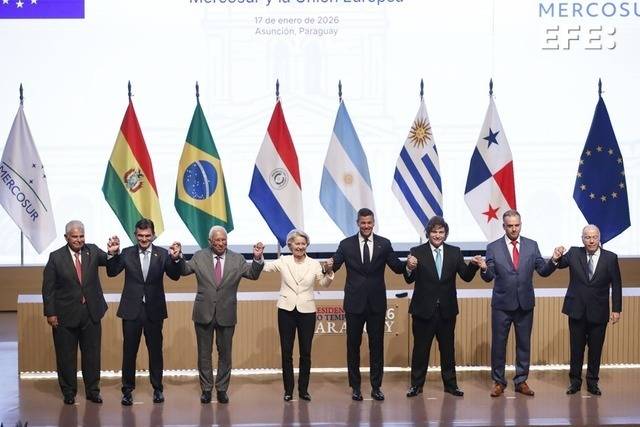
The trade agreement between Mercosur and the European Union, signed on January 18 in Asunción, Paraguay, faces a new delay after the European Parliament voted to refer the pact to the European Court of Justice for a legal review. This process could take between 18 and 24 months, postponing the final ratification by EU member states. Despite this judicial pause, the European Commission is not legally required to wait for the Parliament’s approval and could begin provisional application of the agreement once it is signed.
Brazil’s government announced on Wednesday that it will move forward with its own ratification process regardless of the European Parliament’s decision. The Ministry of Foreign Affairs stated that President Luiz Inácio Lula da Silva’s administration is giving “full priority” to domestic approval of the treaty. The ministry emphasized its commitment to “accelerate internal procedures” to ensure that all conditions for full implementation are met “as quickly as possible.” Brazil will also monitor developments within European institutions as the legal review proceeds.
The decision by the European Parliament has triggered varied responses among Mercosur member countries. Paraguay’s President Santiago Peña said he does not expect the legal review to become an obstacle. Uruguay’s Foreign Minister Mario Lubetkin described the development as a “setback,” but expressed confidence that the court will ultimately validate the agreement. Argentina and Bolivia, which is in the process of joining Mercosur, have not yet issued official statements.
The agreement marks a significant milestone after more than 25 years of negotiations. It establishes one of the world’s largest free trade zones, covering about 720 million people and representing an economic area worth $22 trillion, nearly one quarter of global GDP. The deal will gradually reduce or eliminate tariffs on approximately 90% of exports and imports between both blocs.
One sector expected to benefit significantly from the agreement is European wine. Currently, European wines entering Brazil face tariffs of 27% for still wines and 35% for sparkling wines. The new framework would phase out these tariffs over eight years, potentially boosting the competitiveness of European wine producers in South America. The Brazilian market imports nearly €500 million worth of wine annually and accounts for 75% of EU wine exports to Mercosur countries.
European wine industry representatives have welcomed the agreement, viewing it as an opportunity to expand their presence in South American markets. They argue that lower tariffs will make their products more accessible and attractive to consumers in Brazil, Argentina, Uruguay, and Paraguay.
While legal uncertainties remain on the European side, Mercosur governments are pressing ahead with their own ratification processes. The coming months will be crucial as both regions navigate institutional procedures and await a ruling from Europe’s highest court. If provisionally applied by the European Commission, parts of the agreement could take effect before final ratification by all parties involved.

Founded in 2007, Vinetur® is a registered trademark of VGSC S.L. with a long history in the wine industry.
VGSC, S.L. with VAT number B70255591 is a spanish company legally registered in the Commercial Register of the city of Santiago de Compostela, with registration number: Bulletin 181, Reference 356049 in Volume 13, Page 107, Section 6, Sheet 45028, Entry 2.
Email: [email protected]
Headquarters and offices located in Vilagarcia de Arousa, Spain.