Chilean Bottled Wine Exports Fall 12.5% in January as Key Markets Cut Purchases
Revenue drops 9.3% despite rising average prices, with premium wines showing resilience amid global demand shifts
Thursday, March 5, 2026
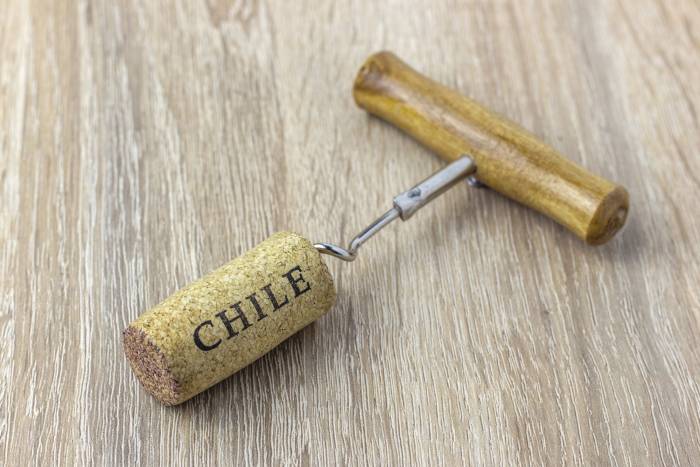
Bottled wine exports from Chile began 2026 with a significant decline. In January, shipments dropped by 12.5% in volume and 9.3% in value compared to the same month last year. The country exported 3.7 million cases, generating $105.4 million in revenue. Despite the overall decrease, the average price per case rose by 3.6%, moving from $27.4 in January 2025 to $28.4 this year.
Several major markets for Chilean bottled wine saw notable decreases in imports during January. Exports to Brazil, which has been a key growth market for Chilean wine, fell sharply. Shipments to the United Kingdom, United States, China, and South Korea also declined. China’s downturn was particularly pronounced, continuing a trend of falling demand that has persisted for several months.
Some markets did show positive results. Japan led growth for the month, while Canada continued its upward trajectory, likely influenced by ongoing trade tensions with U.S. wine producers. Exports to the Netherlands, Ireland, and Colombia also increased but were not enough to offset losses elsewhere.
Looking at the past twelve months, Chile exported 45.5 million cases of bottled wine worldwide, earning $1.251 billion. This represents a drop of 3.2% in volume and 4.2% in value compared to the previous twelve-month period. The average price per case over this period slipped slightly by 1.1%, settling at $27.5.
Brazil remains Chile’s top market over the last year, accounting for 18% of total volume and 16% of export value for bottled wines. The United States, Japan, and the United Kingdom follow with similar shares around 9%. Among these leading destinations, only Canada posted a strong increase—about 20%—attributed to its trade disputes with the U.S., which have benefited Chilean exporters.
In terms of pricing among major markets over the past year, China paid the highest average price at $34.3 per case, followed by South Korea at $33.3, Canada at $33.2, and the Netherlands at $30.4 per case. The United Kingdom (+4.6%), China (+1.4%), Netherlands (+5%), and Ireland (+3.2%) all saw increases in average prices paid for Chilean bottled wine compared to the previous year-long period. In contrast, prices fell for shipments to the United States, Japan, and South Korea, while Brazil, Canada, and Mexico remained stable.
Breaking down exports by price segment for January shows that higher-end wines performed better than lower-priced ones despite the overall decline in shipments. Wines priced between $40 and $50 per case saw increases close to 40% in both volume and value compared to January 2025; those between $50 and $60 per case rose more than 30%. However, wines priced between $20 and $30 per case experienced the steepest drop: down 20% in volume and 19% in value.
In January, wines priced above $50 per case made up 6% of total export volume but accounted for 19% of export value—a sign of growing interest in premium Chilean wines abroad. Canada was the main destination for these higher-value wines and showed significant growth from last year’s figures. Value also increased for shipments to South Korea, Japan, the United Kingdom, Netherlands, and Mexico within this segment; meanwhile Brazil, China, United States, and Germany reduced their purchases of these premium wines.
Over twelve months, only wines priced between $40 and $50 per case showed positive growth—up between 4% and 5%. Other segments declined: wines between $30 and $40 per case dropped by 10% in both volume and value; those above $60 per case fell by 3.2% in volume and 7.8% in value.
Exports of wines priced above $50 per case totaled 2.6 million cases worth $248 million over twelve months—representing 6% of total bottled wine export volume but a substantial 20% share of export value. Brazil is now the leading market for these high-value wines by value but not by volume; China remains an important destination despite recent declines.
Canada and Denmark stood out as markets with positive trends for premium Chilean wines during this period according to data from Corpo (Corporación Chilena del Vino). The overall weak start to the year highlights ongoing challenges for Chilean wine exporters as they navigate shifting demand across global markets and changing consumer preferences for different price segments within bottled wine exports.