Supreme Court Faces Pivotal Decision on Arizona Wine Shipping Ban
Case could redefine state power over alcohol sales and reshape access to out-of-state wine for millions of Americans
2026-02-18
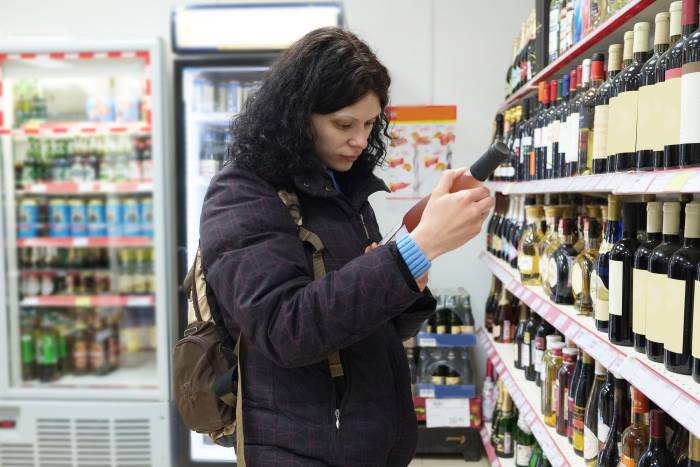
The Supreme Court is being asked to review a case that could reshape how Americans buy wine across state lines. The case, Day v. Henry, centers on Arizona’s law that blocks residents from receiving wine shipments from out-of-state retailers. The National Association of Wine Retailers (NAWR) has filed an amicus brief urging the justices to take up the case, arguing that current laws unfairly restrict consumer choice and protect local businesses from competition.
The dispute follows two major Supreme Court decisions on wine shipping. In 2005, Granholm v. Heald ruled that states cannot discriminate against out-of-state wineries by banning their shipments while allowing in-state shipments. In 2019, Tennessee Wine v. Thomas extended this principle to wine retailers. Despite these rulings, many states still enforce laws that prevent out-of-state retailers from shipping wine to local consumers.
Arizona’s law requires retailers to have a physical presence in the state before they can ship wine to Arizona residents. On September 25, 2025, the Ninth Circuit Court of Appeals upheld this rule, accepting the argument that it is a legitimate part of the state’s “three-tier system” for alcohol distribution. This system separates producers, wholesalers, and retailers and is often cited by states as necessary for regulating alcohol sales.
NAWR and other groups argue that such laws are protectionist and harm both consumers and independent retailers. They point out that courts in different parts of the country have reached conflicting decisions about whether these restrictions are constitutional. Some courts have demanded evidence that such laws serve a real public health or safety purpose, while others have accepted states’ claims without requiring proof.
This split among federal appeals courts has created uncertainty for retailers and consumers alike. NAWR’s executive director, Tom Wark, said that inconsistent standards across states like Missouri, North Carolina, Ohio, and Rhode Island have made it difficult for businesses to know what is allowed. He called on the Supreme Court to clarify whether states can defend discriminatory shipping bans simply by labeling them as part of the three-tier system.
Supporters of Arizona’s law say it helps regulate alcohol sales and prevents underage access. Opponents argue that it mainly protects local wholesalers and retailers from competition, leading to higher prices and fewer choices for consumers. NAWR’s brief claims that these restrictions stifle innovation and limit access to a wider variety of wines.
Several organizations have joined NAWR in asking the Supreme Court to hear Day v. Henry, including the Manhattan Institute, the Reason Foundation, and groups representing wine consumers. They argue that the current patchwork of state laws leaves many Americans unable to buy wines they want from out-of-state sources.
The Supreme Court has not yet announced whether it will take up the case. If it does, its decision could affect wine shipping laws in many states and determine how much power states have to restrict interstate commerce in alcohol. For now, Arizona residents remain unable to receive direct shipments from out-of-state wine retailers, while industry groups continue their push for change at the highest court in the country.

Founded in 2007, Vinetur® is a registered trademark of VGSC S.L. with a long history in the wine industry.
VGSC, S.L. with VAT number B70255591 is a spanish company legally registered in the Commercial Register of the city of Santiago de Compostela, with registration number: Bulletin 181, Reference 356049 in Volume 13, Page 107, Section 6, Sheet 45028, Entry 2.
Email: [email protected]
Headquarters and offices located in Vilagarcia de Arousa, Spain.