French Winegrowers Face Higher Social Security Base as 26% Flat Deduction Replaces Previous Allowances
New single-base system aims to simplify contributions but could increase payments for many self-employed farmers starting in 2026
Monday, January 19, 2026
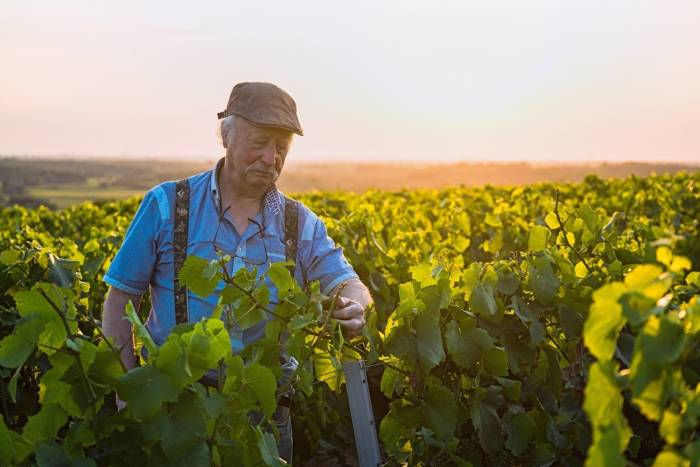
Since January 1, 2026, a new system for calculating social security contributions has come into effect for French winegrowers and other self-employed agricultural workers. This reform changes the way contributions are assessed and aims to address longstanding inequalities and complexities in the previous system.
Before this change, two separate calculation methods existed. The first, called the “net base,” was used to determine contributions that created social rights, such as retirement and health insurance. This base was calculated after deducting certain contributions and a portion of the CSG (a social tax). The second method, known as the “super gross base,” was used to calculate the CSG and CRDS (another social tax), and it included social contributions back into the income. This dual system led to higher deductions for self-employed agricultural workers compared to employees with similar incomes, while offering them less comprehensive social coverage. The complexity of these calculations also caused confusion and errors for many farm operators.
The reform introduces a single calculation base for all social security contributions. From now on, the base will be determined from the taxable agricultural profit, with some fiscal deductions no longer allowed for social purposes. After this adjustment, a flat-rate deduction of 26 percent will be applied. This deduction is subject to a minimum threshold, equivalent to the basic retirement contribution (calculated as 450 times the hourly minimum wage multiplied by 17.75 percent), and a maximum cap set at three times the annual ceiling of French social security.
Winegrowers and other self-employed farmers can still choose between two calculation options: using the average income over three years or, by request, using income from the previous year.
For those taxed under personal income tax rules, certain fiscal mechanisms—such as slow-moving stock provisions, young farmer allowances, and deferred taxation schemes—will no longer reduce the social security base, even though they remain deductible for tax purposes. As a result, some winegrowers may find that their social security base is higher than their taxable income. The reporting process has also been simplified: only one form now needs to be submitted to both tax authorities and the agricultural social security fund (MSA).
For companies taxed under corporate income tax rules, there are no major changes. Dividends received by self-employed agricultural workers will continue to be included in the contribution base if they exceed 10 percent of share capital and related sums. The main change here is legal clarification: old articles from rural law have been replaced by those from social security law to standardize rules across sectors.
The reform also addresses cases where no declaration is filed. In such situations, MSA can now impose a default assessment based on either a fixed income set by decree or the last declared income. This rule applies to all types of contributions, including merged social levies like CSG and CRDS. It is now essential for all winegrowers and self-employed farmers to submit a declaration every year, even if they have no income or activity.
The government’s stated goal is to make contribution calculations more coherent and transparent by introducing a single base and harmonized rules that better align with tax regulations. However, the real impact on individual winegrowers will depend on future contribution rates and practical details yet to be announced. For those who previously benefited from deductions that are no longer allowed for social purposes, an increase in their contribution base—and therefore their payments—is likely. Those with higher incomes may see their contributions rise above certain thresholds.
Many winegrowers are now advised to review their financial planning with accountants or advisors to anticipate how these changes could affect their cash flow in 2026 and beyond. Further details from authorities are expected in the coming months as implementation continues across France’s agricultural sector.