Domaine EdeM Launches Low- and No-Alcohol Wines With Just 25 Calories, Redefining Sustainability in Wine
Dr. Laura Catena’s science-driven project shifts focus from carbon metrics to healthier drinking habits and consumer choice in the industry.
2025-12-17
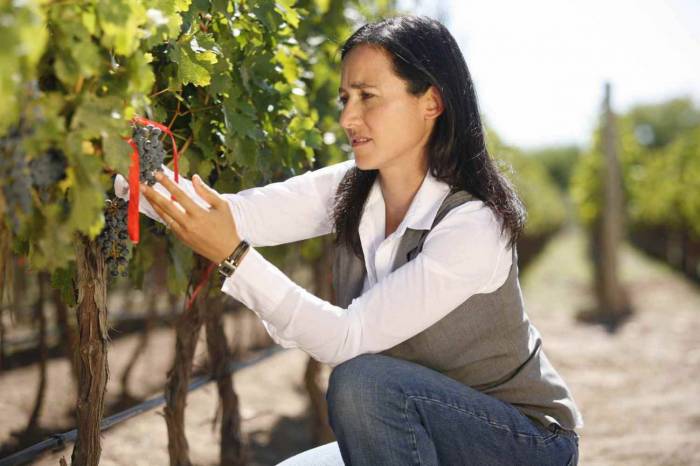
Dr. Laura Catena, a prominent figure in the global wine industry, is challenging traditional ideas of sustainability with her new project, Domaine EdeM. While most discussions about sustainable wine focus on environmental factors like carbon emissions, water use, and packaging, Catena is shifting the conversation toward how people drink. Her approach centers on moderation and offering consumers more choices, especially through low- and no-alcohol wines.
Catena brings a unique perspective to the debate. She is the managing director of Bodega Catena Zapata in Argentina and founder of the Catena Institute of Wine. In addition to her work in wine, she practiced emergency medicine in San Francisco for nearly three decades and has written several books and scientific articles. As a fourth-generation winemaker from Mendoza, she joined her family’s winery in 1995 and has since become a leading voice in both viticulture and public health.
Domaine EdeM, set to launch as 2026 approaches, is a science-driven project developed by the Catena Institute of Wine. Unlike many initiatives that highlight environmental benefits, Catena describes this as “a sustainability initiative for people.” She believes that encouraging moderation—rather than abstinence—is key to a healthier drinking culture. Catena acknowledges that some people should not drink at all for health reasons but argues that the wine industry should provide options for those who want to reduce their alcohol intake without giving up wine entirely.
The idea for Domaine EdeM took shape during the pandemic. Catena observed significant changes in drinking habits as lockdowns led many to drink more at home, followed by a period when health warnings prompted some to quit alcohol altogether. She notes that moderate drinkers are often the ones who stop drinking, while heavy drinkers continue their habits. For Catena, the solution lies in giving consumers more flexibility—what her son Dante McDermott Catena calls “zebra striping,” or alternating between no-, low-, and full-strength wines during social occasions.
Domaine EdeM is built on research rather than trends. The Catena Institute set out to create low- and no-alcohol wines that taste as good as traditional wines. The products use high-quality vinifera grape must, verjus, and botanicals, with no added sugar or artificial flavors. Sulfites are used only for stability. Catena emphasizes that starting with quality ingredients is essential; early attempts in the industry often used lower-quality base wines for dealcoholization, but this approach did not yield satisfying results.
Production choices for Domaine EdeM reflect both practical and environmental considerations. The flagship N.0 Rosæ (0% alcohol) is produced in Spain’s Toledo region at a solar-powered, carbon-neutral facility. Spain was chosen because it offers advanced dealcoholization technology not yet available in Argentina. Catena acknowledges concerns about the energy intensity of dealcoholization but says these are addressed by using renewable energy and focusing on the broader impact of promoting moderation.
The range includes N.0 Rosæ, made from Airén grapes with a rose-petal infusion and just 25 calories per serving; Blonde (0%) and Brunette (0.4%), sparkling apéritifs based on Chardonnay must; and Uco Stones (7%), a lower-alcohol wine made from mountain Chardonnay blended with must and verjus.
While Domaine EdeM redefines sustainability around consumption habits, environmental efforts remain central to the Catena group’s operations. Bottle weights have been reduced by over 40%, with further reductions planned through collaboration with glass manufacturers. Water conservation is another priority, with vineyard trials showing potential savings of up to 30%.
Catena argues that sustainability should not be measured solely by carbon metrics or resource use. She believes that supporting consumers’ long-term relationship with wine is equally important for the future of the industry. Providing healthier options helps ensure that wine remains part of social rituals without compromising well-being.
As the wine sector faces ongoing challenges related to health messaging and changing consumer behavior, Domaine EdeM represents an effort to adapt rather than retreat. For Catena, sustainability means finding solutions that protect both people and the planet while preserving wine’s cultural significance.

Founded in 2007, Vinetur® is a registered trademark of VGSC S.L. with a long history in the wine industry.
VGSC, S.L. with VAT number B70255591 is a spanish company legally registered in the Commercial Register of the city of Santiago de Compostela, with registration number: Bulletin 181, Reference 356049 in Volume 13, Page 107, Section 6, Sheet 45028, Entry 2.
Email: [email protected]
Headquarters and offices located in Vilagarcia de Arousa, Spain.