Bulk Wine Now Makes Up Over One-Third of Global Trade as Surplus Reshapes Industry
Record attendance at Amsterdam’s WBWE highlights mounting pressures from oversupply, falling prices, and shifting power to buyers worldwide
2025-12-15
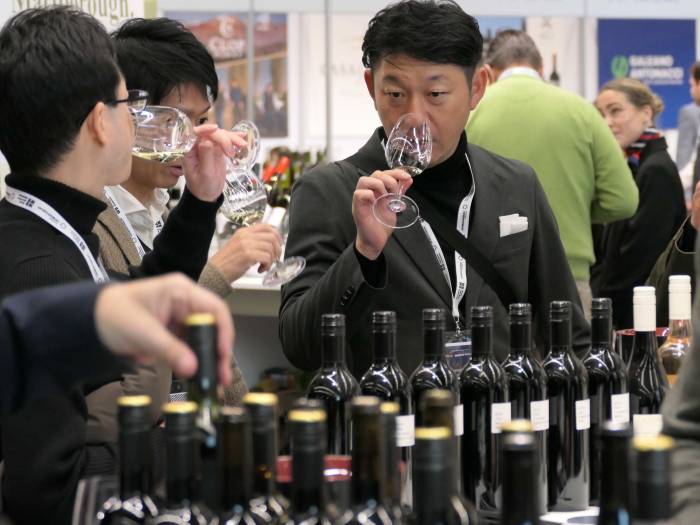
At the World Bulk Wine Exhibition (WBWE) held in Amsterdam last month, the global wine industry’s deep structural and production challenges were on full display. The event brought together more than 240 producers from 25 countries, each with millions of liters of wine to sell. However, the main issue was not supply, but finding buyers willing to pay the prices producers needed.
The exhibition took place against a backdrop of significant market pressures. The combined effects of U.S. trade tariffs imposed during the Trump administration, the collapse of the Chinese wine market, declining global wine consumption, and major imbalances in supply between key producing countries have created a difficult environment for producers. Many left the event feeling uncertain about the future.
Barry Dick MW of Fero, a veteran buyer and trader, described the mood as “deflated.” He noted that many producers now face a “monumental challenge” and recognize that fundamental changes are coming to reshape the industry. Some New Zealand and Australian producers at WBWE said they might not make any wine next year as they try to clear unsold stock and stabilize their markets. Argentinian producers were also looking to offload large volumes of Malbec, while French exhibitors offered declassified AOC wines from previous vintages as bulk products.
Andrew Porton, wine director at Lanchester Wines and Wine Fusion, observed that this year’s show was an opportunity for buyers seeking large quantities of French red wine at competitive prices. The power dynamic has shifted: buyers now hold more influence, able to select the best deals from a surplus market.
Florian Ceschi, European director at Ciatti, a leading bulk wine broker and analyst, said the current market structure is unsustainable for many producers and growers. As long as production outpaces demand, buyers will continue to dictate terms and keep prices low. Some French regions are now calling on the European Union to introduce sustainable pricing measures to prevent further damage to their industries.
Alistair McIntosh, chief operating officer at New Zealand Wineries, said bulk pricing from New Zealand would likely fall again this year. His company hoped for NZ$2.50 per liter but expected closer to NZ$2.20 or less. Louise Miller, chief executive at New Zealand Wineries, added that despite producing high-quality wine, they are unable to sell it at desired prices.
Despite these headwinds, WBWE remains a vital event for both producers and buyers. According to WBWE data, bulk wine now accounts for over a third of global trade volumes. While bottled sales have declined in both volume and value since the start of the year, bulk shipments have seen a slight drop in volume but an increase in average price per liter.
South African winemaker Bruce Jack emphasized that understanding trends in the bulk market is essential for anyone involved in wine production or sales. He likened it to “flying with radar,” allowing participants to spot emerging trends before they affect branded wines.
Simon Jerrome, head buyer at C&C Group for Bibendum and Matthew Clark, called WBWE a “vital show” for networking and gaining insight into global supply issues. He noted an increase in varietal opportunities from major producing countries and said that buyers use the event to align strategies before negotiating major deals that set pricing benchmarks across markets.
The complexity of today’s wine supply chain means decisions are no longer just about price or quality; packaging costs and logistics play a larger role than ever before. Ceschi noted that fewer deals are finalized on-site at trade shows like WBWE because buyers need time for laboratory tests and internal tastings before committing. Brokers now provide more specialized services to help navigate these complexities.
Porton said his focus at WBWE has shifted from finding new contacts to strengthening relationships with existing suppliers. Reliability is now more important than ever as businesses look for stability in uncertain times.
Ceschi pointed out that price differences between generic grapes from Spain, Italy, France, and Germany have narrowed significantly due to oversupply in Europe. This has kept prices down even in countries like Chile where harvests have been smaller than usual.
One positive trend is an overall improvement in bulk wine quality. Buyers reported more expressive and complex wines available this year compared to previous editions of WBWE. There is also growing demand for smaller contracts as importers seek flexibility amid declining volumes.
Shipping delays and rising freight costs remain significant challenges for exporters worldwide. Ceschi expressed concern that shipping companies are not adapting quickly enough to meet industry needs.
The surplus situation in traditional markets is pushing producers to explore new opportunities in Africa, the Middle East, and South America. Countries like Lebanon, Mauritius, and Panama exhibited at WBWE for the first time this year. While these emerging markets cannot absorb all excess supply yet, they offer new channels for growth.
Bulk wine consultant Rafael del Rey expects increased demand from Brazil, Colombia, Mexico, and parts of Africa but cautions that these markets will not fully offset declines elsewhere.
Another area of growth highlighted at WBWE was low- and no-alcohol wines. The sector is benefiting from improved base wine quality and rising consumer interest in alternatives such as wine-based cocktails and ready-to-drink products. Robert Joseph of Le Grand Noir said it took his team nearly three years to develop a satisfactory 0% alcohol wine but believes investment in this category will pay off as demand grows.
Ray O’Connor MW of Atelier Wines argued that innovation is essential if the industry wants to remain relevant with consumers seeking pleasure from their drinks—whether alcoholic or not.
The mood at this year’s WBWE was described by many as “eerie,” reflecting uncertainty about how ongoing shifts in consumption patterns will affect business models across the sector. Despite these challenges, industry veterans like Barry Dick remain confident that resourcefulness will help producers adapt and find new ways forward.
The 17th edition of WBWE attracted 2,150 visitors from 60 markets—a record attendance—and organizers announced that next year’s event will return to Amsterdam from November 30 to December 1.

Founded in 2007, Vinetur® is a registered trademark of VGSC S.L. with a long history in the wine industry.
VGSC, S.L. with VAT number B70255591 is a spanish company legally registered in the Commercial Register of the city of Santiago de Compostela, with registration number: Bulletin 181, Reference 356049 in Volume 13, Page 107, Section 6, Sheet 45028, Entry 2.
Email: [email protected]
Headquarters and offices located in Vilagarcia de Arousa, Spain.