Australian Researchers Develop Rapid Paper Test for Sulphur Dioxide in Wine
New sensor technology enables winemakers to monitor preservative levels on-site, reducing costs and improving quality control
2026-03-11
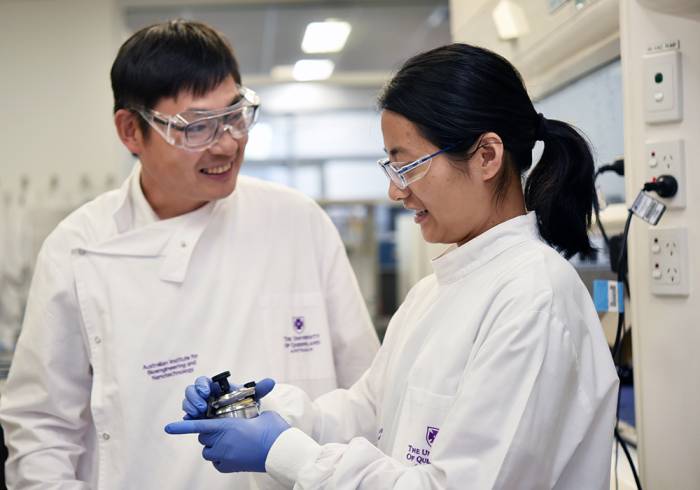
Researchers at the Australian Institute for Bioengineering and Nanotechnology (AIBN) have received grants from the Australian Government’s Economic Accelerator (AEA) program to advance two projects aimed at addressing challenges in the wine and waste management industries. The AEA program is part of the University Research Commercialisation Action Plan, which seeks to turn promising research into practical solutions.
Dr. Run Zhang and his team are collaborating with Winechek Pty Ltd, a company specializing in wine analysis with laboratories in major wine regions such as Margaret River, Barossa Valley, and Yarra Valley. Their goal is to develop a rapid, affordable paper-based test for detecting sulphur dioxide in wine. Sulphur dioxide is widely used as a preservative in winemaking, but its levels must be carefully monitored to ensure compliance with safety standards and maintain product quality.
Currently, wine samples are sent to laboratories for testing, a process that can be time-consuming and costly. Dr. Zhang’s team has created a sensor technology that allows winemakers to test sulphur dioxide levels on-site using a paper strip that changes color within one minute. The results can be read easily with a smartphone. This new method aims to reduce reliance on laboratory tests and could be adapted for use in other food and beverage sectors.
Dr. Victoria Hughes from Winechek highlighted the importance of both laboratory precision and rapid on-site testing during different stages of winemaking. Winechek manufactures the Vintessential test kit brand, which provides analysis tools for wine, beer, cider, and other beverages. The partnership with Dr. Zhang’s team is seen as an important step in maintaining innovation within the industry.
In a separate project, Associate Professor Cheng Zhang and Dr. Xuemei Li are working on methods to upcycle per- and polyfluorinated substances (PFAS), often referred to as “forever chemicals.” PFAS are used in various industries including electronics, automotive, waterproofing, and energy storage but are difficult to dispose of due to their persistence in the environment.
Dr. Li’s team is exploring ways to transform PFAS waste into valuable raw materials for industrial applications, such as components for batteries. The current methods for treating PFAS waste are often expensive and energy-intensive. To address this, the researchers are using a mechanochemical ball-milling process that breaks down fluorinated material waste efficiently while recovering fluorine-containing products that can be reused.
The project involves collaboration with Chemours, a global manufacturer of fluoropolymers, which provides technical expertise and material samples, and Advanced Nanomaterials, an Australian nanotechnology company offering commercialization support and industry connections.
Associate Professor Cheng Zhang stated that these new processes could strengthen Australia’s position in recycling fluorine resources while reducing the costs associated with hazardous waste management. The work reflects ongoing efforts by researchers, industry partners, and government agencies to find science-based solutions that promote sustainability and responsible manufacturing practices.
Both projects demonstrate how targeted research funding can help bridge the gap between scientific discovery and real-world application, supporting industries as they adapt to changing regulatory requirements and environmental challenges.

Founded in 2007, Vinetur® is a registered trademark of VGSC S.L. with a long history in the wine industry.
VGSC, S.L. with VAT number B70255591 is a spanish company legally registered in the Commercial Register of the city of Santiago de Compostela, with registration number: Bulletin 181, Reference 356049 in Volume 13, Page 107, Section 6, Sheet 45028, Entry 2.
Email: [email protected]
Headquarters and offices located in Vilagarcia de Arousa, Spain.